Ali Ikhwan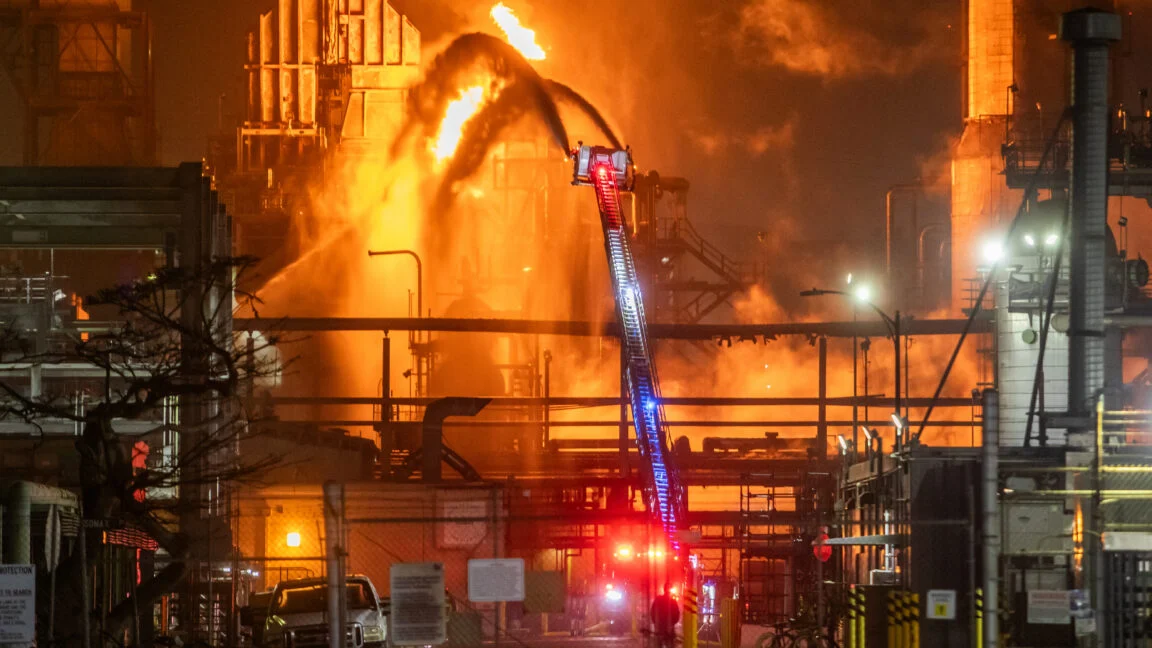
Across the United States, industrial facilities—ranging from sprawling petrochemical refineries to local water treatment plants—operate as silent neighbors to millions of citizens. Yet, beneath the veneer of routine operations, a growing frequency of chemical accidents is sounding an alarm for public safety advocates and environmental watchdogs. As the federal government navigates a volatile transition in regulatory philosophy, the transparency regarding these hazardous releases has become the epicenter of a high-stakes legal and political struggle.
The Fight for Transparency: A Legal Precedent
The current debate over public access to industrial safety data did not emerge in a vacuum. It is the result of years of litigation aimed at holding the federal government accountable. The non-profit advocacy group Public Employees for Environmental Responsibility (PEER) recently unveiled critical statistics regarding industrial chemical releases, but only after a prolonged legal battle.
PEER, alongside allied environmental organizations, filed suit to compel the Chemical Safety Board (CSB) to fulfill its mandates under the Clean Air Act. The core of their argument was simple: citizens living in the shadow of hazardous facilities possess an inherent "right to know" about the materials stored and potentially released into their neighborhoods. In 2019, a federal judge affirmed this position, ruling that the public has a fundamental right to access information concerning hazardous chemical risks in their proximity.
Despite this legal victory, the struggle for data access remains fraught with obstacles. Observers note that while courts have mandated transparency, the administrative reality is often characterized by the removal of tools designed to facilitate that disclosure. For example, during the previous Trump administration, the Environmental Protection Agency (EPA) dismantled a public data tool specifically engineered to help communities assess nearby chemical risks, creating a significant information vacuum for local emergency planners and concerned residents.
A History of Regulatory Whiplash
The trajectory of the Risk Management Plan (RMP) rules reflects the broader political polarization surrounding industrial oversight. The RMP program is designed to prevent catastrophic accidents by requiring facilities that handle highly hazardous substances to develop and implement proactive safety programs.
The political volatility surrounding these rules has been intense:
- The Trump Era Strategy: Beyond the removal of public data portals, the Trump administration sought to fundamentally diminish the role of the Chemical Safety Board. By repeatedly withholding requested funding, the executive branch attempted to effectively neutralize the agency. While Congress maintained its support for the board, the intent signaled a clear pivot toward deregulation.
- The Biden Era Reversal: In a stark departure, the Biden administration moved to strengthen RMP rules. These updated standards mandated comprehensive safety-alternatives analyses, independent investigations into the root causes of accidents, and—notably—greater worker participation in the development of safety and prevention protocols. These measures were also designed to force facilities to adapt their infrastructure to the growing threats posed by climate change, such as increased flooding and extreme heat.
- The Current Proposed Rollback: Earlier this year, the administration proposed a new set of changes to the 2024 RMP rules, citing a need to "reduce regulatory burden" on the industry. The proposal, which accepted public comments until May, suggests a return to a more permissive regulatory environment, sparking immediate outcry from safety advocates.
Analyzing the Data: Conflicting Narratives
Central to the current debate is the interpretation of accidental release statistics from 2014 to 2023. This decade of data has become a battleground for two fundamentally different ideologies.
An EPA spokesperson, defending the move to weaken current regulations, pointed to a "rigorous analysis" of these years, claiming that accidental releases have "unequivocally declined significantly." The agency argues that this downward trend proves that RMP-regulated facilities had effective prevention programs in place long before the "nonsensical and burdensome" 2024 rules were finalized. Under this interpretation, the regulations are viewed as unnecessary bureaucratic hurdles that offer little added safety value.
However, critics like PEER’s executive director, Tim Ruch, vehemently disagree. Ruch argues that the EPA is misrepresenting the data to justify deregulation. "The conclusion that any decline is due to industry prevention plans is a supposition which the current EPA does not have the data to support," Ruch stated.
Environmental analysts point out that while some categories of major releases may show numerical fluctuations, the frequency of "near-misses" and smaller-scale incidents that still cause significant community harm remains high. Furthermore, the reliance on industry-reported data creates an inherent conflict of interest, as facilities are often motivated to downplay the severity of their own operational failures.
The Human Cost: A Weekly Crisis
While policymakers debate the nuances of regulatory burden, the real-world consequences of industrial accidents are playing out with alarming regularity. Reports indicate that chemical accidents resulting in mandatory evacuations, hospitalizations, and, in tragic instances, multiple casualties, occur at a rate of at least once per week across the nation.
These events are not merely statistical anomalies; they are community-defining traumas. Whether it is a toxic tank crisis necessitating a weeks-long cleanup in a suburban neighborhood or a spill at a municipal water plant that leaves residents hospitalized, the impact on public health and local infrastructure is profound.
The intersection of aging infrastructure and extreme weather events further exacerbates these risks. "With each passing year, the risk gets greater because the infrastructure continues to age," Ruch observed. He warns that while the risks associated with these industrial sites are compounding, the federal capacity and willingness to respond are concurrently shrinking. This gap between rising danger and falling oversight creates a "perfect storm" for future disasters.
Implications for the Future
The current impasse regarding RMP rules carries significant implications for the future of industrial safety in the United States. If the proposed rollbacks are finalized, the burden of safety will shift even further away from federal oversight and toward a reliance on voluntary industry initiatives.
For the communities living near these facilities, the uncertainty is palpable. The transition from the 2024 strengthened standards to the currently proposed weaker rules represents a fundamental shift in how the federal government views its duty of care.
- Public Health Outcomes: If the "regulatory burden" is reduced, the primary concern is the potential for an increase in long-term exposure to hazardous materials for neighboring populations.
- Climate Resilience: The removal of requirements to prepare for climate-related disasters could leave facilities dangerously unprepared for the next major storm or flood, potentially leading to cascading industrial failures.
- Worker Safety: Diminishing the role of worker participation in accident prevention removes one of the most effective "boots-on-the-ground" monitoring systems, potentially leading to more preventable accidents.
As the EPA reviews public comments with an eye toward completing a final rule by late 2026, the scientific and advocacy communities remain skeptical. The battle over RMP rules is more than a debate over administrative efficiency; it is a debate over whether the federal government should prioritize the ease of industrial operations or the fundamental safety of the citizens living in the shadow of chemical risk.
The data, the lawsuits, and the weekly headlines suggest that the status quo is increasingly fragile. Without a robust, transparent, and strictly enforced safety framework, the risk of a major industrial catastrophe—one that could dwarf the current frequency of weekly accidents—remains a persistent and growing threat. The coming years will determine whether the United States moves toward a more transparent and safer industrial landscape or further retreats from the oversight necessary to protect its most vulnerable communities.


 Nila Kartika Wati
 Asep Darmawan