By [Your Name/Journalistic Desk]
In a feat of technological coordination that bridged the gap between a bustling science fiction convention in Berlin and the frigid, unforgiving waters of the North Atlantic, attendees of Metropolcon were treated to a rare, live-streamed window into one of the world’s most sophisticated research environments. Autun Purser, a polymath scientist with the Alfred Wegener Institute (AWI) and a celebrated cover artist for Gollancz, beamed into the Kuppenhalle from the deck of the RV Polarstern.
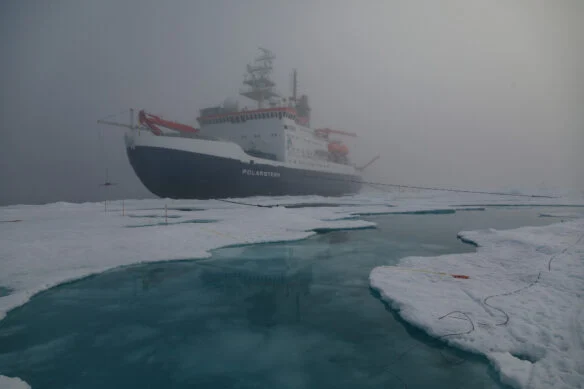
Currently steaming past the Shetland Islands, the Polarstern—a legendary 44-year-old icebreaker—is deep into a critical mission aimed at monitoring the shifting health of the Arctic ecosystem. The event, moderated by Vincent Docherty, served as a compelling intersection of scientific endeavor, maritime logistics, and the imaginative spirit of the science fiction community.

The Vessel: A Titan of Polar Exploration
The RV Polarstern is far more than a ship; it is a mobile, self-sustaining city of science. Measuring 115 meters in length and 33 meters in width, the vessel boasts a 17,000-ton displacement and ten expansive decks. Its wide hull is specifically engineered to provide stability while navigating the crushing pressures of sea ice.
Operating with a complement of 50 crew members and 50 scientists, the ship functions as a microcosm of global collaboration. During the live tour, Purser—who has spent over two years of his career aboard the Polarstern across 18 separate expeditions—walked the audience through the labyrinthine corridors of the vessel. The ship’s interior oscillates between state-of-the-art laboratory facilities and the nostalgic, industrial charm of an aging but capable workhorse. Purser jokingly compared the ship’s internal aesthetic to the original TARDIS—an observation that drew warm laughter from the convention crowd.
A Chronology of the Expedition
The current mission, which departed Bremerhaven on July 4th, is a core component of the FRAM (Frontiers in Arctic Monitoring) project. The expedition’s timeline is grueling but highly structured:

- Departure: The vessel exited Bremerhaven, setting a course north toward the Arctic.
- The Transit: As of the live event, the ship was passing the Shetland Islands, maneuvering toward the Greenland shelf.
- The Daily Routine: The ship functions on a 24-hour cycle of data collection, weather monitoring, and maintenance. Scientists are divided into nine specialized groups, each managing distinct streams of biological, geological, and meteorological data.
- Logistics and Sustainability: The ship operates under strict environmental protocols, including minimized light pollution to protect wildlife and a "zero-discard" policy where all waste is stored for processing upon return to port.
Scientific Instrumentation and Technological Infrastructure
The tour provided an unprecedented look at the heavy machinery of polar research. Purser highlighted an array of sophisticated tools, including a towed camera rig that captures high-resolution imagery of the seafloor—specifically designed to document benthic life like worms and crustaceans.
The vessel also utilizes torpedo-shaped Unmanned Aerial Vehicles (UAVs) for atmospheric and ice-surface surveillance. Purser, leaning into his background as an illustrator and science fiction enthusiast, likened the dome of the UAV to the "Orac" computer from Blake’s 7, highlighting the unique cultural lens through which he views his work.
Beyond the high-tech gear, the ship retains a sense of maritime tradition. The bridge houses an official postbox, complete with custom-made franking stamps unique to each specific expedition—a detail that underscores the ship’s long history as a sovereign, self-contained entity.

Environmental Implications and the Changing Arctic
The core of the Polarstern’s mission is to quantify the rapid environmental changes occurring in the Arctic. Purser noted that the marine environment is undergoing a transformation driven by a cascade of human impacts. Key areas of concern include:
- Ballast Water Management: The improper handling of ballast water by commercial vessels has been identified as a primary vector for invasive species, transporting flora and fauna to ecosystems where they have no natural predators.
- Acoustic Pollution: The ship is strictly regulated regarding underwater noise. When whale researchers are active, the Polarstern frequently shuts down acoustic equipment to ensure that the natural communication and migratory patterns of marine mammals are not disrupted.
- Indigenous Collaboration: Perhaps the most significant development in modern AWI missions is the formal inclusion of Indigenous communities from the Beaufort Sea and Northwest Passage. With eight dedicated berths for community members, the project emphasizes a "two-way knowledge" system. Purser argued that artisanal fishers, who possess generational knowledge of the seafloor, often understand the marine environment better than academic researchers, making their involvement essential for meaningful conservation.
Safety and Emergency Preparedness
The reality of operating in the high Arctic involves inherent risks. When asked about the possibility of the ship becoming trapped in ice—a scenario reminiscent of Shackleton’s Endurance—Purser was candid. The Polarstern carries sufficient food supplies for 18 months, ensuring that if the vessel were to become icebound, the crew could survive an unintended wintering.
Medical care is equally robust. The ship is equipped with a full medical bay, including a doctor and a nurse, and possesses the capability for remote, robotically-assisted surgery. This "tele-medicine" capability is crucial for a vessel that may find itself days or weeks away from the nearest hospital, though the ship also maintains an inherent obligation to assist other vessels in distress, regardless of the mission parameters.

The Intersection of Science and Art
Autun Purser’s presence at Metropolcon was doubly significant due to his status as a renowned cover artist for Gollancz. His work, which often depicts fantastic, science-fictional landscapes, draws heavily on his experiences at the edge of the world. He has produced 26 covers for Gollancz and has become a staple in fanzine culture, most notably through his contributions to Journey Planet.
His essay on the series Andor—which won the ESFS Best Fanzine award—was cited as a prime example of how scientific professionals are increasingly engaging with science fiction as a medium for exploring the ethics and future of human exploration. Purser’s unique ability to translate the cold, hard data of polar research into evocative, imaginative art serves as a bridge between the academic community and the public.
Conclusion: A Vision of the Future
As the tour concluded, moving from the library—which contains secret, hidden shelves—to the "Blue Saloon" bar, the conversation turned toward the future of maritime research. AWI is already planning for the next generation of vessels, which will transition to hybrid power systems to reduce the carbon footprint of these critical expeditions.

The live stream from the Polarstern was a testament to the transparency and openness of modern scientific inquiry. By bringing the reality of the Arctic—the long, dark nights, the complexities of ice-breaking, and the delicate balance of life in the north—directly to a convention hall, Purser and his colleagues provided more than just a lecture. They provided a glimpse into the future of humanity’s relationship with the planet: a relationship defined by rigorous observation, deep respect for indigenous wisdom, and an unwavering, creative spirit of exploration.
Note: This reportage was captured live during Metropolcon. Any technical or transcription errors reflect the fast-paced, "gonzo" nature of the event reporting.