Neng Nana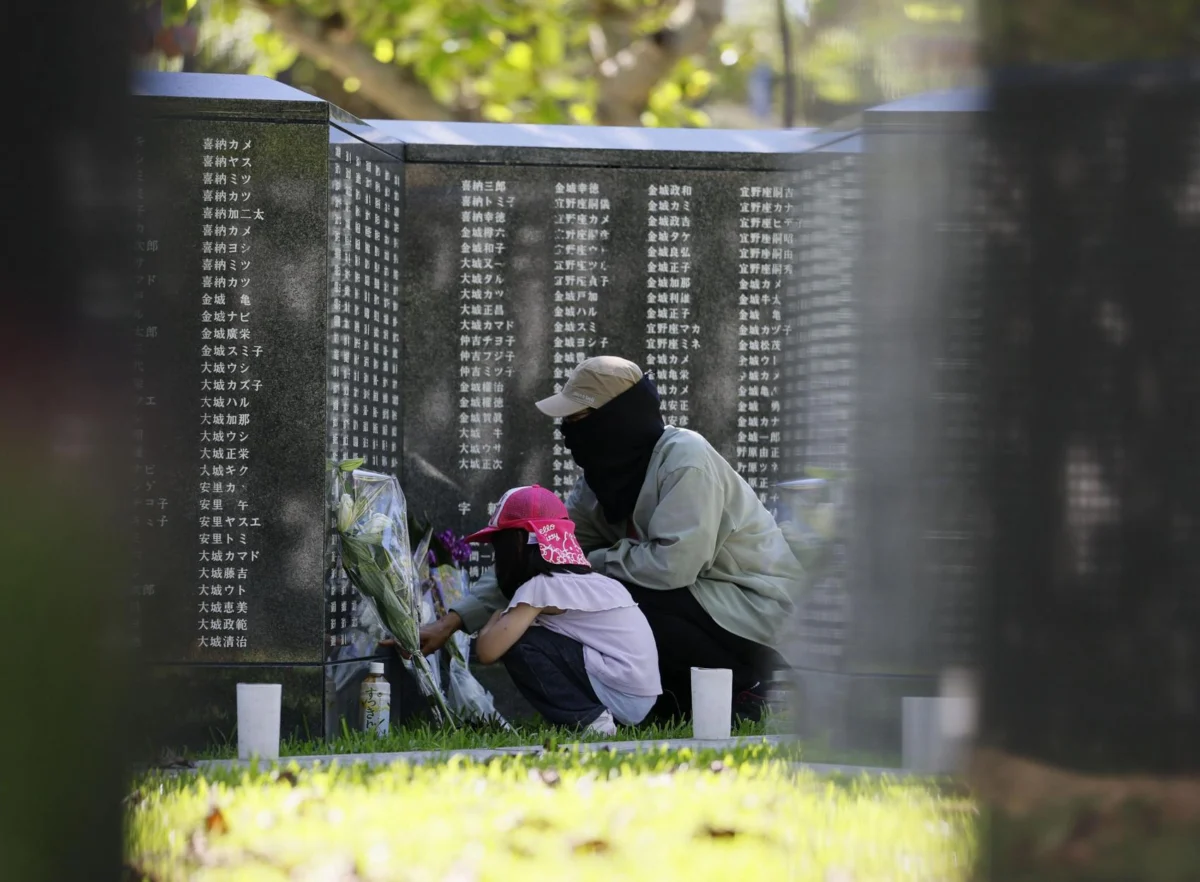
ITOMAN, OKINAWA — Under a somber sky at the Peace Memorial Park in Itoman, the prefecture of Okinawa observed a poignant milestone on Tuesday, marking 81 years since the conclusion of the Battle of Okinawa. The commemoration, held at the site where the final, bloody chapters of the Pacific War played out, served as both a requiem for the more than 200,000 lives lost and a sobering reflection on the prefecture’s precarious position in modern geopolitical tensions.
As the ceremony commenced, a profound silence descended upon the crowd—a silence that carried the weight of 242,659 souls now inscribed on the "Cornerstone of Peace" monuments. With the addition of 95 names this year, the memorial continues to serve as a stark reminder of the "Typhoon of Steel," a conflict that obliterated the social fabric of the island and left scars that have yet to fully heal.
The Chronology of Destruction: A Timeline of the 1945 Catastrophe
The Battle of Okinawa was not merely a military engagement; it was a civilian tragedy of unprecedented scale. The ordeal began in April 1945, when U.S. forces launched an amphibious invasion of the main island. For the Imperial Japanese Army, the defense of Okinawa was a strategic gambit intended to buy time for the defense of the Japanese mainland.
- April 1945: U.S. forces land on the main island of Okinawa, beginning an 82-day campaign of attrition.
- May 22, 1945: Facing mounting losses and the collapse of front lines, the Japanese army retreated to the southern reaches of the island. This tactical withdrawal forced soldiers into civilian settlements, effectively intermingling the non-combatant population with the front lines.
- June 1945: The fighting reached its zenith. The strategy of "total defense" resulted in a staggering loss of life, with one in every four Okinawans—men, women, and children—perishing during the conflict.
- Post-War Reality: The occupation of Japanese air bases by U.S. forces during the battle established the blueprint for the island’s post-war identity, as the U.S. military maintained control of the prefecture for 27 years before its formal reversion to Japan in 1972.
The Burden of History: Okinawa’s Ongoing Geopolitical Struggle
More than half a century after reverting to Japanese sovereignty, Okinawa finds itself at a geopolitical crossroads. While the rest of Japan enjoys the peace of the post-war era, Okinawa remains the primary staging ground for the U.S.-Japan security alliance.
Currently, Okinawa hosts approximately 70 percent of the facilities exclusively used by U.S. Forces Japan, despite accounting for only about 0.6 percent of Japan’s total land area. This concentration of military infrastructure is a constant source of friction between local residents and the central government in Tokyo.
The Henoko Relocation Controversy
Central to the current tension is the plan to relocate the U.S. Marine Corps Air Station Futenma. Currently situated in the densely populated Ginowan city—an area frequently described as the "most dangerous base in the world" due to its proximity to schools and hospitals—the government intends to move the facility to the coastal area of Henoko in Nago.
Many local Okinawans, however, argue that the base should be moved entirely out of the prefecture. Governor Denny Tamaki, speaking at Tuesday’s memorial, underscored the necessity of a diplomatic solution. "We remember the misery of war, and we vow to never repeat the folly," Tamaki stated. "Having borne the scars of war, it is Okinawa that can contribute to peace, as we hereby pledge to fulfill this role together with the rest of the world."
Official Responses and the Policy Gap
Prime Minister Sanae Takaichi, attending the ceremony in Itoman, attempted to address the growing divide between Tokyo’s strategic objectives and the local yearning for peace.
"We will work to reorganize, consolidate and reduce U.S. military facilities and areas in Japan," Takaichi pledged, "while cooperating with the people of Okinawa to promote the effective use of land formerly used by the U.S. forces."
However, observers note a palpable tension between these promises and the reality on the ground. As Japan bolsters its "Self-Defense" capabilities in the Nansei (Southwestern) Islands—citing rising tensions over Taiwan and the Senkaku Islands (controlled by Tokyo, claimed by Beijing as the Diaoyu)—Okinawa is being militarized once again.
For many residents, the deployment of missile batteries and the expansion of surveillance infrastructure across the Ryukyu island chain evokes terrifying echoes of 1945. There is a pervasive fear that in a conflict between superpowers, Okinawa would once again be treated as a sacrificial buffer zone.
The Fading Witness: Preserving Memory at a Crossroads
As the 81st anniversary passes, the physical link to the Battle of Okinawa is fraying. With the passing of the last generation of survivors, the preservation of the "Okinawa experience" has become a race against time.
Research indicates that nearly 60 percent of local high school students no longer have direct family members who can recount the horrors of the battle. This creates a vacuum in the intergenerational transmission of history. Without the firsthand emotional accounts of grandfathers and grandmothers who hid in caves or witnessed the "Typhoon of Steel," the war risks becoming a sterile entry in a history textbook rather than a living, breathing warning.
Governor Tamaki touched upon this fragility, highlighting the global context of the current moment: "Given the reality that even wars far from home impact our daily lives, to oppose all wars and realize peace is no ideal but [a] responsibility."
Supporting Data and Future Implications
The scale of the Battle of Okinawa remains a benchmark for the human cost of war. The following data points highlight the magnitude of the tragedy and the current political environment:
- Human Toll: 242,659 total deaths recorded, encompassing military personnel from both sides and a devastatingly high civilian casualty count.
- Land Utilization: 70% of U.S. base land in Japan is concentrated in Okinawa.
- Regional Security: The "Taiwan Factor" has placed Okinawa at the center of the Indo-Pacific strategy. The island’s proximity to Taiwan—less than 100 miles at its closest point—makes it a strategic lynchpin for the U.S. and Japan, but a target for potential adversary escalation.
The Path Forward
The implications for Okinawa are profound. The prefecture is attempting to redefine its role from a "fortress of the Pacific" to a "bridge for peace." However, as long as the strategic requirements of Tokyo and Washington prioritize the geographic advantages of Okinawa, the prefecture will continue to grapple with the contradiction of being a site of peace-building that is simultaneously a site of intense military preparation.
As the ceremony concluded with the recitation of a peace poem by a middle school student, the message was clear: the youth of Okinawa are being handed the mantle of memory. Whether they will be able to balance the heavy legacy of 1945 with the volatile realities of the 21st century remains the defining question for the island’s future.
In the final analysis, the 81st anniversary is not just an act of remembrance; it is an appeal. It is a plea to the international community to recognize that for those who live on these islands, peace is not a diplomatic goal—it is a condition for survival. As the sun set over the East China Sea, the monuments at Itoman stood as a silent testament to a history that refuses to be buried, and a future that remains caught in the crosshairs of global power politics.
© KYODO



 Asro
Asro