

Editor’s Note: The following feature contains spoilers for the first season of "Spider-Noir," now streaming on Prime Video.
The superhero genre has long been defined by its spectacle—massive CGI battles, gravity-defying physics, and the polished sheen of modern metropolis architecture. However, Amazon’s Spider-Noir takes a sharp, jagged turn away from the glossy aesthetics of the Marvel Cinematic Universe, opting instead for the grimy, smoke-filled, and morally ambiguous streets of Depression-Era New York. At the heart of this atmospheric shift is Ben Reilly, portrayed by Nicolas Cage with the weary, hungover cynicism of a hard-boiled detective plucked from a Bogart film.
For the production team, the challenge was twofold: they needed to capture the classic visual language of film noir while maintaining the superhero "DNA" that defines a Spider-Man story. This delicate balancing act fell squarely on the shoulders of VFX Supervisor Hnedel Maximore and VFX Producer Brooke Noska, who were tasked with turning a modern production shot largely in Los Angeles into a living, breathing relic of the 1930s.
The Architecture of Despair: Building a Hard-Boiled World
To understand the visual identity of Spider-Noir, one must look at the tension between the grit of the streets and the cold indifference of the city’s elite. Unlike the sweeping, heroic vistas of Into the Spider-Verse—the film that introduced Cage’s iteration of the character—the series demands a grounded, tactile reality.

"We’ve got to see the poorest areas of New York, but we also get to see the richest rooftops and the high-class characters in rich environments dressed to the nines," VFX Producer Brooke Noska explained in an interview. "But also we lean into Hoovervilles, into this real time in American history. It’s not big monsters tearing up the city. It’s very personal. It’s very organic."
The VFX team found themselves in an unusual position. Rather than focusing on grand-scale destruction, their work was largely "invisible." It was about the meticulous recreation of a specific era, ensuring that the shadows felt deep enough to hide a secret and the rain felt heavy enough to wash away a sins. Even the signature webs of this Spider-Man were reimagined; they are frayed, grey, and brittle, mirroring the frayed sanity and physical exhaustion of a middle-aged hero who is clearly coming apart at the seams.
A Chronology of Creative Pivots: The Making of Episode 6
The production process for Spider-Noir was defined by a culture of collaboration, where the VFX team was embedded into the creative process from day one. This was never more apparent than during the production of the pivotal sixth episode, "Nightmare on a Gurney."
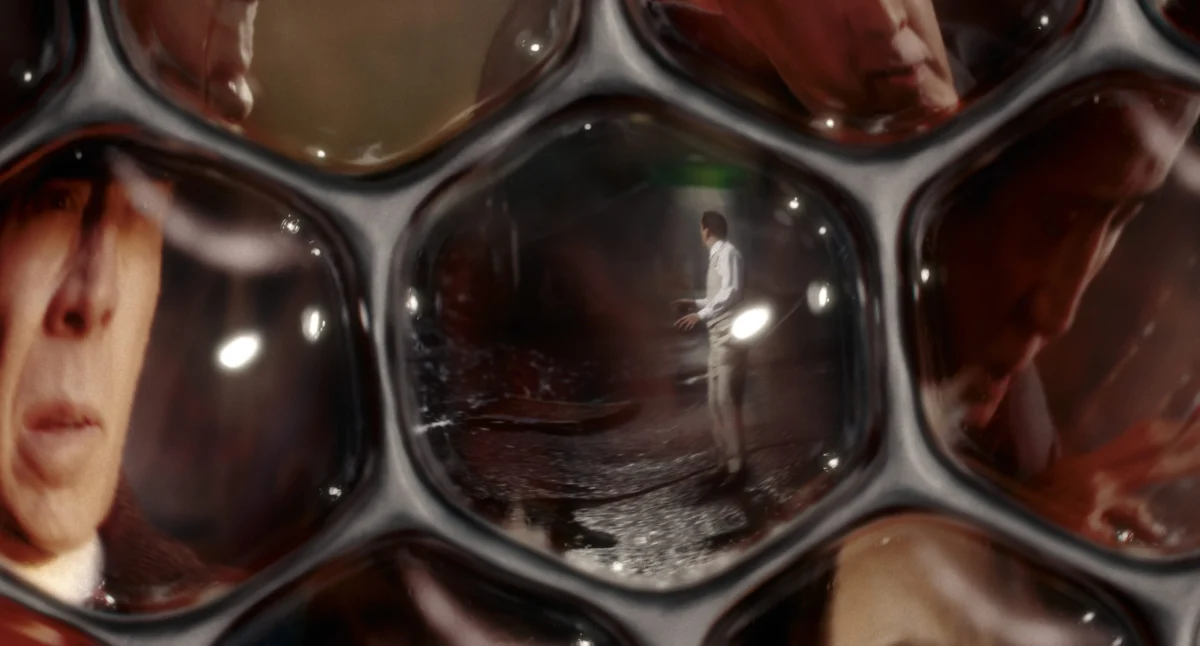
As the narrative reaches its climax, Ben Reilly is captured by Dr. Faber (Amy Aquino) and subjected to a harrowing psychological breakdown. The script called for a fever dream that would manifest Ben’s trauma—a sequence that would see him shrunk to "spider-height," navigating his own office desk as a terrifying, surreal landscape.

However, the initial footage proved difficult to translate from the page to the screen. The pacing felt disconnected, and the visual weight of the scene failed to convey the sheer claustrophobia of Ben’s mental state. It was here that showrunner Oren Uziel’s commitment to collaborative problem-solving proved vital.
"I love that Oren has this ability to pivot," VFX Supervisor Hnedel Maximore noted. "He brings all hands on deck to find solutions, and it’s amazing. He was like, ‘Can you guys pitch a couple ideas of how we can rework this scene?’"
The Hitchcock Influence
Drawing from the show’s "bible" of noir inspirations, Maximore proposed an homage to Alfred Hitchcock’s 1945 masterpiece Spellbound. Specifically, he pointed toward the film’s iconic dream sequence—a surreal, geometric nightmare designed by the legendary Salvador Dalí.
By utilizing digital environments to shrink Cage’s character, the VFX team was able to transform an office setting into a warped, abstract reality. This approach allowed the production to lean into the uncanny, making Ben’s metamorphosis into a metaphorical spider both visually arresting and psychologically unsettling. The team successfully used the VFX toolset not as a crutch for spectacle, but as a narrative instrument to externalize internal pain.

The Organic Approach: Grounding the Surreal
Despite the high-concept nature of the dream sequences, the team remained committed to a "tactile" philosophy. Even in the most surreal moments of the series, the VFX team insisted on using practical, real-world objects from the set to maintain a sense of physical weight.
"Even in that sequence, we used real objects from the show, going back to the organic nature of the project," Noska said. "You can have trippy, drug-induced sequences; you can watch anything from the late 90s and see that drugs were absolutely included. But honing it down to Ben Reilly and his experience and where he is in this moment, where he came from and where he’s headed… I mean, he was really on a treadmill running through space, so it’s not hard to make it look like it’s actually him going through this."
The success of the VFX in Spider-Noir lies in its restraint. As Noska put it, the team avoided the urge to shout "jazz hands" regarding their technical achievements. Instead, the focus was always on the "invisible" work—sculpting the environment around the performances so that the audience never questions the reality of the scene, regardless of how surreal the situation becomes.
Official Responses and Collaborative Synergy
The success of Spider-Noir serves as a case study for the importance of early VFX integration. Unlike many productions where visual effects are treated as a post-production afterthought, Maximore and Noska were involved in the series’ earliest developmental phases.

"The DP and I started the same day. The production designer started a week later, and then Brooke started a couple weeks after me," Maximore revealed. "We were there from the beginning helping establish the look of the show and the pace and timing of the show as much as possible. And now we’re so privileged that people are getting to see this and enjoy it."
This collaborative structure allowed the team to work seamlessly across departments, ensuring that the show’s distinct black-and-white aesthetic (and its color-version counterparts) remained consistent. They acted as what Noska describes as the "emotional support blanket" for the production, bridging the gap between the actors’ performances and the final, polished product.
Implications for the Future of Superhero Storytelling
The implications of Spider-Noir’s success are significant. The series proves that audiences are hungry for "superhero" stories that prioritize tone, character, and historical grounding over endless CGI explosions. By blending the gritty, pessimistic tropes of classic film noir with the tragic, isolated figure of a middle-aged Spider-Man, Amazon has created a unique sub-genre.
Furthermore, the project demonstrates that VFX can—and should—be used as a storytelling tool rather than just a visual spectacle. By allowing artists like Maximore and Noska to influence the narrative beats—such as the Spellbound-inspired sequence—production teams can achieve a level of creative cohesion that is often missing from major franchise entries.

As Spider-Noir continues to find its audience on Prime Video, it stands as a testament to the idea that even in a world of superheroes and alternate dimensions, the most compelling stories are the ones that feel the most human. Whether it is through the fraying, grey webs of a tired hero or the surreal, Dalí-esque nightmares of a broken mind, the team behind Spider-Noir has proven that the shadows are where the most interesting stories are told.











No comments yet. Be the first to join the conversation!