Laily UPN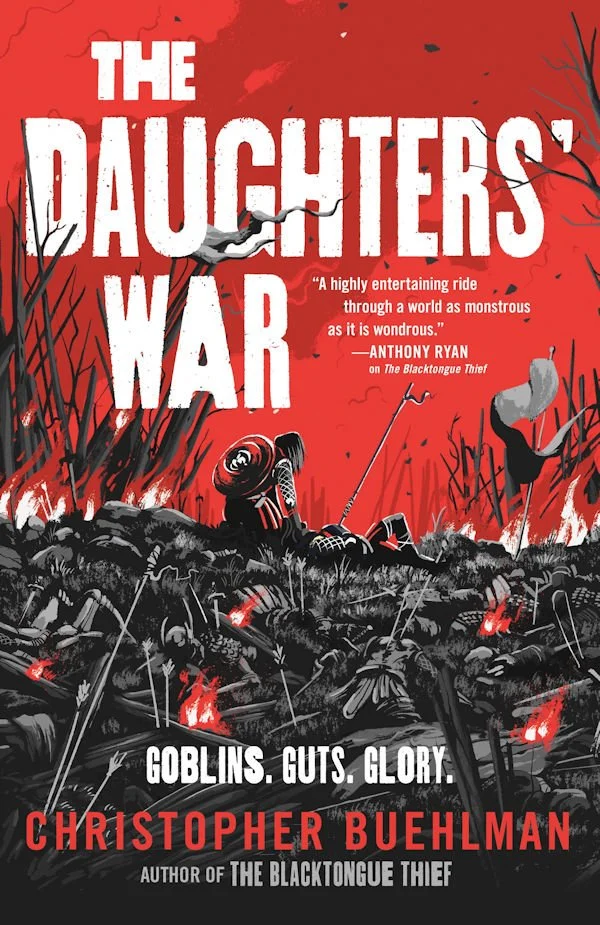
In the landscape of modern dark fantasy, few authors have managed to marry the grotesque with the poignant as effectively as Christopher Buehlman. With the release of The Daughters’ War, a harrowing prequel to his critically acclaimed The Blacktongue Thief, Buehlman invites readers to return to a world defined by its blood-soaked soil and the relentless encroachment of an ancient, terrifying foe. The novel serves not merely as a bridge to previous works, but as a standalone testament to the cost of survival in a world where humanity is treated as little more than livestock.
The State of the World: Main Facts and Premise
The Daughters’ War thrusts the reader into a continent teetering on the precipice of total annihilation. The antagonist force—the Biters—represents a significant departure from the comic, bumbling goblins of traditional fantasy. These are creatures torn from the darkest pages of medieval folklore: grotesque, intelligent, and utterly devoid of empathy. To the Biters, humanity (known in the text as "kynd") is merely a commodity to be caged, slaughtered, and consumed.
The story centers on Galva, a scion of the influential Dom Braga family. Eschewing the comfort and safety of her birthright, Galva commits herself to the front lines, joining the "Raven Knights." This experimental, all-female military unit is the desperate response of a broken civilization. Their primary tactical advantage is as lethal as it is disturbing: the corvids. These are not mere animals, but massive, magically engineered war birds, forged through dark arts to serve as sentient, feathered engines of destruction.
The central conflict is stark: a war of attrition where the stakes are absolute. As Galva marches toward a city held by the goblin horde, the narrative explores the intersection of high-stakes military fantasy and the intimate, crushing weight of personal tragedy.
Chronology of a Conflict: A Narrative Trajectory
The narrative structure of The Daughters’ War is a masterclass in pacing, utilizing a dual-perspective approach to contrast the brutal reality of the battlefield with the introspective yearning of those left behind.
The Front Lines: Galva’s Ascent
The primary narrative follows Galva’s journey through the "killing grounds." The early chapters intentionally throw the reader into the deep end of a world already consumed by war. There is little exposition to hold the reader’s hand; one must navigate the geopolitical and existential dread alongside the protagonist. Galva begins as a resolute, perhaps even cold, figure. Her evolution from a detached soldier into a nuanced, deeply feeling human being—tempered by the loss of her brothers and the horrors of the front—forms the emotional backbone of the book.
The Journal of Amiel: A Counterpoint
Interspersed throughout the main narrative are the journal entries of Galva’s younger brother, Amiel. If Galva represents the "bloody hand" of war, Amiel represents the romanticized, sensitive perspective of those witnessing the conflict from a distance. These entries provide a vital contrast, softening the narrative and offering a window into the familial bonds that Galva is fighting to protect.
The Climactic Resolution
The novel’s final act is a tour de force of emotional and visceral intensity. It builds toward a conclusion that manages to reconcile the grim realities of the setting with a deeply satisfying narrative arc. The ending serves to elevate Galva’s character, providing the necessary context for her temperament in The Blacktongue Thief.
Supporting Data: The Anatomy of a Medieval Nightmare
To understand the impact of Buehlman’s work, one must examine the specific elements that elevate the text above the standard grimdark genre fare.
The Corvids: A Unique Tactical Asset
The corvids are the most compelling piece of world-building in the novel. These birds are not just weapons; they are characters. Their relationship with the Raven Knights is one of profound mutual reliance. They represent the thin line between victory and total consumption by the Biters. The bond between human and bird serves as a surrogate for the family ties that Galva loses as the war progresses.
The Depiction of the "Biters"
The Biters are arguably the most unsettling element of the book. By framing them as "cattle-herders" of humans, Buehlman strips away the "fantasy creature" trope and replaces it with a visceral, predatory terror. This is not a war of ideologies; it is a war of survival against a force that does not view humans as sentient peers.
Pacing and Atmospheric Tension
Buehlman employs a "measured approach" to pacing. Unlike epic fantasy series that rely on constant escalation, The Daughters’ War features deliberate lulls. These moments of stillness—where characters eat, bond, or reflect—are where the true weight of the story is felt. They prevent reader fatigue and make the subsequent bursts of violence significantly more jarring and impactful.
Official Perspectives and Critical Reception
While the novel has been lauded for its visceral combat scenes, early critical reviews have noted that the opening of the book requires patience. Some readers found the protagonist, Galva, to be one-dimensional in the initial chapters. However, literary analysis suggests this was a deliberate narrative choice by Buehlman. By presenting a hardened exterior, he allows the reader to experience the gradual "softening" of her character as more organic and earned.
The combat itself has been noted for its lack of "over-technical" strategy. Instead, Buehlman focuses on the raw, chaotic carnage of medieval warfare. It is, by all accounts, a masterclass in writing violence that feels authentic rather than glorified.
Implications for the Series and Beyond
The release of The Daughters’ War has profound implications for the broader Blacktongue universe. As a prequel, its primary objective is to flesh out the foundations of a world that fans already inhabit.
Re-evaluating The Blacktongue Thief
With this newfound depth provided to Galva, a re-read of the original novel is now essential. Actions and temperaments that previously seemed mysterious or harsh now carry the heavy, tragic weight of the events depicted in this prequel. It transforms Galva from a static character into a deeply layered survivor whose resilience is earned through blood.
The Future of the Franchise
The conclusion of The Daughters’ War leaves readers primed for the next installment in the series. With the announcement that The Thrice-Bound Fool is slated for an October release, the momentum for this fantasy universe is at an all-time high.
A Synthesis of Resilience
Ultimately, the novel succeeds because it is not just about a war; it is about the "blood-soaked mire" of human existence. It explores the intersections of:
- Unconditional Love: The bonds between family members and companions.
- Personal Discovery: Galva’s exploration of her own identity and sexuality amidst the chaos.
- Resilience: The capacity to maintain one’s humanity when the world demands you become a monster.
In the words of Galva herself, "Short life, bloody hand." This phrase serves as the ethos for the entire work. It is a promise of the brutality to come, but also a statement of defiance against an uncaring, consumption-obsessed enemy. Christopher Buehlman has delivered a work that is quiet in its devastation and loud in its impact, cementing his place as a leading voice in modern fantasy. Whether you are a newcomer to this world or a long-time reader of The Blacktongue Thief, The Daughters’ War is a mandatory, if haunting, experience.

 Siti Muinah
 Raul Delapena Setiawan