Nana Muazin
In an era where our mobile devices serve as the central nervous system of our daily lives, "low battery" is more than a minor inconvenience—it is a disruption of productivity. While users often obsess over screen brightness, background app activity, and software optimization to preserve battery health, the most significant factor in daily convenience is often overlooked: the speed at which that battery is replenished.
Despite Apple’s reputation for seamless integration, the company has historically been opaque regarding the technical specifications of its charging standards. With the removal of power adapters from retail packaging—a move initiated in 2020—many consumers are inadvertently throttling their modern devices by relying on legacy hardware. Understanding the charging limits of your iPhone or iPad is no longer just a technical exercise; it is essential for anyone looking to maximize their hardware’s lifespan and utility.
The Fundamentals: How Charging Speeds Are Measured
To understand why your device takes hours to charge, we must first distinguish between battery capacity and energy delivery. Battery capacity is measured in milliamp-hours (mAh), a metric that quantifies the total electrical charge a battery can store. Think of this as the size of a water tank. A smartphone battery typically hovers around 3,500mAh to 5,000mAh, while tablets, which require more sustained power, often exceed 10,000mAh.
Charging speed, conversely, is measured in watts (W). Power—or wattage—is the product of voltage and amperage. When you plug a device into a wall outlet, the charger negotiates with the device’s internal Power Management Integrated Circuit (PMIC) to determine how much power the battery can safely intake.
Battery Metrics in Modern Hardware
The disparity in charging requirements is best illustrated by the latest Apple lineup:
- iPhone 17: 3,692mAh
- iPhone 17 Pro Max: 5,088mAh
- iPad 11th Gen (2025): 7,698mAh
- 13-inch M5 iPad Pro: 10,290mAh
While a 140W charger might be perfect for a MacBook Pro, delivering that much power to an iPhone would be dangerous without sophisticated internal regulation. Apple, along with most major manufacturers, utilizes the USB Power Delivery (USB-PD) standard, which allows for "handshaking." The charger and the device communicate to ensure the device only draws what it can handle, preventing thermal runaway and battery degradation.
The Evolution of Charging: From 5W to 60W
The history of iPhone charging is a study in incrementalism. For over a decade, Apple bundled a 5W "cube" charger with its smartphones. To put this in perspective, charging an iPhone 17 with a 5W brick is akin to filling a swimming pool with a garden hose; it is functional, but woefully inefficient by modern standards.
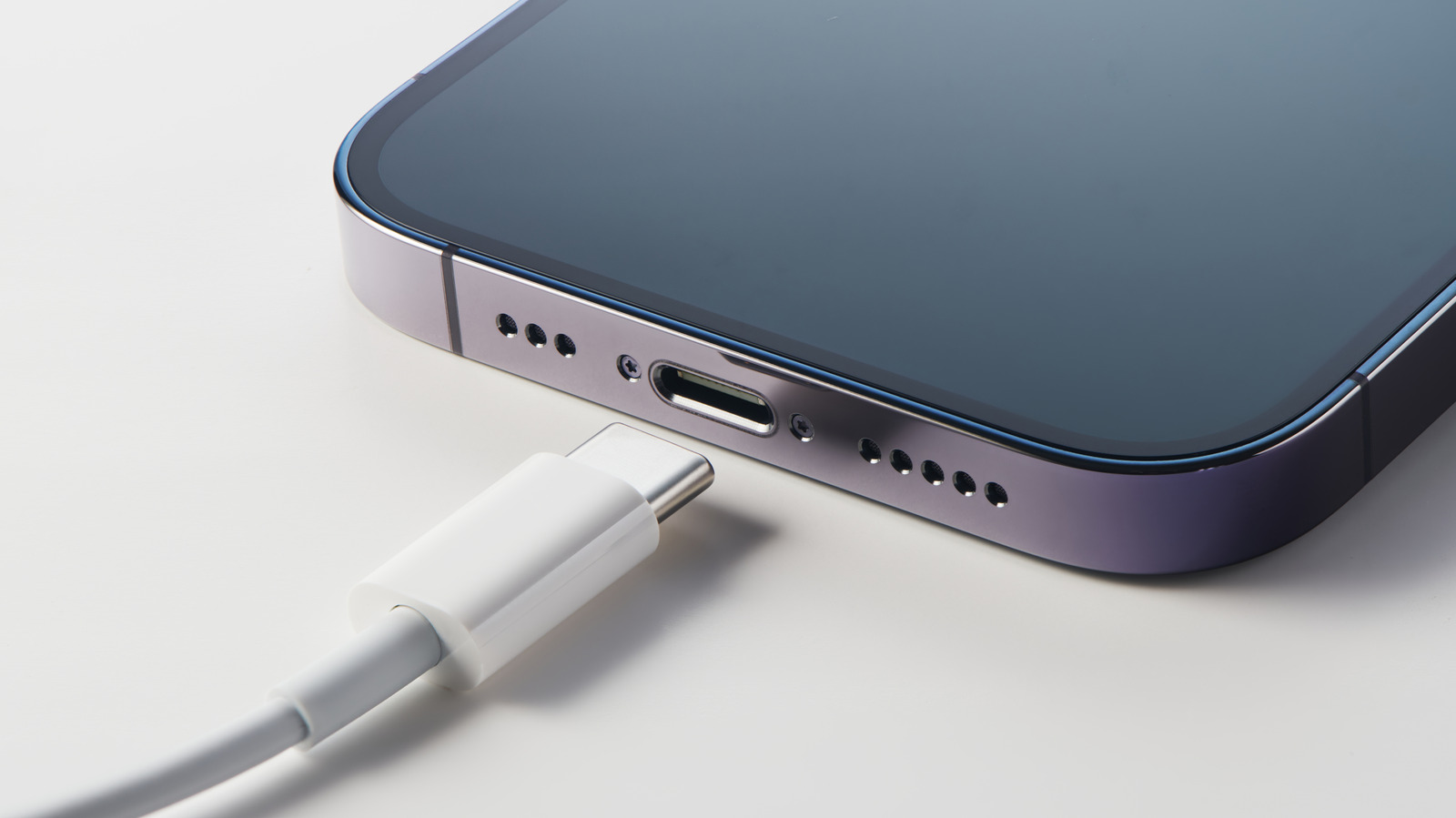
Chronology of Charging Benchmarks
- The 5W Era (iPhone 11 and earlier): For years, the industry standard for Apple was the 5W charger. While safe, it meant that users could expect charge times exceeding three hours for a full cycle.
- The Transition (iPhone 11 Pro/12/13/14): As USB-C adoption began to take hold, Apple slowly increased support for higher wattages, moving to 18W and eventually 20W adapters.
- The Current Standard (iPhone 17 Series): With the latest flagship series, Apple has unlocked 40W charging capabilities for the 17, 17 Pro, and 17 Pro Max. Interestingly, the ultra-thin iPhone Air is hardware-limited to 20W due to its compact internal volume, which requires stricter thermal management.
- The Tablet Frontier: iPads have always demanded more power. The 2025 base model iPad supports up to 45W, while the high-performance M5 iPad Pro pushes the envelope to 60W, allowing for rapid replenishment of its massive 10,290mAh cell.
Supporting Data: Why Your Current Brick Might Be the Problem
The most pervasive issue for modern users is "charger inertia." Because Apple no longer includes a power brick, users often reuse the oldest adapter they have in their junk drawer. If you are using a 5W or even an 18W charger on an iPhone 17 Pro Max, you are physically unable to reach the device’s peak charging speed.
Furthermore, third-party accessories have evolved. While the original Apple 20W charger was once the gold standard, companies like Anker, Ugreen, and Satechi have mastered GaN (Gallium Nitride) technology. GaN chargers are smaller, more efficient, and produce less heat than traditional silicon chargers. A 65W GaN charger can often power an M5 iPad Pro at its full 60W speed while simultaneously charging an iPhone 17 at its peak 40W, all from a device no larger than a deck of cards.
Official Responses and Industry Implications
Apple has maintained a consistent, albeit quiet, stance on this issue. By supporting the USB-PD standard, the company effectively offloads the responsibility of fast charging to the consumer. The official line from Cupertino is that any USB-PD certified charger will work, but to achieve "fast charging," one must use a power adapter that meets or exceeds the device’s maximum supported wattage.
The implications of this are twofold:
1. Consumer Misconception
Many users believe that "fast charging" harms battery health. While heat is indeed the enemy of lithium-ion batteries, modern smartphones utilize advanced thermal management software that slows down the charging rate as the battery nears 80% capacity (trickle charging). Using a high-wattage charger does not force the battery to absorb more power than it can handle; it simply provides the "headroom" required for the device to draw its maximum safe current.
2. Environmental Impact and E-Waste
Apple’s decision to remove chargers from the box was marketed as an environmental initiative to reduce e-waste. However, this has created a secondary market of low-quality, inefficient chargers. Consumers who do not understand the distinction between a 5W and a 45W charger often purchase cheap, uncertified adapters that are less efficient and have shorter lifespans, arguably creating more e-waste in the long run.
Recommendations for the Modern User
If you want to ensure your device is charging at its absolute fastest, follow these three steps:
1. Audit Your Accessories: Check the fine print on your current power brick. If the output is listed as 5W, 10W, or even 12W, it is time to recycle it. These are outdated.
2. Invest in GaN Technology: When purchasing a new charger, look for "GaN" branding. These chargers are more reliable and run cooler, which is better for the long-term health of your battery. Ensure the brick supports USB-PD (Power Delivery).
3. Match the Wattage: For an iPhone 17, a 40W or 45W charger is sufficient. For an M5 iPad Pro, ensure your charger can provide at least 60W. If you have multiple devices, a 100W multi-port GaN charger is a singular solution that can handle your phone, tablet, and even a laptop simultaneously without sacrificing speed.
Conclusion: The Future of Power
We are moving toward a future where charging speeds will continue to climb, likely hitting 100W+ for mobile devices in the coming years. As battery technologies improve and cooling solutions become more sophisticated, the "bottleneck" will shift from the charger to the battery chemistry itself.
However, for now, the limitation is often the user’s hardware setup. By moving away from legacy 5W chargers and investing in modern, high-wattage USB-PD bricks, you can reclaim hours of your time each week. Charging your device isn’t just about filling a tank—it’s about matching the potential of your hardware with the power source it deserves. Don’t let a decades-old charging brick slow down your 2026 flagship experience.

 Neng Nana
 Sagoh
Sagoh