

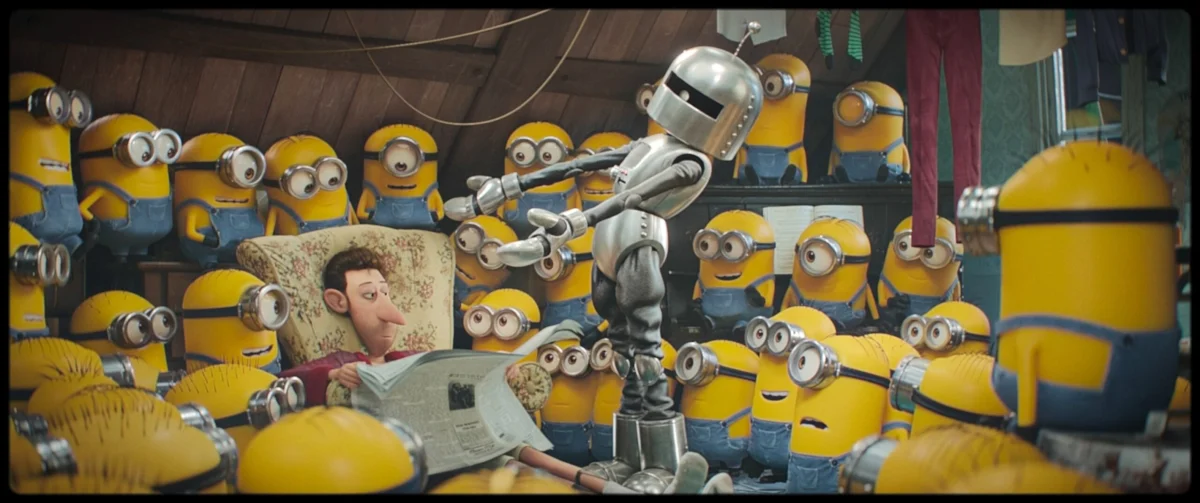
The 4th of July weekend has long been a sacred corridor for the American box office, a time when family-friendly tentpoles typically generate explosive returns. Yet, this year’s holiday frame felt distinctly tempered. As the latest entry in the juggernaut Despicable Me franchise, Minions & Monsters, hit theaters, the anticipated fireworks were noticeably absent. Despite securing the top spot at the domestic box office, the film’s $62 million five-day opening represents a franchise low, signaling a potential shift in the audience’s appetite for Illumination’s iconic yellow mascots.
The State of the Industry: A Softer Holiday Frame
To understand the performance of Minions & Monsters, one must view it through the lens of a broader domestic malaise. According to data from Rentrak, the total domestic box office for the July 4th weekend tallied a meager $121.3 million—a staggering 23 percent decline compared to the same period in 2025.
The industry’s struggle was compounded by the rapid decay of other mid-summer releases. Supergirl, once heralded as a potential blockbuster, plummeted a disastrous 74 percent in its second weekend, netting only $9.6 million. With the market already feeling the strain of "sequel fatigue" and a lack of breakout original hits, the burden fell squarely on the shoulders of the Minions to anchor the holiday earnings. When a franchise as historically reliable as Despicable Me underperforms, the ripple effects are felt across the entire exhibition sector.
A Chronology of Minion Dominance
Since the release of the original Despicable Me in 2010, Illumination has maintained a nearly bulletproof track record. For 16 years, the franchise has been the gold standard for high-concept, low-cost animation.
- 2010: The original Despicable Me introduces the world to Gru and his bumbling minions, launching a multi-billion dollar empire.
- 2022: Minions: The Rise of Gru proves the franchise is still in its prime, delivering the second-biggest opening of the series and reaching a massive $370.5 million domestic total.
- 2024: Despicable Me 4 sustains the momentum, opening with $75 million over a traditional three-day weekend and eventually securing $361 million domestically.
- 2026: Minions & Monsters arrives, marking the seventh film in the franchise. Despite critical acclaim and a modest $85 million budget, it opens to a franchise-low $62 million over five days.
The stark contrast between the three-day weekend performances is telling. While Despicable Me 4 pulled in $75 million in its opening three days, Minions & Monsters managed only $36.4 million in the same timeframe—roughly half the volume of its predecessor. Even if the film enjoys a healthy "tail" and manages to replicate the 5x multiplier seen by Despicable Me 4, it would peak at roughly $175 million domestic—a far cry from the $300 million-plus heights the series once commanded.

Data Deep-Dive: Why the Disconnect?
The mystery of Minions & Monsters lies in the data, which offers no easy explanations. Audience demographics—spanning gender, age brackets, and racial profiles—are nearly identical to those of previous entries. The film also boasts an A- CinemaScore, indicating that those who did show up were thoroughly satisfied.
Furthermore, critical reception has been remarkably strong. With a 69 on Metacritic and a 91 percent approval rating on Rotten Tomatoes, the film has been lauded as an inventive love letter to Old Hollywood, filled with silent-film homages and Golden Age visual gags. It is a rare case where the quality of the film is not in question, but the commercial reception is.
The Competition Factor: The Shadow of Pixar
One theory gaining traction among analysts is the "Toy Story Effect." Toy Story 5, currently in its third weekend, continues to be a formidable adversary, pulling in another $31 million. While Despicable Me films have historically contended with fierce competition—such as Inside Out 2 or Lightyear—they have traditionally thrived. The fact that the audience is now splitting its ticket dollars between two massive animation brands suggests that the market may finally be reaching a saturation point for family-oriented animated sequels.
Implications for Illumination and Universal
While the opening of Minions & Monsters is a disappointment, it would be premature to write off Illumination. The studio remains in a dominant position within the global market.
- Global Resilience: While domestic numbers are tepid, the film has already brought in $160.5 million globally. Given its disciplined $85 million production budget, the film is essentially guaranteed to turn a profit, justifying the studio’s continued investment in the brand.
- The Nintendo Pipeline: Illumination’s partnership with Nintendo remains a gold mine. The Super Mario Galaxy Movie surpassed the $1 billion global mark earlier this year and is currently finding a second life on Peacock. The studio has a clear roadmap for the future, with the original film Not Alone slated for April 16, 2027, and an unannounced Nintendo property—potentially Super Smash Bros. or a Donkey Kong spinoff—due in 2028.
The studio has also signaled that there is life beyond the Minions, with potential third installments for The Secret Life of Pets and Sing in the wings. This diversification is a strategic hedge against the potential decline of their most famous franchise.

The Verdict: A Necessary Hiatus?
In the world of animation, longevity is the ultimate prize, but it is also a double-edged sword. When a franchise spans seven films in 16 years, the law of diminishing returns becomes an inevitable obstacle.
The audience, while still fond of the Minions, may be signaling that they are ready for something new. The Minions films have become a staple of modern childhood, a visual shorthand for family entertainment. However, even the most beloved mascots need room to breathe.
If there is a lesson to be learned from the lukewarm reception of Minions & Monsters, it is that brand loyalty is not an infinite resource. The audience is sophisticated, and while they appreciate a high-quality product, they are increasingly sensitive to repetitive cycles. The Minions aren’t going away—they are too profitable and too culturally embedded to vanish—but a strategic retreat from the spotlight might be exactly what the "little yellow pillboys" need to remain relevant.
For now, the industry will look to the remainder of the summer to see if Minions & Monsters can defy the odds and build a longer, more sustainable run. But for the analysts at the box office, the message is clear: the era of automatic, record-breaking openings for the franchise may be coming to a close, giving way to a more cautious, measured reality for animated tentpoles.
As the credits roll on this latest outing, the question remains: does the audience want more of the same, or are they waiting for Illumination to reach into their creative bag of tricks and pull out something as fresh and surprising as the original Despicable Me was back in 2010? Only time—and perhaps a long vacation for the Minions—will tell.










