Basiran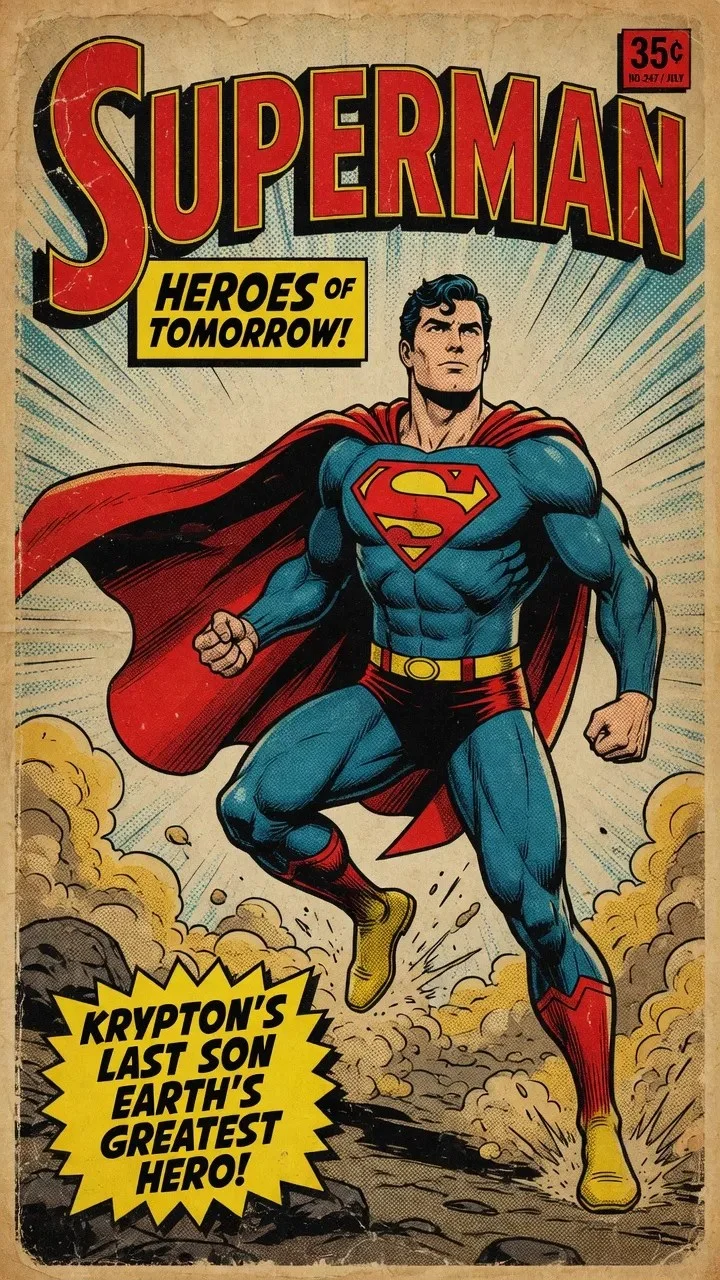
Since his monumental debut in the pages of Action Comics #1 in 1938, Superman has transcended his medium to become the definitive archetype of the modern superhero. Created by Jerry Siegel and Joe Shuster, the "Man of Steel" did more than just introduce the concept of the costumed vigilante; he established a global lexicon of hope, justice, and the indomitable spirit of humanity. Today, more than eight decades later, his influence remains as potent as ever, finding new life in the hands of contemporary digital artists, comic collectors, and graphic designers who continue to interpret his legacy through high-quality, illustrative posters and dynamic artwork.

The Chronology of an Icon: From 1938 to the Digital Age
To understand the enduring popularity of Superman, one must look at his evolution through the decades.

- The Golden Age (1938–1950s): Superman emerged during the Great Depression as a beacon of moral certainty. The bold colors—primary blue, red, and yellow—were designed to stand out on crowded newsstands. This era established the "S" shield as the most recognizable logo in pop culture.
- The Silver and Bronze Ages (1950s–1980s): As comic book technology improved, so did the visual representation of the hero. The art became more dynamic, and the scope of his powers expanded, allowing for more dramatic, epic storytelling.
- The Modern Era (1990s–Present): With the advent of digital illustration, the Man of Steel has been reimagined through hyper-realistic rendering, stylized minimalism, and cinematic compositions. Today’s artists are not just drawing a hero; they are capturing the essence of a god-like being living among us.
The Anatomy of a Symbol: Why We Still Need the Man of Steel
The "S" shield is not merely a piece of branding; it is a semiotic masterpiece. In the narrative of the DC Universe, it represents the crest of the House of El, which translates to "hope." This deep, semiotic resonance is why graphic designers and illustrators gravitate toward him as a subject.

When artists craft Superman posters, they are engaging with a visual language that signifies safety and stability. The classic "soaring" pose against the Metropolis skyline, for instance, serves as a shorthand for peace and vigilance. Unlike other anti-heroes who operate in the shadows, Superman is a daylight character, and the artwork celebrating him almost universally utilizes bright, optimistic palettes that reflect this core trait.

Supporting Data: The Market for Superhero Aesthetics
The appetite for superhero-themed interior design and collectible art has seen a massive surge in the last decade. According to industry trends in home décor and digital media, "geek culture" art—specifically high-end illustrations—has moved from niche hobbyist circles into the mainstream design industry.

- Professional Utility: Graphic designers often utilize these illustrations as benchmarks for dynamic composition, color theory, and character weight.
- Collectibility: Limited edition prints and digital assets have become a primary way for fans to curate their living spaces. Whether it’s a vintage-inspired screen print or a sleek, modern digital render, these pieces act as "visual anchors" in gaming rooms, home offices, and entertainment hubs.
- Digital Accessibility: Platforms that offer unlimited access to creative assets have seen a 40% increase in search volume for "comic book" and "superhero" related design elements, indicating that the aesthetic of the Golden Age is currently enjoying a stylistic renaissance.
Official Perspectives: The Artist’s View on the Man of Steel
Professional illustrators who focus on the superhero genre often describe the process of drawing Superman as a study in "restrained power." Unlike characters that rely on gadgets or darkness, Superman’s presence is defined by his posture and the way he occupies space within the frame.

"When you illustrate Superman, you aren’t just drawing a man in a cape," says one leading digital artist in the field. "You are drawing the concept of weightlessness and moral gravity. The challenge is to make him look powerful without making him look aggressive. His strength is meant to be a comfort, not a threat."

This perspective is reflected in the current collection of illustrated posters. Notice how many depictions feature him looking toward the horizon or shielding the city—he is always the "Guardian of Tomorrow." These artworks serve as a testament to the fact that Superman remains our most trusted cultural avatar.

Implications for Future Design and Pop Culture
The influence of these posters goes beyond simple decoration. They represent the democratization of art; where once, iconic comic art was relegated to the back of a drawer, it now holds a place of honor in professional studios and contemporary homes.

As we look toward the future, the implications are clear: the "Man of Steel" is not a relic of the past, but a living foundation for future creative expression. As technology advances, we see artists experimenting with 3D-style shading, neon-noir lighting, and abstract geometric interpretations of the "S" shield.

The integration of Superman into modern home décor serves as a reminder that we still value the archetype of the "selfless hero." In an increasingly complex world, the clear, bright, and hopeful imagery of a hero who stands for "truth, justice, and a better tomorrow" remains a psychological balm.

The Ultimate Collection: Curating the Heroic Aesthetic
For those looking to integrate these legendary visuals into their own environments, the current landscape of digital illustration offers endless variety. Whether you prefer the raw, ink-heavy style of the 1940s or the polished, cinematic look of the 2020s, there is a piece of art that perfectly encapsulates the spirit of the Man of Steel.

Key Elements of a Great Superman Poster:
- Dynamic Composition: The hero should feel as though he is in motion, even when standing still.
- Color Hierarchy: The interplay between the iconic red, blue, and yellow must be balanced to draw the eye to the hero first.
- Environmental Context: The cityscape of Metropolis acts as a necessary contrast, grounding the otherworldly hero in a familiar, urban setting.
- Narrative Intent: A great poster tells a story. Is he saving a life? Is he watching over the skyline? Is he a symbol of hope at sunrise?
Final Reflections
Superman’s longevity is a direct result of his adaptability. He has survived the transition from newsprint to digital screens, from radio dramas to global film franchises. Yet, through all these changes, the core image of the hero—the cape flowing, the shield prominent, the gaze steady—has remained constant.

By celebrating his legacy through these posters and illustrations, we are doing more than just appreciating art. We are participating in a global conversation about what it means to be a hero. We are acknowledging that, no matter how much the world changes, there will always be a place for the man who flies, who protects, and who inspires us to look up at the clouds and dream of a better tomorrow.

As these illustrations demonstrate, the Man of Steel is more than just a character; he is a permanent fixture in the collective human consciousness. His story is our story, and his legacy is one that will undoubtedly continue to inspire artists and fans for generations to come.

Whether you are a collector, a designer, or simply a fan of great storytelling, the next time you look at a poster of the Last Son of Krypton, remember that you are looking at more than just a drawing. You are looking at the evolution of an ideal—a visual representation of the very best that humanity strives to achieve.

 Lina Irawan
 Ali Ikhwan