Nana Wu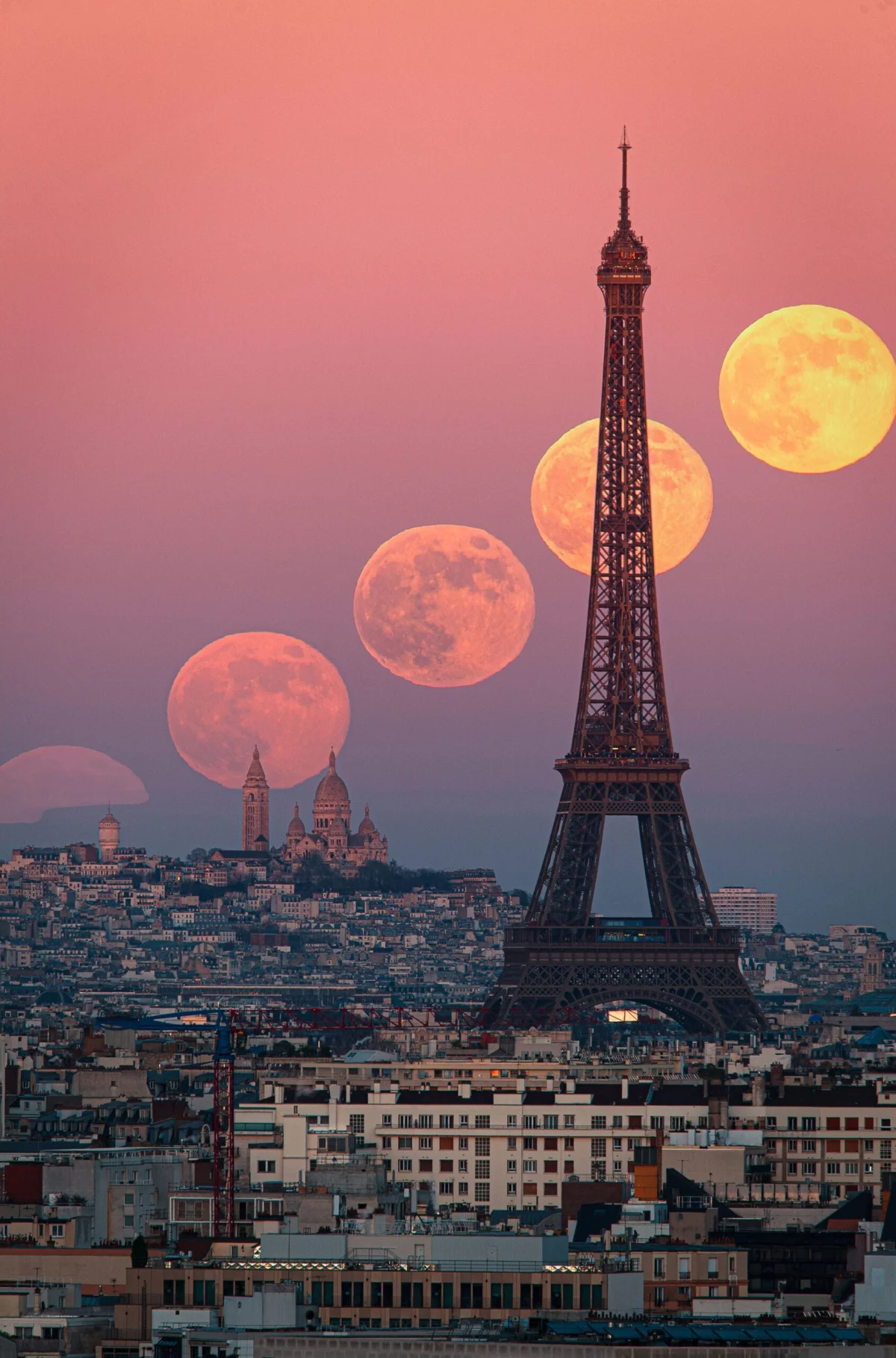
The intersection of human ingenuity and the vast, silent majesty of the cosmos has once again been captured in the latest shortlist for the ZWO Astronomy Photographer of the Year. This prestigious annual competition, which serves as a global touchstone for astrophotography, has released its 2026 selection, offering a breathtaking survey of the universe as seen through the lenses of 769 photographers and astronomers hailing from 66 countries.
With over 4,000 entries submitted, the task of narrowing the field to a select group of finalists represents a daunting challenge for the judging panel. The resulting shortlist is a testament to the technical precision and artistic vision required to document phenomena that exist hundreds, thousands, or even millions of light-years away—or, in the case of terrestrial-based captures, phenomena that dance in the upper reaches of our own atmosphere.

The Global Scope: A Synthesis of Science and Art
The competition highlights two distinct, yet complementary, approaches to space imagery. The first involves "landscape astrophotography," which masterfully juxtaposes the terrestrial beauty of our planet—rugged cliffs, serene waterfalls, and iconic city skylines—with the celestial bodies above. The second approach is the high-fidelity, telescopically captured snapshot, which pulls distant galaxies, nebulae, and stellar nurseries into sharp relief, often through complex composite imaging that reveals structures invisible to the naked eye.
This year’s shortlist traverses the globe, documenting the night sky from the pristine, dark-sky reserves of Chile and Namibia to the dramatic landscapes of the Swiss Alps, Iceland, and the North Island of New Zealand.

A Chronology of the 2026 Competition
- Early 2026: Call for entries opens to professional and amateur photographers globally.
- Spring 2026: Submission window closes after thousands of entries are processed from 66 nations.
- Summer 2026 (July): The shortlist is officially unveiled to the public, providing a glimpse of the top contenders.
- September 17, 2026: The official winners will be announced during a gala ceremony.
- September 18, 2026: A public exhibition showcasing the winning and highly commended works opens at the National Maritime Museum in London.
- Post-Exhibition: The release of the annual anthology, Astronomy Photographer of the Year, Collection 15.
Analyzing the 2026 Shortlist: A Visual Journey
The 2026 shortlist is characterized by an unprecedented level of technical sophistication. Among the standout entries is Evan McKay’s "Te Hoho Rock Moonrise," captured at Cathedral Cove in New Zealand. The image perfectly encapsulates the "human environment" school of astrophotography, where the geological history of Earth acts as a foreground for the cyclical, timeless motion of the moon.
Conversely, the deep-space photography on display pushes the boundaries of resolution. Ani Shastry’s "Gum 37: The Southern Tadpoles," captured at the El Sauce Observatory in Chile, provides a mesmerizing look at the molecular clouds that define the birthplaces of stars. These images are not merely photographs; they are data-rich visual documents that reveal the chemical and thermal compositions of distant nebulae through long-exposure filtered imaging.

The inclusion of younger voices, such as the 14-year-old photographer from Xiamen, China, who captured "Dancing Flames"—a high-resolution detail shot of solar flares—underscores the democratization of high-end equipment and the increasing accessibility of complex solar imaging.
Supporting Data: By the Numbers
The scale of this competition is reflective of the booming interest in amateur astronomy.

- Participant Count: 769 photographers.
- Geographic Reach: 66 countries represented.
- Submission Volume: More than 4,000 individual images.
- Technical Variety: Entries range from long-exposure light-painted landscapes to multi-filter narrowband images of Deep Sky Objects (DSOs).
These statistics reveal a shifting landscape in the world of photography. The barrier to entry for high-quality astrophotography has significantly lowered over the past decade, thanks to the maturation of affordable equatorial mounts, high-quantum-efficiency CMOS sensors, and advanced stacking software like DeepSkyStacker and PixInsight.
Official Responses and Curatorial Insight
The organizers at the Royal Museums Greenwich (RMG) have noted that the 2026 entries show a marked increase in "post-processing sophistication." In previous years, the challenge was primarily one of signal-to-noise ratios; today, the challenge is one of narrative.

"The standard of the entries this year is quite simply staggering," noted a spokesperson for the competition. "We are seeing photographers who are not just capturing light, but are effectively conducting citizen science. They are identifying new structures within known nebulae and documenting rare atmospheric phenomena that were previously the domain of professional observatories."
The decision to pair the exhibition with the book Astronomy Photographer of the Year, Collection 15 serves to preserve these moments. As the museum notes, these images are fleeting; a comet’s path or a specific aurora alignment may not repeat for decades. The collection serves as an archival record of our collective view of the universe in the mid-2020s.

The Implications of Modern Astrophotography
What does this surge in high-quality celestial imagery mean for the average observer? Beyond the aesthetic appeal, these photographs serve as a bridge between the cold, abstract data of astrophysics and the public’s imagination.
1. The Normalization of Space Exploration
When a teenager can capture the turbulent magnetic fields of the sun from their backyard, the "mystery" of space begins to dissolve. This fosters a more scientifically literate public, one that is increasingly comfortable with concepts like light-years, nebular composition, and planetary transit.

2. Environmental Advocacy
Many of the shortlisted photos, particularly those featuring the aurora borealis or the Milky Way core, are only possible in locations with minimal light pollution. The competition inadvertently acts as a global platform for the "Dark Sky" movement. By showing the world what we stand to lose if light pollution continues to sprawl, these photographers are some of the most effective advocates for protecting the night sky.
3. Technological Advancements
The competition acts as a feedback loop for the hardware industry. Manufacturers of telescopes and filters closely monitor the winning entries to understand what the most talented photographers are demanding. This has led to a rapid cycle of innovation, where technology that was once available only to government-funded research institutions is now finding its way into consumer-grade gear.

Looking Toward September
As the countdown to September 17 begins, the astronomical community is abuzz with speculation regarding the grand prize. While the competition has always been a celebration of beauty, the 2026 cohort has proven that it is also a celebration of resilience. From the remote mountains of Switzerland, where Jakob Sahner captured the path of Comet C/2025 A6, to the bustling suburbs of Paris, where Martin Giraud caught the "Supermoon Path" behind the Eiffel Tower, these photographers are documenting the intersection of time, space, and human civilization.
The exhibition at the National Maritime Museum in London will be more than just a gallery; it will be a sanctuary. In an era where our daily lives are dominated by screens and artificial light, stepping into a space filled with the silent, glowing, and ancient light of the stars provides a necessary, humbling perspective.

Whether one is a seasoned astronomer or a casual observer, the 2026 ZWO Astronomy Photographer of the Year exhibition promises to remind us that we live in a universe of infinite complexity—and that, if we look up at the right time, we are all part of the story.



 Muslim