

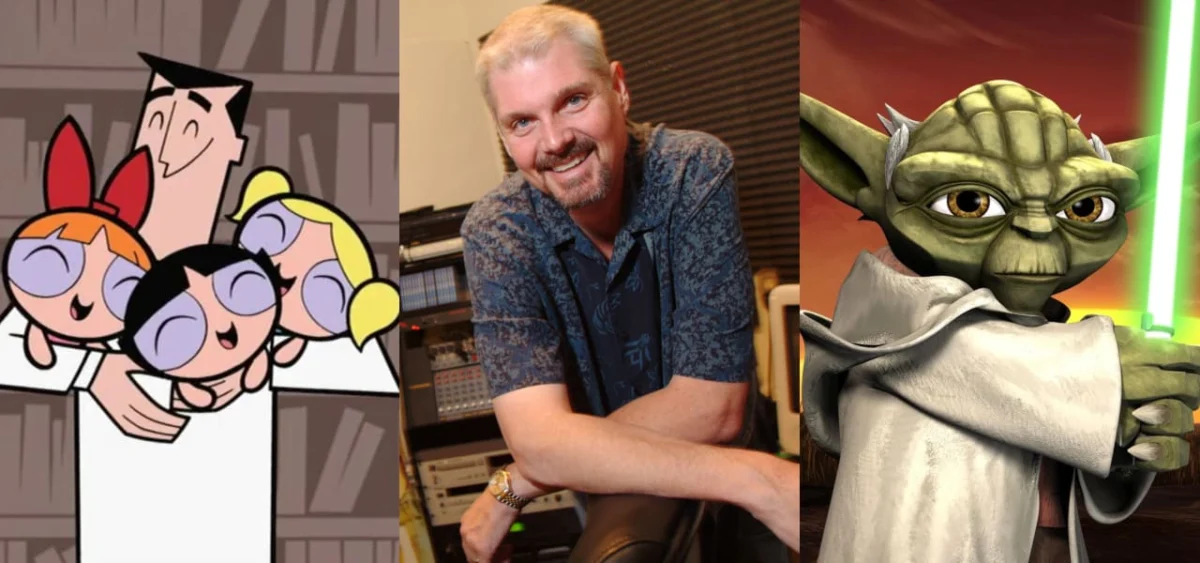
The world of animation and voice acting lost one of its most versatile and recognizable pillars this week. Tom Kane, a performer whose vocal range bridged the gap between whimsical children’s programming and the gritty, high-stakes narratives of galactic warfare, passed away on Monday at the age of 64. His death follows a long and difficult period of recovery from a stroke he suffered in 2020, an event that prematurely silenced a voice that had been a staple of American media for over three decades.
For millions of fans, Kane was not just a voice actor; he was the sonic architecture of their childhoods. From the manic energy of The Powerpuff Girls to the stoic, measured wisdom of Jedi Master Yoda in Star Wars: The Clone Wars, Kane possessed the rare ability to disappear entirely into his characters. His passing marks the end of an era for a generation that grew up hearing his work in their living rooms, on their gaming consoles, and at the cinema.
A Legacy Built on Versatility: The Main Facts
Tom Kane’s career was defined by a staggering level of range. In an industry that often typecasts performers, Kane was an outlier who could pivot seamlessly between roles. He was equally adept at playing the grounded, fatherly figure—such as the endearing Mr. Herriman in Foster’s Home for Imaginary Friends—as he was at portraying cackling villains, most notably the gender-bending, devilish HIM in The Powerpuff Girls.
His ability to project warmth, menace, absurdity, and profound gravitas allowed him to become one of the most in-demand voice actors in Hollywood. His resume includes iconic turns as Darwin in The Wild Thornberrys, Monkey Fist in the cult-favorite Kim Possible, and the dry-witted Woodhouse in the hit adult animated series Archer.
Beyond animation, Kane was a dominant force in the video game industry. He lent his vocal talents to some of the most successful franchises in history, including Call of Duty, Final Fantasy, and Fortnite. His reach was so pervasive that he was even the voice behind the scenes for numerous high-profile projects, including the Academy Awards telecasts and various major commercial campaigns, making him one of the most heard, yet often anonymous, voices in the world.
From Kansas City to the Galactic Stage: A Chronological Journey
Born and raised in the heartland of the United States, Kane’s journey into the booth began early. According to his official biographical records, he was a prodigy of sorts, beginning his career in radio and voiceover in Kansas City at the age of 15. This early exposure to the mechanics of broadcasting provided him with a technical foundation that would serve him for the rest of his life.
After attending the University of Kansas, Kane set his sights on Los Angeles, the epicenter of the entertainment industry. During the late 1980s and early 1990s, he cut his teeth in the competitive world of commercial voiceovers and television promos. However, it was the animation boom of the 1990s that truly launched his career. As cable networks like Cartoon Network and Nickelodeon began producing original content at an unprecedented rate, Kane became a foundational element of the “Cartoon Network era.”
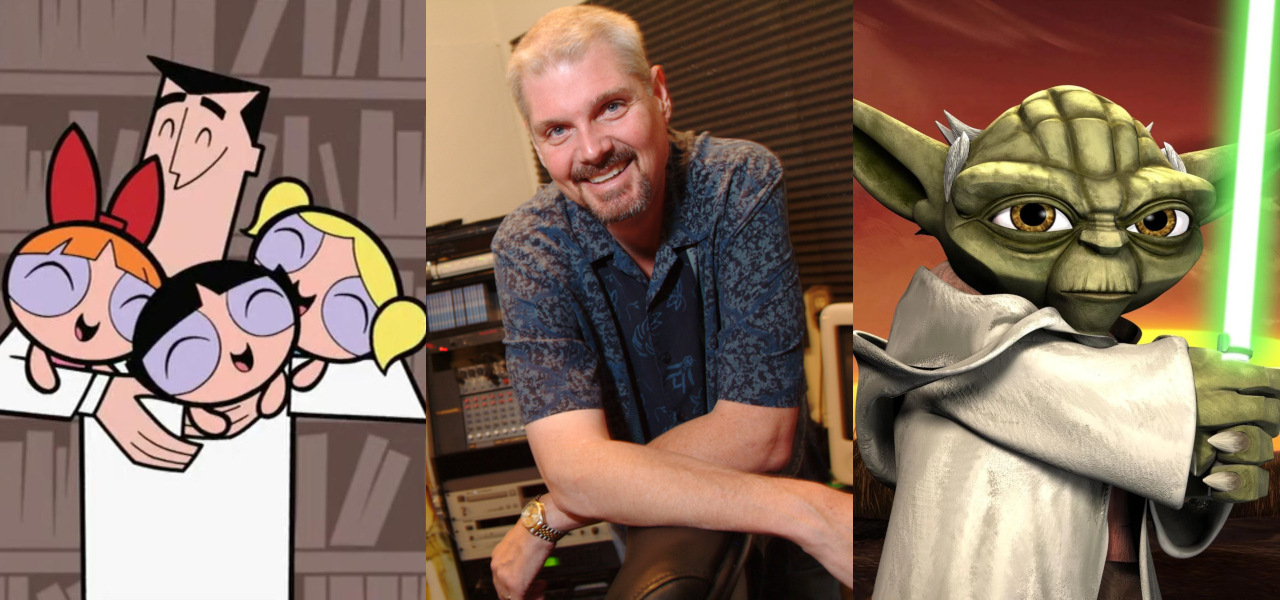
By the 2000s, Kane had cemented his status as a titan of the craft. His association with the Star Wars franchise began in earnest during this period, allowing him to step into the shoes of some of the most iconic characters in science fiction history. His portrayal of Yoda in Star Wars: The Clone Wars is widely cited by critics and fans alike as a masterclass in vocal performance. He managed to honor Frank Oz’s legendary interpretation while imbuing the character with his own unique rhythmic cadence, a feat that helped define the series for a new generation of Star Wars fans.
The Weight of the Voice: Supporting Data and Industry Impact
To understand the scope of Tom Kane’s career, one must look at the sheer volume of his output. During his peak, Kane was working simultaneously on multiple animated series, AAA video game titles, and film projects.
His work in the Star Wars universe alone is a testament to his versatility. He did not just voice one character; he voiced dozens. Whether it was the tactical, booming voice of Admiral Ackbar or the wise, weary tone of Qui-Gon Jinn, Kane understood that voice acting was as much about character psychology as it was about vocal manipulation. He treated every role—no matter how small—with the same level of commitment.
Furthermore, his career spanned a critical transition in the industry. When Kane started, voice acting was largely viewed as a niche craft. By the 2010s, it had become a high-profile arena where celebrity status often eclipsed traditional voice-acting skill. Yet, even in this changing landscape, Kane remained a powerhouse. His consistent employability was a result of his technical precision, his speed in the booth, and his ability to take direction with surgical accuracy. He remained a "working actor" in the best sense of the term, sustaining a career that weathered the shift from traditional hand-drawn animation to the high-tech, motion-capture-heavy environment of modern gaming and streaming.
Official Responses and the Personal Man Behind the Mic
The news of Kane’s passing was met with an outpouring of grief from the animation community. His agency, Galactic Productions, released a statement that captured both his professional magnitude and his personal humanity.
“Tom was a legendary voice actor whose work shaped the childhoods and imaginations of millions around the world,” the statement read. “But beyond the credits and the awards, he was a man defined by his devotion to his family.”
The agency noted that Kane and his wife, Cindy, shared a life that was deeply rooted in compassion, having raised nine children, including six through adoption and fostering. This detail—that the man who provided the voice for the devilish HIM and the menacing Monkey Fist was, in his private life, a dedicated father to a large, blended family—speaks to the depth of his character.
.png)
For those who knew him, the 2020 stroke was a devastating blow. When the news of his medical condition first broke, it felt incongruous with the public image of a man whose voice was, quite literally, ubiquitous. The idea that his voice could be silenced was difficult for the industry to process. His retirement from the craft left a void that, as many of his colleagues noted this week, can never truly be filled.
The End of an Era: Implications for the Future of Voice Acting
Tom Kane’s passing serves as a somber milestone for the animation industry. He represents the end of a specific generation of voice actors—performers who were trained in the nuances of radio and theater, and who brought a level of technical rigor to the booth that is sometimes lost in the age of digital post-production.
His legacy raises important questions about the nature of voice acting in the 21st century. As AI and synthetic voice technology continue to develop, the industry is grappling with the value of the human performance. Kane’s career serves as a powerful argument for the importance of the human actor; it was his specific, lived experience, his ability to inject humor, tragedy, and warmth into a performance, that made him irreplaceable.
Audiences today are often separated from the faces of those who provide the voices for their favorite characters, but in the case of Tom Kane, the connection was intimate. He was the voice that welcomed viewers into the world of Foster’s Home, the voice that guided them through the galaxy, and the voice that reminded them of the power of storytelling.
As we reflect on his life, it is clear that Tom Kane was more than just a resume of characters. He was a craftsman who understood that a voice is a vessel for emotion. While he may be gone, the echoes of his work will continue to live on in the countless hours of animation and gaming that he helped bring to life. For millions of people, he will always be the voice they hear when they think of the characters that defined their youth—a permanent, comforting presence in a world that is always changing.










No comments yet. Be the first to join the conversation!