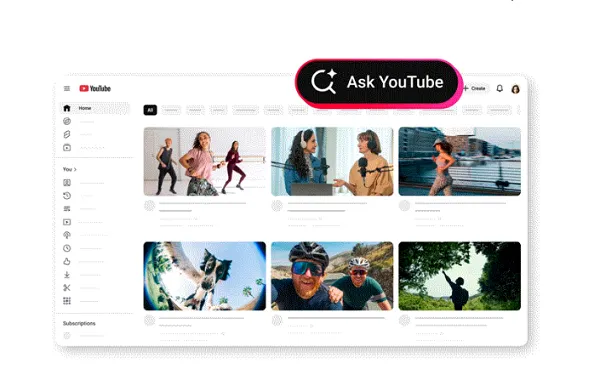
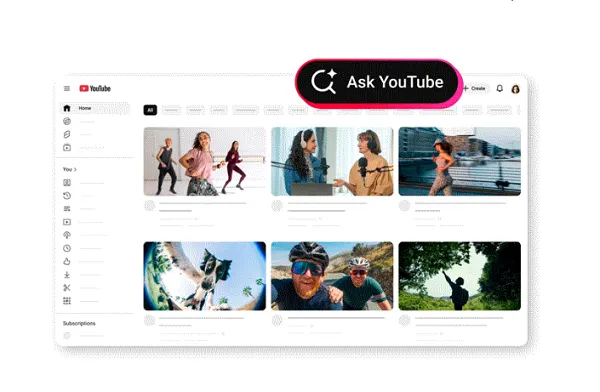
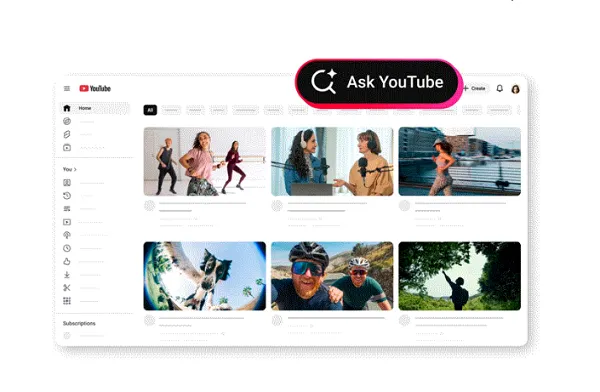
In a move signaling a fundamental shift in how digital content is discovered and consumed, YouTube has officially expanded its generative AI-powered search tool, "Ask YouTube," to desktop users across the United States. While the feature has been a staple of the mobile experience since its initial launch in 2023, its arrival on the desktop platform represents a significant milestone in Google’s broader strategy to integrate conversational AI into its entire ecosystem of information retrieval.
This development marks a departure from traditional keyword-based search—which has powered the internet for decades—toward a more nuanced, "natural language" interface designed to help users synthesize complex information from the vast library of video content hosted on the platform.
The Mechanics of ‘Ask YouTube’
At its core, "Ask YouTube" is an experimental, conversational search experience. Unlike the standard search bar, which relies on matching user queries with metadata and tags, the new AI assistant processes multi-layered, complex questions.
When a user submits a prompt, the AI does not simply provide a list of blue links or video thumbnails. Instead, it aggregates relevant clips, full-length videos, and Shorts, weaving them together with generated text summaries to provide a comprehensive answer. The goal is to act as a guide, allowing viewers to dive deep into niche topics, educational concepts, or historical events without having to manually sift through dozens of search results.
YouTube describes the tool as a "complement" to, rather than a replacement for, standard search. The interface allows users to pose follow-up questions, creating a dialogue-based interaction that mimics a human researcher. Whether a user is trying to understand the nuances of a complex scientific theory or seeking a curated list of DIY tutorials based on specific constraints, the tool aims to bridge the gap between curiosity and content discovery.
A Chronology of AI Integration at YouTube
The journey toward "Ask YouTube" did not happen overnight. It is the result of a multi-year effort by Google’s DeepMind and YouTube engineering teams to leverage Large Language Models (LLMs) for video comprehension.
- 2023: The Mobile Pilot: YouTube first introduced the conversational AI feature in its mobile application. This initial rollout served as a testing ground to see how users would interact with AI prompts while on the go.
- February 2024: The CTV Expansion: Demonstrating that YouTube viewed this as a platform-agnostic feature, the company brought "Ask YouTube" to Connected TV (CTV) devices. This was a critical step in testing the UI for larger screens and non-keyboard input methods.
- Late 2024: The Desktop Launch: The current rollout brings the feature to the official YouTube website for signed-in users in the U.S. aged 13 and older. This brings the functionality to the "power users"—creators, students, and researchers who rely on desktop environments for deeper engagement.
The delay in bringing the feature to desktop—a platform that many assumed would be the first point of entry—is noteworthy. Industry analysts suggest that optimizing the AI’s response window and ensuring the "Ask" button does not clutter the desktop interface required a more deliberate design process compared to the more streamlined mobile app environment.
The Logic Behind the Shift: Why Now?
The proliferation of AI discovery tools across the digital landscape—from OpenAI’s ChatGPT to Microsoft’s Copilot and Google’s own Gemini—has created a new expectation among internet users. We no longer want to just "search"; we want to "inquire."
YouTube’s pivot reflects this change in user behavior. As the platform hosts billions of hours of content, the traditional search bar is increasingly hitting a bottleneck. If a user searches for "how to fix a leaky faucet," they are met with a barrage of videos, some of which may be irrelevant or outdated. An AI assistant, however, can analyze the transcript of those videos to provide a step-by-step summary, effectively acting as an automated librarian.
Furthermore, this move aligns with Google’s "Search Generative Experience" (SGE) philosophy. By keeping users engaged within the platform through conversational responses, YouTube effectively increases watch time and session duration—key metrics for the company’s advertising-based business model.

Official Responses and User Guidelines
YouTube has been explicit about the purpose of this tool, positioning it as an "optional add-on." The company is clearly wary of alienating long-term users who prefer the speed and precision of traditional keyword search.
In its official guidance to users, YouTube stated: "Ask YouTube is a new, conversational search experience designed to help you explore complex questions and dive deeper into topics you’re curious about."
The company encourages users to move away from static, single-word phrases and instead embrace "longer, multi-layered questions." For example, rather than searching "black hole physics," a user might ask, "How do black holes affect the stars in their immediate vicinity, and what does this mean for galaxy formation?" By facilitating this level of depth, YouTube hopes to unlock the value of "long-tail" content—videos that are highly informative but rarely seen because they don’t rank for high-volume, generic keywords.
Implications for Content Creators
Perhaps the most significant, yet understated, implication of "Ask YouTube" concerns the creator economy. If AI begins to summarize the content of a video, will users still feel the need to click through and watch the full production?
- The "Summary" Threat: If the AI provides a perfect summary, creators may fear a decline in views. However, YouTube argues that the AI will lead users to the video to see the full context, potentially increasing clicks for high-quality, authoritative creators.
- SEO Strategy: The rise of conversational AI forces a shift in how creators "tag" and describe their content. Creators may soon need to optimize their video descriptions and scripts to answer specific, complex questions that users are likely to ask the AI assistant.
- Discovery of Niche Content: For creators who produce educational or deep-dive content, this is a massive win. Their videos are more likely to be surfaced by an AI looking for accurate, substantive answers than by a traditional algorithm favoring clickbait titles.
Ethical Considerations and Data Integrity
As with any deployment of generative AI, there are inherent risks. The "hallucination" problem—where AI confidently provides false information—remains a concern. YouTube is relying on the fact that its AI is drawing from a curated database of user-uploaded videos rather than the entire open web, which theoretically provides a "grounded" source of truth.
However, the moderation of these AI responses will be a permanent task. YouTube must ensure that the AI does not surface misinformation, conspiracy theories, or harmful content when providing summaries. The company has stated that the tool is in an experimental phase, suggesting that guardrails are currently in place and will be refined based on user feedback.
The Future of the Digital Library
The transition of YouTube from a "video hosting site" to an "AI-powered knowledge engine" is nearly complete. By enabling users to converse with their library of content, YouTube is positioning itself as a primary competitor to traditional search engines for informational queries.
For the average user, this means a more efficient way to learn. For the platform, it means higher retention and a more sophisticated way to index its massive archive. As the feature expands beyond the U.S. and eventually graduates from its "experimental" status, we may be looking at the end of the era where we had to "search" for information. Instead, we will simply ask, and the internet—or at least, the video portion of it—will answer.
Conclusion: A New Chapter for YouTube
The rollout of "Ask YouTube" on desktop is more than just a feature update; it is a declaration of intent. As Google continues to weave AI into the fabric of its properties, YouTube is proving that it is not merely a destination for entertainment, but a primary source of knowledge.
As users begin to test the limits of this new tool, the feedback loop between the platform and its community will be critical. Will it simplify our lives, or will it distance us from the original content creators? The answer, much like the queries we pose to the AI, remains complex. For now, users in the U.S. have a powerful new lens through which to view the world’s largest video library—one that invites us to ask, to learn, and to explore deeper than ever before.