Japan’s capital is poised for a significant transformation in how it funds its massive tourism sector. The Tokyo Metropolitan Government, with the official backing of the national government, is set to retire its long-standing fixed-rate lodging tax in favor of a modern, percentage-based model. This shift, while seemingly technical, represents a fundamental change in the relationship between travelers, local infrastructure, and the municipalities that host millions of visitors annually. As Japan grapples with the pressures of record-breaking tourism, the "Tokyo Model" may soon become the blueprint for cities and towns across the nation.
The Shift: From Flat Fees to Percentage-Based Contributions
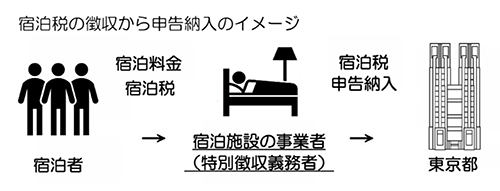
Beginning in April 2027, Tokyo will replace its current tiered, flat-rate accommodation tax with a 3 percent levy on the nightly room rate. This decision, announced this week following approval from Internal Affairs Minister Hayashi Yoshimasa, is designed to align the city’s revenue streams with the actual economic reality of its tourism market.
Under the current framework, which has been in place for years, visitors pay a flat fee based on room price thresholds. Guests staying in rooms priced between ¥10,000 and ¥14,999 currently pay ¥100 per night, while those in rooms costing ¥15,000 or more pay a flat ¥200. This system, however, has failed to capture the value of the luxury market, which has boomed alongside the surge in high-spending international travelers.
The new system simplifies the threshold while increasing the burden on mid-to-high-end travelers. Accommodations priced below ¥13,000 per night will remain tax-exempt, protecting budget-conscious travelers and local businesses. However, for any room priced at or above that threshold, a 3 percent tax will be applied.
The financial impact for the traveler is clear: a guest paying ¥15,000 per night will see their tax jump from the current ¥200 to ¥450. The difference becomes starker at the luxury end of the market. A traveler booking a room for ¥50,000 per night will now contribute ¥1,500, and a guest in a ¥100,000 suite will pay ¥3,000 per night. Furthermore, the mandate now explicitly extends to minpaku (private lodging rentals), ensuring that the growing peer-to-peer accommodation sector is held to the same fiscal standards as traditional hotels and ryokan.

A Chronology of Japan’s Tourism Funding Evolution
The journey toward this legislative overhaul did not happen overnight. It is the culmination of two decades of trial and error in Japanese municipal governance.
- 2002: The Pioneer. Tokyo became the first municipality in Japan to introduce an accommodation tax. At the time, it was a novel concept, designed to help the capital manage its unique urban tourism pressures.
- 2017–2018: The Regional Expansion. As the "Inbound Tourism" boom began to gain momentum, major cities followed suit. Osaka implemented its tax in 2017, and Kyoto—faced with the unique challenges of preserving ancient cultural sites while managing massive crowds—introduced its own version in 2018.
- 2020–2023: The Pandemic Pivot. The COVID-19 pandemic caused a temporary collapse in tourism, but the subsequent "V-shaped" recovery caught many municipalities off guard. The sudden return of international travelers at record volumes highlighted the fragility of local infrastructure.
- 2024: The Resort Revolution. Niseko, the global hub for winter sports in Hokkaido, introduced an accommodation tax in 2024, signaling that the trend was no longer limited to major metropolitan areas.
- 2027 and Beyond: With Tokyo’s transition to a percentage-based tax, the focus is shifting toward scalability. Other regions, including Hakone, are already evaluating similar models to ensure they remain financially sustainable.
Supporting Data: The Funding Gap
The primary driver behind this reform is a widening gap between tourism-related costs and tax revenue. Tokyo’s own fiscal data reveals a sobering disparity. In fiscal year 2025, the Tokyo Metropolitan Government expects tourism-related expenditures—such as improving signage, maintaining public spaces, funding disaster preparedness, and enhancing transportation—to exceed ¥30 billion.
Under the existing flat-rate tax, the city was generating only about ¥6.9 billion annually. This meant that the burden of maintaining the city’s world-class tourism infrastructure was falling disproportionately on local taxpayers rather than the visitors utilizing the services.
By switching to the 3 percent model, the Tokyo government projects annual revenue will climb to approximately ¥19 billion. While this still does not cover the entirety of the ¥30 billion expenditure, it represents a substantial improvement in cost-recovery efficiency. It effectively shifts the fiscal load away from local residents and places it upon the shoulders of the tourism industry, specifically those utilizing high-end lodging.
Official Responses and Strategic Rationale
Government officials, including those within the Ministry of Internal Affairs and Communications, have framed these changes as a necessity for "sustainable tourism."
"We are at a point where the scale of tourism has outpaced our legacy funding models," noted a representative from the Tokyo Metropolitan Government during the press announcement. The goal is not merely to "tax the tourist," but to create a virtuous cycle. Revenue from these taxes is legally designated for projects that directly improve the visitor experience: multilingual information centers, upgraded public restrooms, and the preservation of historic sites that might otherwise degrade under the weight of foot traffic.
Kyoto, which has historically taken the most aggressive stance on tourism taxation, serves as a cautionary tale and a model. By implementing a tax that can reach as high as ¥10,000 for ultra-luxury accommodations, Kyoto has signaled that it is willing to use taxation as a tool for "quality over quantity." While Tokyo has opted for a percentage-based approach to ensure simplicity and fairness across varying price points, the underlying philosophy—that the tourism industry must be self-sustaining—is identical.
Broader Implications for the Future of Travel
The implications of Tokyo’s policy shift are profound for the Japanese travel landscape.
1. The End of "One-Size-Fits-All"
The "patchwork" nature of Japan’s tax system is becoming the new norm. Travelers can no longer assume a standard fee across the country. Instead, they must navigate a variety of regional policies. For instance, Hakone is currently considering a tax that would be classified as an "ordinary local tax" rather than a "purpose tax." This is a crucial distinction: while most current taxes are strictly earmarked for tourism, an ordinary tax allows the municipality to spend the funds on broader services, such as general social welfare or public health, benefiting the local community directly.
2. The Rise of Dynamic Pricing
By moving to a percentage-based system, municipalities like Tokyo and Niseko are effectively linking their tax revenue to the market value of tourism. When room rates rise due to high demand, the tax revenue rises proportionally. This creates a built-in inflation adjustment, ensuring that the city captures more revenue during peak tourist seasons when the strain on infrastructure is at its highest.
3. Impact on the Private Rental Market
The explicit inclusion of minpaku (private lodgings) in the tax code is a major development. For years, the rise of the private rental market created a "gray zone" for taxation. By bringing these properties into the formal tax fold, the government is not only closing a revenue loophole but also professionalizing the sector. It signals that all forms of commercial lodging, regardless of scale, are expected to contribute to the public good.
4. A Shift in Destination Management
Ultimately, these taxes signal a shift in how Japanese cities view their role as hosts. Tourism is no longer being treated as a "free" economic benefit. Instead, it is being managed as a resource that requires maintenance. Cities are now adopting a "user-pays" philosophy, ensuring that the very infrastructure that attracts visitors is maintained by the revenue those visitors generate.
Conclusion: A New Standard for Global Tourism?
As Tokyo prepares for the implementation of its new tax in 2027, the rest of the world will be watching. Japan has long been a leader in managing the complexities of mass tourism in dense, culturally sensitive environments. The transition from flat-rate, nominal fees to a dynamic, percentage-based model is a sophisticated evolution of fiscal policy.
For the average visitor, the impact will be negligible at the time of booking—a few hundred extra yen on a nightly bill is unlikely to deter travel to one of the world’s most popular destinations. However, for the municipalities themselves, the change is transformative. It provides a stable, scalable, and equitable way to fund the future of Japan’s tourism sector.
As more cities like Hakone join the movement, it is clear that the "Tokyo Model" is not just an isolated administrative update; it is a fundamental shift in how Japan intends to balance the economic benefits of global tourism with the preservation of its cities and the well-being of its local residents. The era of the "free" tourist is coming to an end, replaced by a more intentional, sustainable, and fiscally responsible approach to international travel.