Asro
Asro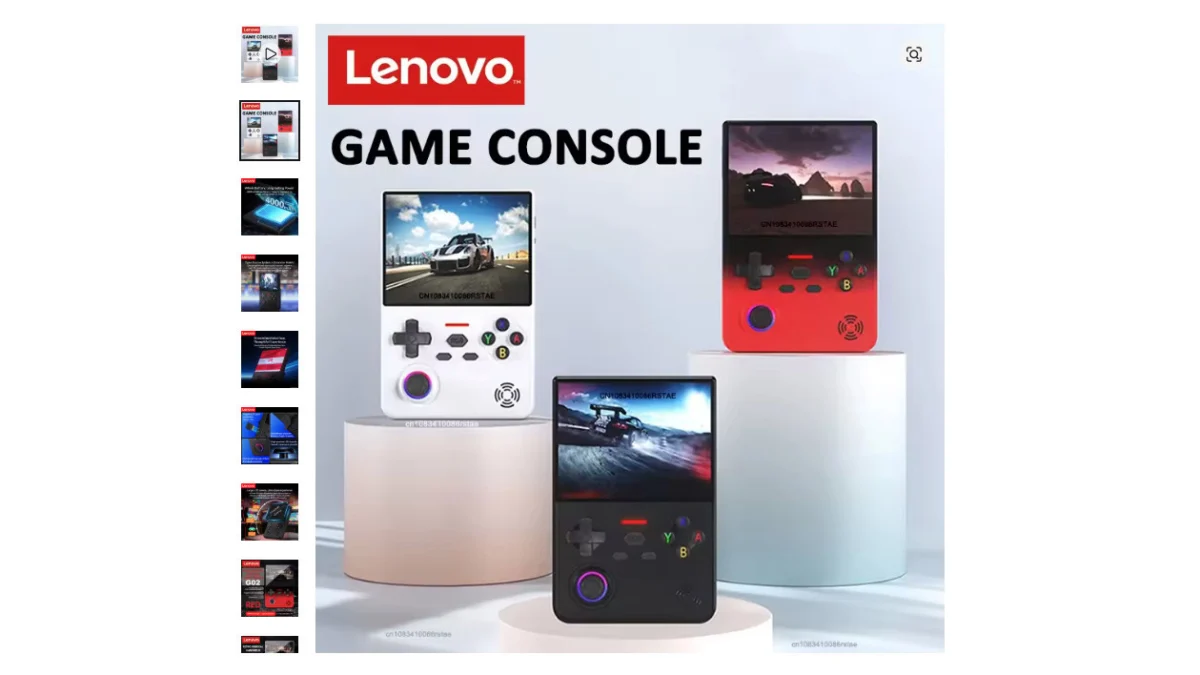
The gaming industry is no stranger to the gray market. For years, low-cost Linux-based handhelds, often referred to as "retro handhelds," have flooded digital storefronts like AliExpress and Alibaba, promising thousands of preloaded titles from iconic consoles like the Nintendo Entertainment System, Sega Genesis, and the Game Boy line. However, when a global tech titan like Lenovo becomes entangled in the distribution of such a device, the industry takes notice. The saga of the Lenovo G02—a budget-friendly, controversial handheld that arrived with the promise of nostalgia and left in a cloud of corporate uncertainty—serves as a fascinating case study in brand management, third-party licensing, and the perils of the global marketplace.
Main Facts: The Anatomy of a Controversy
The Lenovo G02 first caught the attention of the gaming community in May 2026. Marketed as an entry-level Linux handheld with an aggressive price tag of approximately $60, the device was positioned as a competitor to the burgeoning field of budget emulation machines. On the surface, the G02 offered a straightforward value proposition: a portable interface capable of running classic games, housed within a shell carrying the reputable Lenovo brand name.
However, the "official" nature of the device was immediately called into question. Global listings for the G02 arrived preloaded with libraries of copyrighted ROMs, a practice that is standard for "no-name" Chinese emulation consoles but highly irregular for a major manufacturer. When journalists began digging, it became clear that the device existed in a legal limbo. While the hardware was purportedly designed by Lenovo, its path to the consumer—particularly those outside of China—was riddled with irregularities that eventually forced the company to pull the plug on the entire project.
A Chronological Breakdown of the G02 Saga
The timeline of the G02 is marked by a series of denials, rebrands, and eventual retractions that underscore the complexity of modern hardware distribution.
The Spring Emergence (May 2026)
The G02 appeared on major global e-commerce platforms like AliExpress and Alibaba. Early marketing materials highlighted the device’s ability to play classic titles out of the box, with many sellers touting the inclusion of preloaded ROMs as a primary selling point. This immediately triggered red flags among tech observers, as major corporations rarely, if ever, distribute hardware containing unlicensed copyrighted software.
The Lenovo Clarification
As the media spotlight intensified, Lenovo issued a statement attempting to distance itself from the global retail iteration of the G02. The company claimed that the device was a "white-labeled" product intended exclusively for the Chinese domestic market. According to Lenovo, the version sold within China did not include preloaded games, implying that third-party resellers had intercepted the hardware, installed unauthorized ROMs, and funneled the units into the global gray market.
The "Sunyao" Pivot
Following the initial backlash, the device briefly vanished from some storefronts, only to reappear under the name "Sunyao G02." Sunyao is a known sub-brand of Lenovo, often associated with affordable peripherals like cooling fans and budget headphones. This rebranding appeared to be an attempt to formalize the product’s identity, yet it failed to address the underlying issue of unauthorized software distribution. Whether the Sunyao-branded units were officially sanctioned for export remained, and remains, a point of significant ambiguity.
The Final Withdrawal
In late 2026, reports from industry outlets such as Retro Dodo confirmed that the G02 had been scrubbed from major online marketplaces. This move effectively terminated the project, marking the end of a bizarre chapter in the company’s history. As of this writing, Lenovo has been approached for a definitive statement regarding whether the device has been permanently discontinued or if a future, legitimate iteration is in development.
Supporting Data: Why the Gray Market Matters
The G02 is not an isolated incident; it is a symptom of a massive, decentralized industry. The budget handheld market is dominated by companies that operate on razor-thin margins, often bypassing traditional distribution channels to keep costs low.
Data from the portable gaming sector shows that consumer demand for sub-$100 emulation devices is at an all-time high. Manufacturers are increasingly looking for ways to capture this market share. However, the use of "ROM packs"—collections of pirated games—is a standard business tactic for these manufacturers to add perceived value to otherwise cheap hardware.
When a company like Lenovo enters this space, the expectation is that they will adhere to international intellectual property standards. The G02 failed this test. Even if the hardware itself was legitimate, the ecosystem surrounding it—which relied on the distribution of pirated content—was incompatible with the standards of a Fortune 500 company. The logistical failure to control the supply chain, ensuring that only "clean" units reached consumers, proved to be the project’s undoing.
Official Responses and Corporate Strategy
Lenovo’s communication strategy throughout the G02 controversy was one of damage control. By labeling the device as "white-labeled," they attempted to shift the blame to upstream manufacturers and independent resellers.
"White-labeling" is a common industry practice where a manufacturer produces a generic product and allows other companies to slap their branding on it. While efficient, it creates a massive accountability gap. If Lenovo did not have sufficient oversight over the final packaging and software configuration of the G02, they were essentially outsourcing their brand reputation to anonymous third parties.
In the wake of the removal, industry experts have argued that Lenovo’s failure was one of due diligence. A brand that prides itself on premium quality and security cannot afford to be associated with devices that facilitate copyright infringement. The ultimate removal of the device from all platforms suggests that, internally, Lenovo decided the risks to their brand equity far outweighed the potential profits of a $60 handheld.
The Implications for the Future of Handheld Gaming
The G02 saga offers several critical lessons for both manufacturers and consumers.
1. The Death of the "Wild West" Mentality
The days of major manufacturers quietly shipping devices through gray-market channels are numbered. As digital rights management (DRM) and intellectual property enforcement become more sophisticated, corporations will find it increasingly difficult to distance themselves from the actions of their authorized or semi-authorized distributors.
2. The Demand for Legitimate "Budget" Options
The popularity of the G02, despite its controversial nature, proves there is a massive appetite for affordable, portable, Linux-based gaming hardware. Fans want a "plug-and-play" experience that doesn’t require the technical expertise to sideload software or configure complex emulators. There is a clear market opening for a major player to release a sanctioned, affordable handheld that provides a curated, legal storefront of games.
3. The Need for Global Standardization
The discrepancy between the "China-only" version and the "Global" version of the G02 is a reminder that regional product segmentation is increasingly obsolete in the age of the internet. A device released in one market will inevitably find its way to another. Companies must design their products with the assumption that they will be accessible globally, which necessitates adherence to global legal standards regarding software and licensing from day one.
Conclusion: A Lesson Learned
The Lenovo G02 may have been a "shady" endeavor, but it was also a missed opportunity. If Lenovo had chosen to pursue a legitimate global release—partnering with developers to offer legal retro game bundles or focusing on a high-quality, software-agnostic hardware platform—they could have redefined the budget handheld market.
Instead, the project will be remembered as a cautionary tale. It serves as a reminder that in the modern tech landscape, the hardware is only half the battle. The software, the distribution, and the legal framework surrounding a device are equally important. For Lenovo, the G02 is a closed chapter, but the demand for the kind of device they tried to build remains louder than ever. Whether the company will take another, more disciplined, and more transparent stab at the handheld market remains the next great question for their gaming division.
For now, the G02 stands as a testament to the fact that when it comes to the complex, globalized world of consumer electronics, there are no shortcuts to success—especially when you are playing with the legacy of a brand like Lenovo.


 Azzam Bilal Chamdy
 Suro Senen