

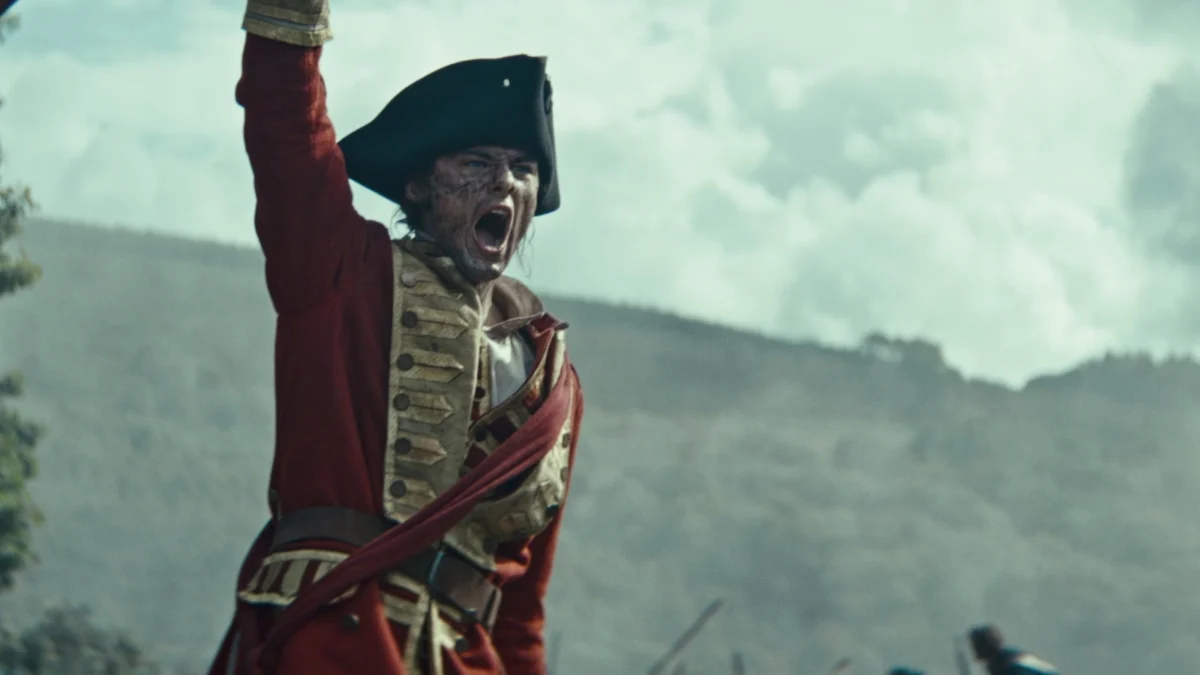
The intersection of artificial intelligence and narrative filmmaking has long been a flashpoint for industry anxiety, but few have navigated this volatile terrain as boldly—or as transparently—as director Jon Erwin. Known for his faith-based dramas like I Can Only Imagine and I Still Believe, Erwin has recently become the center of a burgeoning debate regarding the use of generative AI in high-budget cinema. His latest project, Young Washington, has sparked intense scrutiny from online observers, revealing a new reality: the future of visual effects (VFX) is no longer confined to post-production suites, but is being woven into the very fabric of on-set production.
The Controversy and the Credits
The discourse began in the digital trenches of X (formerly Twitter), where eagle-eyed viewers began dissecting the credits of Young Washington. Screenshots circulated, confirming that the production had explicitly utilized artificial intelligence for a significant portion of its visual effects. This discovery prompted a wave of amateur forensic analysis, with users sharing freeze-frames of specific sequences—ranging from the intricate details of period costumes to the physics of cannon fire—that they suspected were AI-generated.
The speculation reached a fever pitch when Variety confirmed that approximately 100 shots in the film were indeed augmented with generative AI. Rather than retreating from the accusations, Erwin leaned into the conversation. For a director who has built a career on human-centric, emotional storytelling, his embrace of machine-learning tools might seem paradoxical to some. However, Erwin maintains that his approach is not about replacement, but about evolution.
A Chronology of Integration
Erwin’s journey into the AI-augmented workflow was not an overnight decision but a systematic progression. Before the release of Young Washington, the seeds of this technological shift were sown in his previous projects. House of David incorporated early experiments with AI, and this year’s The Old Stories: Moses saw a more substantial integration, with a vast majority of its VFX being AI-driven.
The filmmaker has been vocal about these efforts, most notably at the recent "AI on the Lot" convention. His newly formed studio, Innovative Dreams, operates out of a facility in Manhattan Beach—the same lot that hosts the legendary James Cameron. The studio features a cutting-edge volume stage, where Erwin and his team are leveraging AI to achieve near real-time visual effects, effectively collapsing the traditional gap between principal photography and final post-production.

Box Office Resilience
Despite the "AI-generated" label acting as a lightning rod for critics, the commercial performance of Young Washington suggests that the average moviegoer is either indifferent to the method or impressed by the results. The film grossed $20.8 million in its opening weekend, surpassing its $20 million budget and comfortably outperforming the heavily anticipated Supergirl. With a sequel already confirmed, the project stands as a pragmatic case study for studio executives: high-tech, AI-augmented production can yield high-profit, audience-friendly results.
Defining "Synthesis": The Technical Philosophy
A critical distinction in Erwin’s philosophy is his rejection of the term "generation." He argues that what his studio does is better described as "synthesis." In this workflow, AI does not create images from a vacuum; rather, it augments assets that the production team already owns—filmed costumes, physical location plates, and original performances.
"You actually get to a much higher level of photorealism if you take real things that you can prove you own," Erwin explained in an interview. "It’s the same way you own a chain of title to a script. You have your location agreements, your actor’s consent, your wardrobe. When you use these tools to synthesize those real things, you arrive at far superior results."
For instance, in Young Washington, AI was utilized to enhance the visual impact of cannons during battle sequences, simulating the kinetic recoil that would be difficult to capture safely or cheaply with traditional practical effects. More significantly, the film utilized AI to composite actors filmed in a controlled trench environment into the treacherous, icy landscapes of the Ohio Territory. By filming the real river separately and using AI to blend the assets in real-time, the production achieved a level of photorealism that would have been impossible or prohibitively expensive a decade ago.
The "Stacking" Strategy
Unlike early adopters who may have relied on a single model like Sora or DALL-E, Erwin’s team employs a "stacking" methodology. By layering various foundational models alongside traditional VFX software like Unreal Engine and Nuke, they have created a proprietary pipeline that avoids the "uncanny valley" associated with standalone AI tools.

"People were only trying to use one tool," Erwin noted. "We realized we could stack them together in creative ways, and the stack was where the quality was. We realized that this didn’t replace anything; it augmented what we were already doing."
Empowering Professionals, Not Prompters
The central fear regarding AI in Hollywood is the potential for mass displacement of human talent. Erwin, however, frames his adoption of the technology as a potential lifeline for the industry. He advocates for a collaborative model where veteran film professionals—those with years of experience in lighting, cinematography, and production design—are retrained to use AI tools, rather than replacing them with solo "prompters."
His vision is one of "non-linear filmmaking." Traditionally, the process is bifurcated: prep, production, and a long, expensive post-production phase where the director hopes the visual effects match their original vision. With his AI-augmented workflow, Erwin can see the results on set, in real-time. This allows for a more fluid, intuitive creative process where the director can adjust lighting or framing to match the synthesized backdrop, ensuring cohesion from the start.
The Ethical Boundary: Why Performance Matters
Despite his enthusiasm, Erwin draws a hard line at synthetic performers. He believes that the soul of cinema lies in the human connection between actor and audience. Furthermore, he identifies a "false economy" in the current AI arms race; while it might be cost-effective to use AI for background explosions or set extensions, the cost of synthesizing a truly compelling, long-form human performance is not only technically difficult but fundamentally counterproductive to the art form.
"Any mindset of how many people can we replace is immoral," Erwin stated. "What we should think is: could we use these tools to combat the primary reason jobs have been lost, which is the escalating cost of production and the sheer time it takes to create?"

The "Star Wars" Moment of the 2020s
Erwin likens the current state of the industry to 2002, when George Lucas convened a summit of filmmakers to discuss the transition to a digital pipeline. Just as the industry once resisted the move from celluloid to digital, it is currently grappling with the transition to AI-integrated production.
Erwin’s challenge to his peers is one of curiosity over criticism. He argues that by sitting on the sidelines, traditional filmmakers risk losing their agency in shaping the future of the medium.
"We’re the people that have dedicated our lives to this craft," he said. "We should not sit on the sideline. Let’s roll up our sleeves. It’s a lot easier to criticize something than it is to get curious and to start trying it."
Conclusion: A Call for Industry Standards
The implications of Erwin’s work are profound. If AI can indeed lower the barrier to entry and reduce the prohibitive costs of production, it could lead to a renaissance of independent and mid-budget filmmaking. However, this shift requires a transparent, regulated framework—one that protects copyright, ensures fair labor practices, and prioritizes human creativity.
Jon Erwin is not just making movies; he is conducting a grand experiment in the future of the industry. By proving that AI can be a tool for synthesis rather than a shortcut for replacement, he is inviting the rest of Hollywood to join him in a conversation about the next hundred years of cinema. As the dust settles on the Young Washington controversy, it is becoming increasingly clear that the question is no longer if AI will be used, but who will define the ethical standards of its application. For Erwin, the answer is simple: the storytellers themselves.










