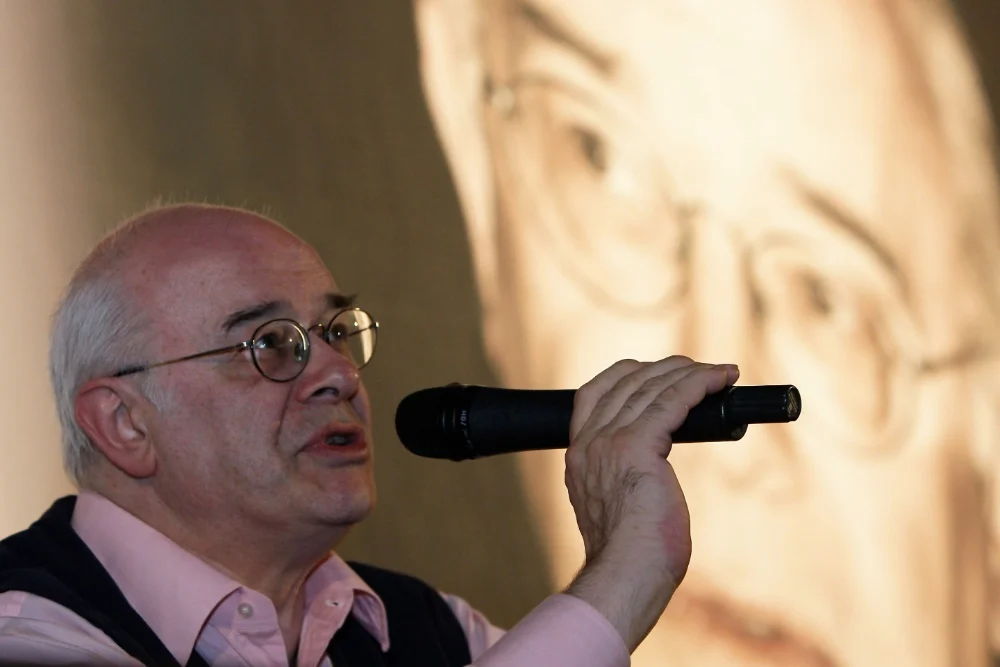
The international film community is mourning the loss of Tony Rayns, the preeminent British critic, programmer, and documentarian whose tireless advocacy fundamentally reshaped the Western perception of East Asian cinema. Rayns, 78, passed away on July 7 following an accidental fall down the stairs at his home. His death was confirmed by his sister, Stephanie Gowman, who noted that the tragedy followed a brief, worrying period of radio silence that prompted concern among his vast network of friends and colleagues.
Rayns was more than a critic; he was a bridge. At a time when East Asian cinema was largely relegated to the fringes of Western arthouse distribution, Rayns acted as a curator, translator, and champion. His influence extended from the scholarly pages of Sight & Sound to the programming offices of major global festivals, and his legacy remains etched into the very fabric of how modern audiences consume and understand the works of masters like Wong Kar-wai, Jia Zhangke, and Edward Yang.
A Life Defined by the Moving Image: Chronology
Born in 1948, Rayns’ intellectual development coincided with the rise of the counter-culture film movement in the late 1960s. He cut his teeth as a writer for the underground publication Cinema Rising, a platform that allowed him to cultivate his rigorous, uncompromising voice. By December 1970, he had joined the Monthly Film Bulletin, a publication that became his professional home until its merger into Sight & Sound in 1991.
Throughout the 1970s and 80s, Rayns became a fixture in the British critical landscape. His byline appeared in the most prestigious venues of the era, including Time Out, Melody Maker, Cahiers du Cinéma, and Film Comment. However, his trajectory shifted definitively when he turned his gaze eastward. In the 1980s, he spearheaded the landmark British television series New Chinese Cinema, which introduced domestic audiences to the seismic shifts occurring in Chinese filmmaking.
His influence became institutionalized during his tenure at the Vancouver International Film Festival (VIFF) from 1988 to 2006. As the head of the "Dragons and Tigers" competition, Rayns transformed the festival into the premiere venue for discovering emerging talent from across Asia. This role, coupled with his presence on juries in Cannes, Sapporo, San Sebastian, San Francisco, Vladivostok, and Beijing, made him an indispensable arbiter of taste.
The Scholar as Collaborator: Supporting Data
Rayns’ contributions were not merely passive observations; they were active, hands-on collaborations. His proficiency in language and his deep cultural immersion allowed him to serve as a subtitle translator for iconic works from Hong Kong, Japan, Korea, Taiwan, and Thailand. He was a frequent, trusted collaborator of Taiwanese director Huang Ming-chuan and played a pivotal role in bringing the nuances of regional dialect and cultural subtext to global audiences.
His literary output was equally prolific. Rayns authored definitive books on Rainer Werner Fassbinder and Seijun Suzuki, but he is perhaps most revered for his seminal texts on the "New Waves" of China, Japan, and Korea. His monograph on Wong Kar-wai remains a touchstone for film students, providing an analytical framework that elevated Wong from an "exotic" stylist to a central figure in world cinema history.
For collectors, Rayns was the voice of authority on the supplemental features of physical media. His audio commentary tracks for the Criterion Collection and Masters of Cinema—ranging from Seven Samurai and Ugetsu to Memories of Murder and Chungking Express—are considered masterclasses in contextual analysis. His commentary for Bong Joon-ho’s Parasite, recorded alongside the director, and his collaborative work with Edward Yang on Yi Yi, represent the pinnacle of critical engagement, where the critic acts as a partner in the director’s creative process.
A "Free Citizen": The Tribute of Jia Zhangke
Perhaps the most moving testament to Rayns’ life came from Chinese director Jia Zhangke. Their 28-year partnership, built on mutual respect and professional necessity, was characterized by an intimacy rarely found in the world of high-brow criticism.
In a poignant social media post, translated from Mandarin, Jia wrote: "Dear Tony, I didn’t get the chance to say ‘thank you,’ or to say ‘I’m sorry,’ before you were gone. In the 28 years we knew each other, I was always the one turning to you for help… My work couldn’t have happened without you, and yet I often neglected you."
Jia’s words highlighted the solitude that often accompanies the life of a dedicated intellectual. "You traveled alone, watched films alone, made your home everywhere, smoked alone, worried alone," Jia reflected. "You were a free citizen of the kingdom of cinema." This admission of regret underscores the human cost of Rayns’ relentless dedication to his craft, a life lived in service of the directors he loved, often at the expense of his own personal comfort.
A Legacy of Recognition and Impact
The global film industry recognized the magnitude of Rayns’ impact early and often. In 2004, he was awarded the prestigious Kawakita Prize, which honors individuals who have made significant contributions to the promotion of Japanese cinema abroad. In 2008, he received a formal commendation from the Japanese Foreign Ministry—a rare honor for a critic, reflecting the depth of the diplomatic and cultural bridge he had built between Japan and the West.
Rayns’ work extended to nearly every major boutique label, including Arrow, Indicator, Second Run, and BFI Video. Through these collaborations, he ensured that restored prints of forgotten masterpieces were accompanied by the necessary historical and cultural context required for modern appreciation. He did not just sell films; he educated audiences on how to look at them.
The Void in the Festival Circuit: Implications
The passing of Tony Rayns leaves a profound vacuum in the international festival circuit. As the landscape of cinema shifts toward algorithmic curation and streaming-first consumption, the "human touch" of a programmer like Rayns—who possessed an encyclopedic knowledge of regional history, political context, and aesthetic evolution—is increasingly rare.
His death serves as a reminder of the fragility of the "memory" of cinema. Critics like Rayns are the custodians of history; they are the ones who ensure that a 1990s Taiwanese drama or an experimental Japanese film is not lost to the passage of time. Without the tireless advocacy of individuals who, like Rayns, are willing to "travel alone" to remote film sets and archives to champion the work of foreign auteurs, the canon of world cinema would be significantly narrower.
Stephanie Gowman noted that the family plans to hold an event celebrating Rayns’ life and achievements at a later date. It will surely be a gathering of the global film community, a chance for the many directors, programmers, and cinephiles whose careers were shaped by his guidance to offer the "thank you" that Jia Zhangke lamented not giving in time.
As the film world looks back on a career that spanned over five decades, the consensus is clear: Tony Rayns was the architect of our contemporary understanding of East Asian cinema. He was a man who lived within the frame, ensuring that the stories of the East were not just seen in the West, but deeply, profoundly understood. He was, as Jia Zhangke noted, a "free citizen of the kingdom of cinema"—a kingdom that is undoubtedly quieter and less vibrant without his voice.