

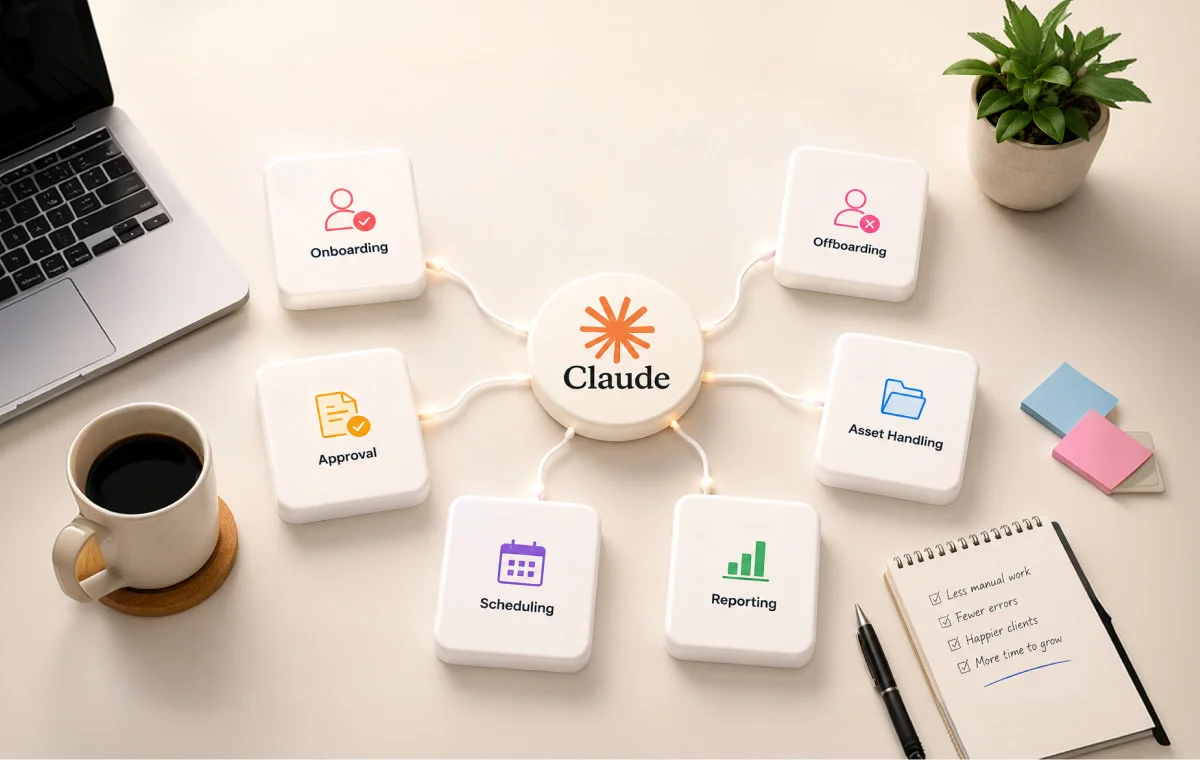
Somewhere in the deep, cluttered archives of your Notion workspace or a buried folder of Loom recordings, your agency’s Standard Operating Procedures (SOPs) exist. You have documented the client onboarding checklist. You have mapped out the approval process. You have a definitive document that outlines exactly how a performance report should be constructed.
The documents themselves are not the problem. The problem is that you are still the one executing these processes by hand. You are still copy-pasting the same captions into six different browser tabs. You are still manually pinging clients who haven’t approved a post in four days. You are still building reports at 9:00 PM because nobody else on the team understands your specific formatting quirks.
This is not a training failure that can be solved with a better PDF. It is a structural failure. As 97% of marketing leaders now acknowledge, integrating AI into daily operations is no longer a competitive advantage—it is a baseline requirement for survival.
The Structural Shift: Moving Beyond Static Documentation
The current crisis in agency management isn’t a lack of information; it’s a lack of execution. When processes rely on human memory and manual labor, they become bottlenecks. This article isn’t another plea to write more SOPs. You already have them. Instead, this is a blueprint for the six specific workflows that demand automation, the exact steps to implement them, and how tools like Claude and the Model Context Protocol (MCP) allow you to reclaim your time.
The "Before You Automate" Audit
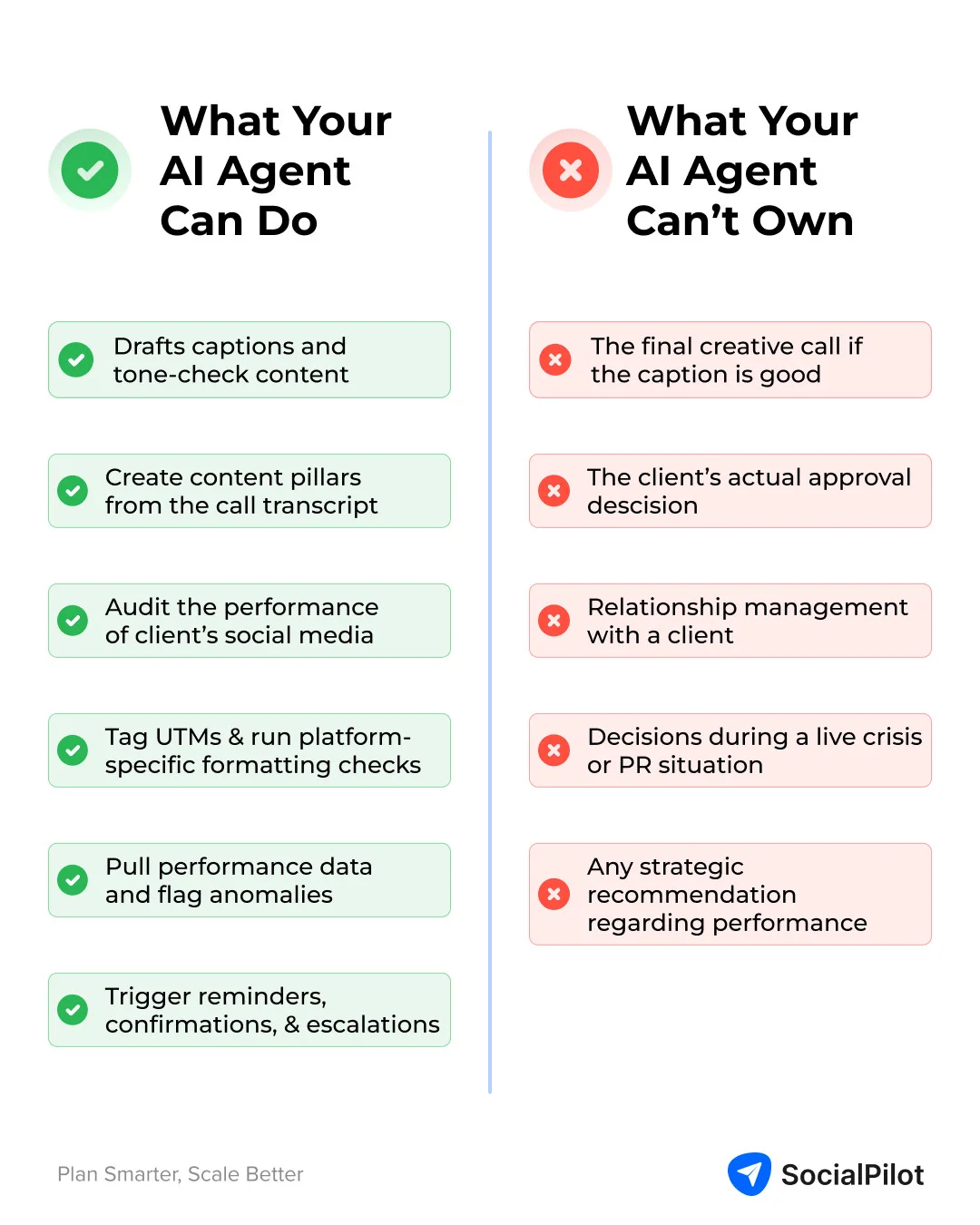
Before handing your workflow over to an AI agent, you must categorize your tasks. Not everything is suitable for automation.
- Strategic Decisions: These require high-level business context, brand empathy, and long-term vision. These must remain human-led.
- Context-Heavy Tasks: These involve complex relationship management and nuanced feedback loops. These require human oversight.
- Mechanical Processes: These involve repetitive actions, data retrieval, and formatting. These are the gold standard for AI automation.
Once you have categorized your tasks, you must define the "authority" of your AI agent. Workflows like scheduling and routing approvals can be fully automated, while tasks requiring creative judgment demand a "human-in-the-loop" approach.
The Technical Backbone: Model Context Protocol (MCP)
The technological breakthrough enabling this shift is the Model Context Protocol (MCP). MCP acts as the connective tissue between your AI agent (Claude) and your operational stack (Notion, Slack, SocialPilot). It allows Claude to read, write, and act directly within your tools, effectively turning your documentation into an automated engine.
| Tool | Primary Ownership |
|---|---|
| Notion MCP | Briefs, calendars, asset intake, feedback loops |
| SocialPilot MCP | Multi-account scheduling, UTM tagging, approval routing |
| Slack MCP | Reminders, escalation routing, delivery alerts |
| GA4 / GSC API | Automated data extraction |
| Claude | Drafting, tone-checking, audit, anomaly detection |
1. The Client Onboarding SOP
Onboarding is the most frequent point of failure for growing agencies. It is a repetitive process performed with unfamiliar variables.
The Automated Workflow:
- Triggered Asset Collection: The moment a contract is signed, the Notion MCP detects the status change and automatically fires the onboarding questionnaire.
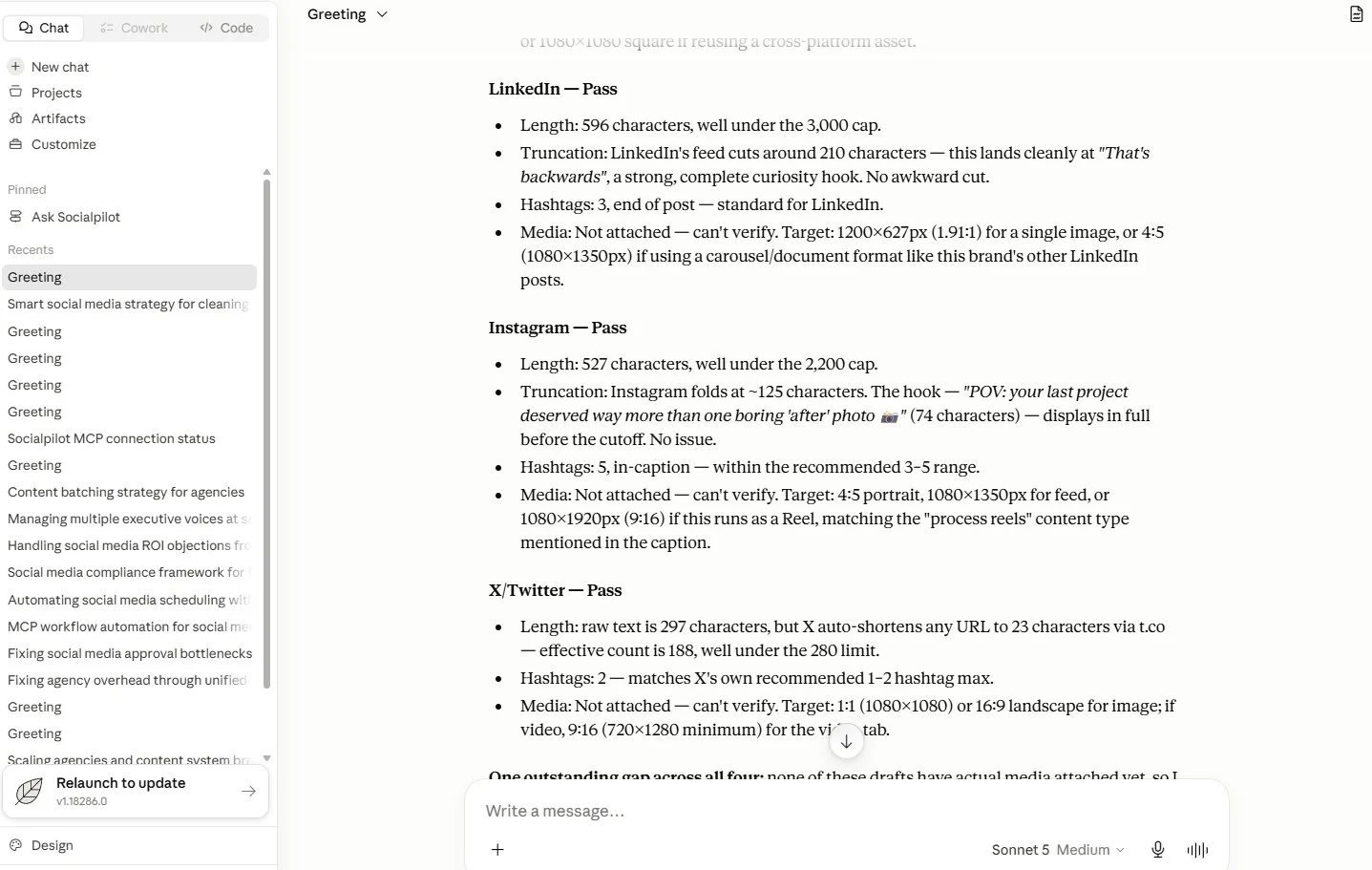
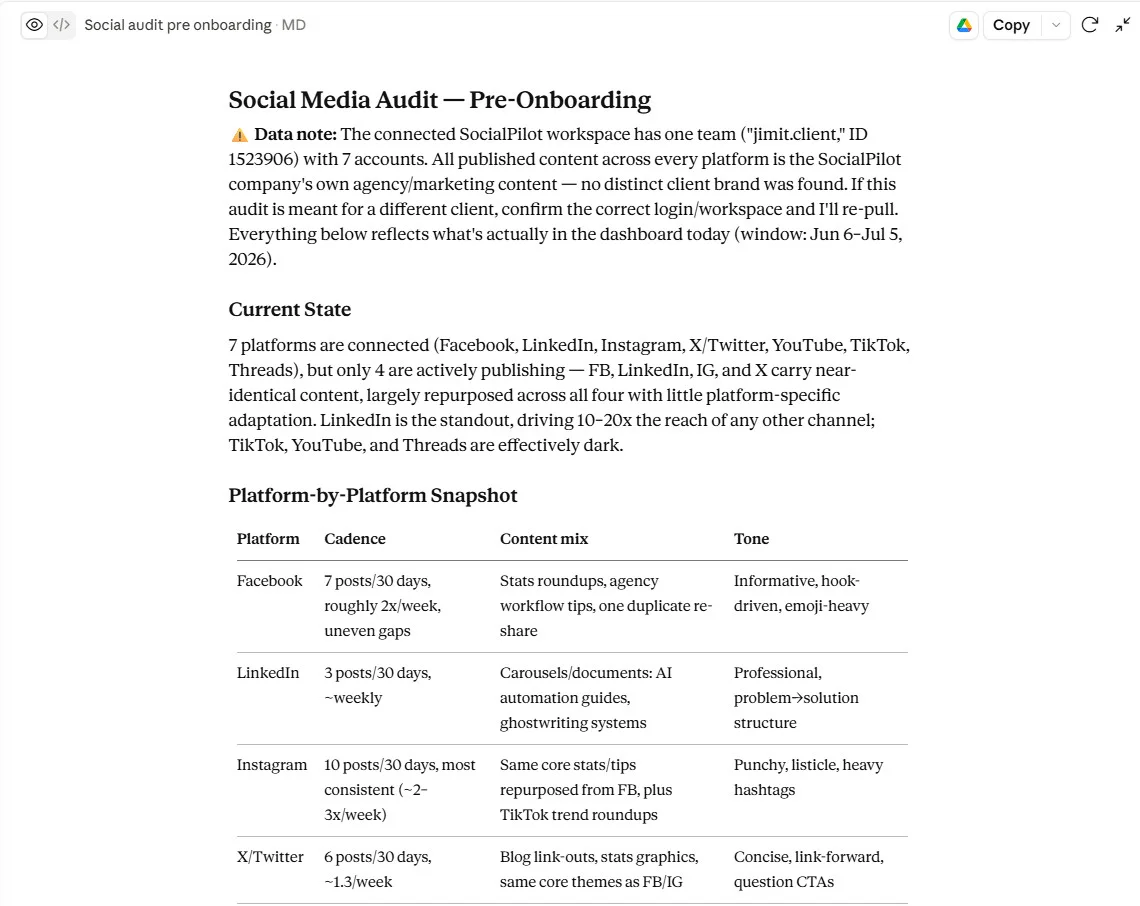
- Automated Audits: Instead of spending two hours manually checking a client’s social presence, Claude scrapes their recent posts across five platforms, analyzing cadence, content mix, and tone, then outputs a one-page audit.
- Transcript-to-Pillar Conversion: By feeding a kickoff call transcript into Claude, the AI extracts key pain points and recurring themes, generating a first draft of content pillars. This transforms a blank-page exercise into a structured editing task.
2. Content Creation and Approval
Content production is often plagued by "re-work." By automating the drafting and initial review, you ensure that the time spent by senior staff is focused on strategy, not grammar.
The Automated Workflow:
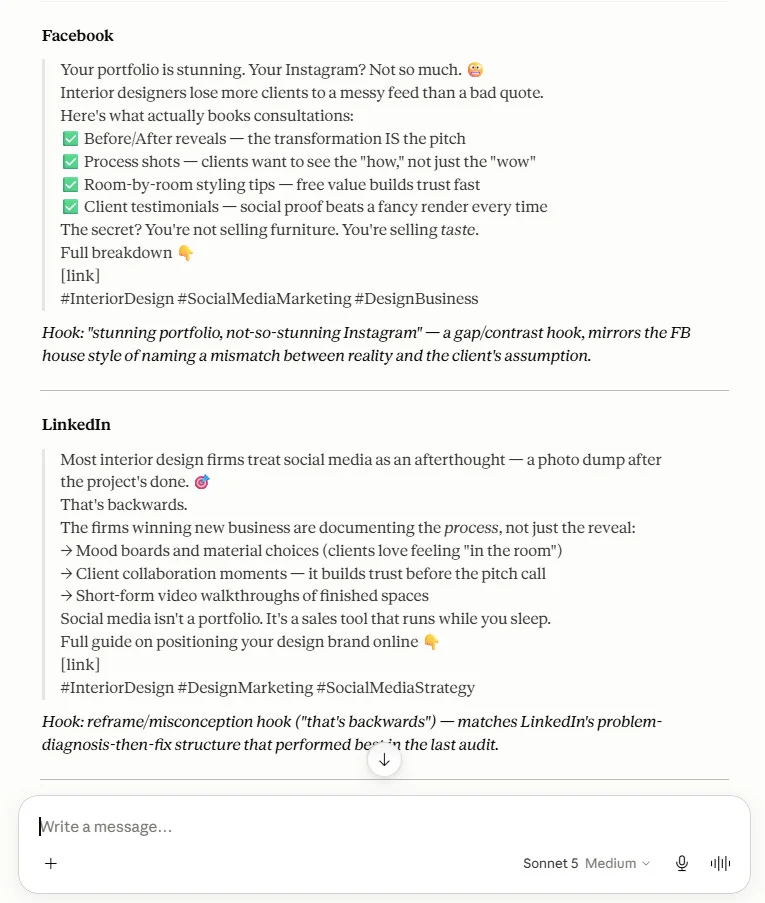
- Context-Aware Drafting: Claude drafts captions by referencing the specific brand brief stored in Notion. It understands platform-specific nuances—such as LinkedIn’s preference for professional tone versus X’s character limits.
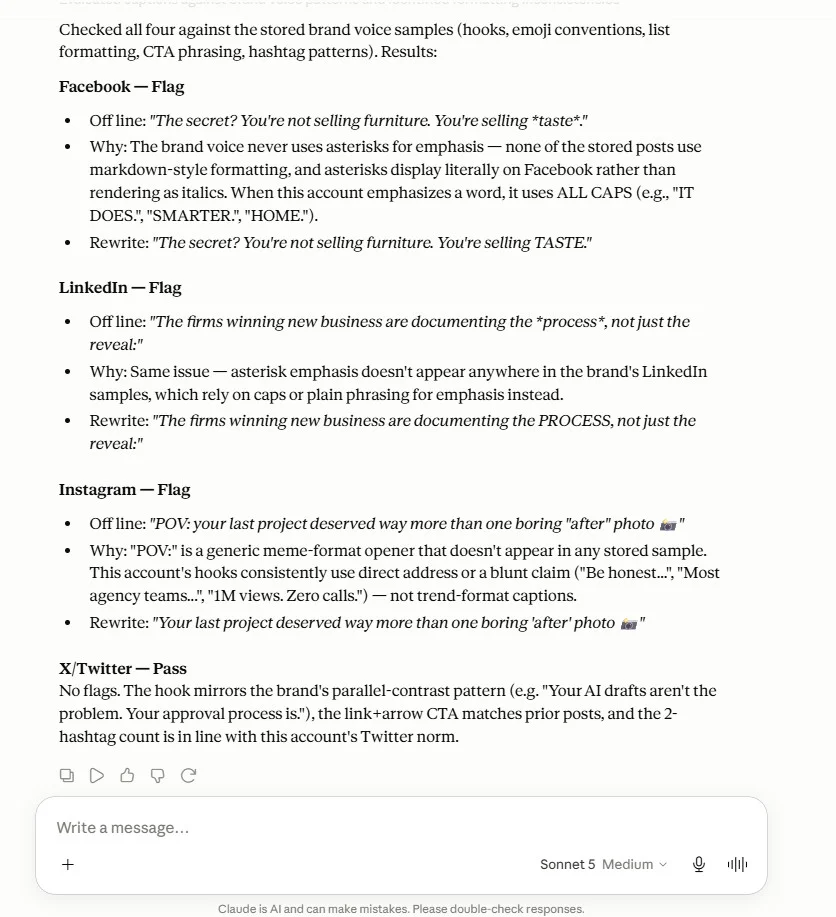
- Tone-Checking: Before a human even sees the draft, Claude compares the copy against established brand guidelines, flagging phrases that drift off-brand and offering precise rewrites.
- Approval Routing: Once internal review is complete, the SocialPilot MCP automatically routes the post to the client’s "Approvals On-The-Go" queue, eliminating the need for email threads.
3. Batch Scheduling and Publishing
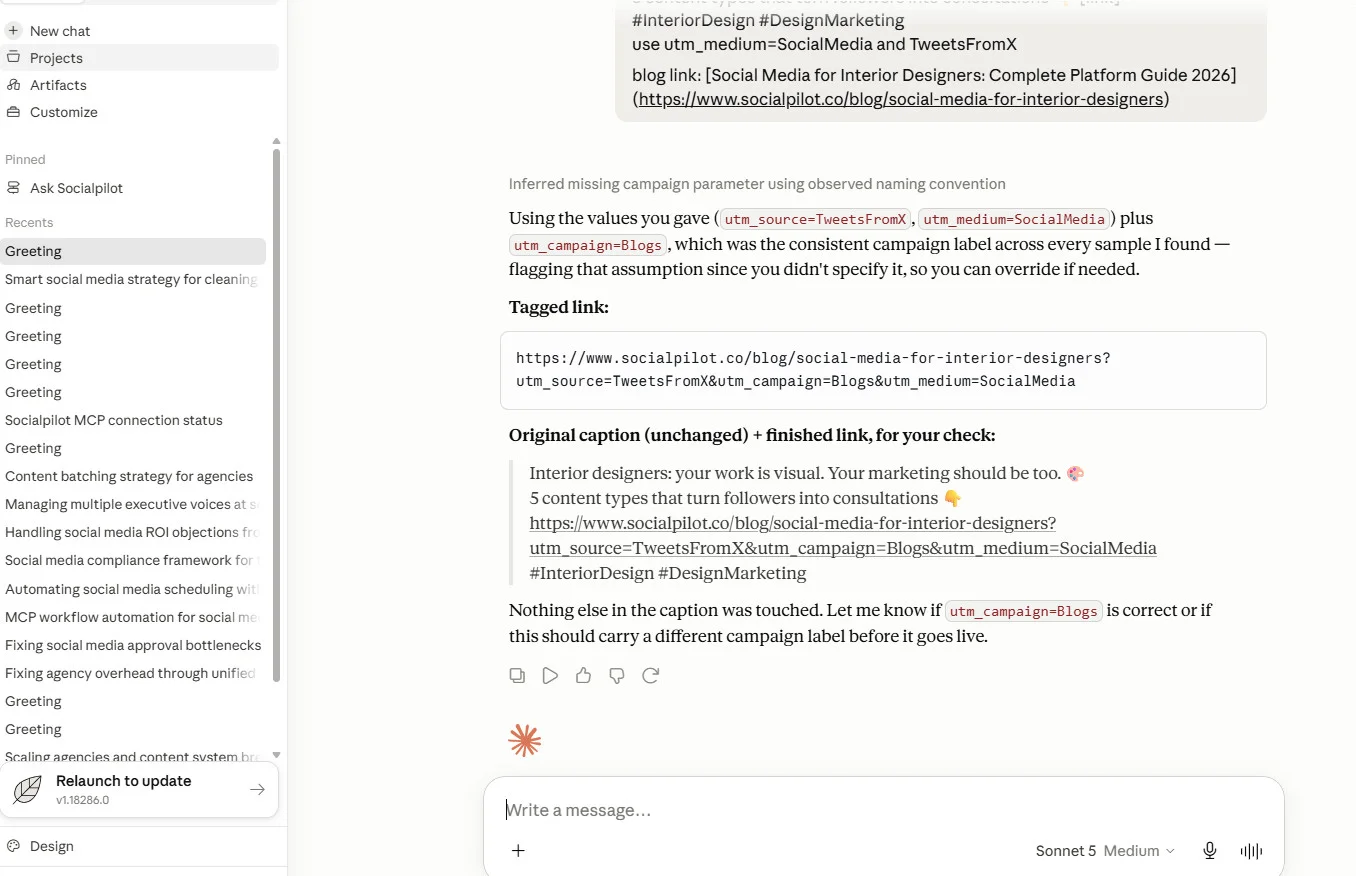
This is the most mechanical of all agency tasks, yet it is where most human errors—like broken links or incorrect UTM parameters—occur.
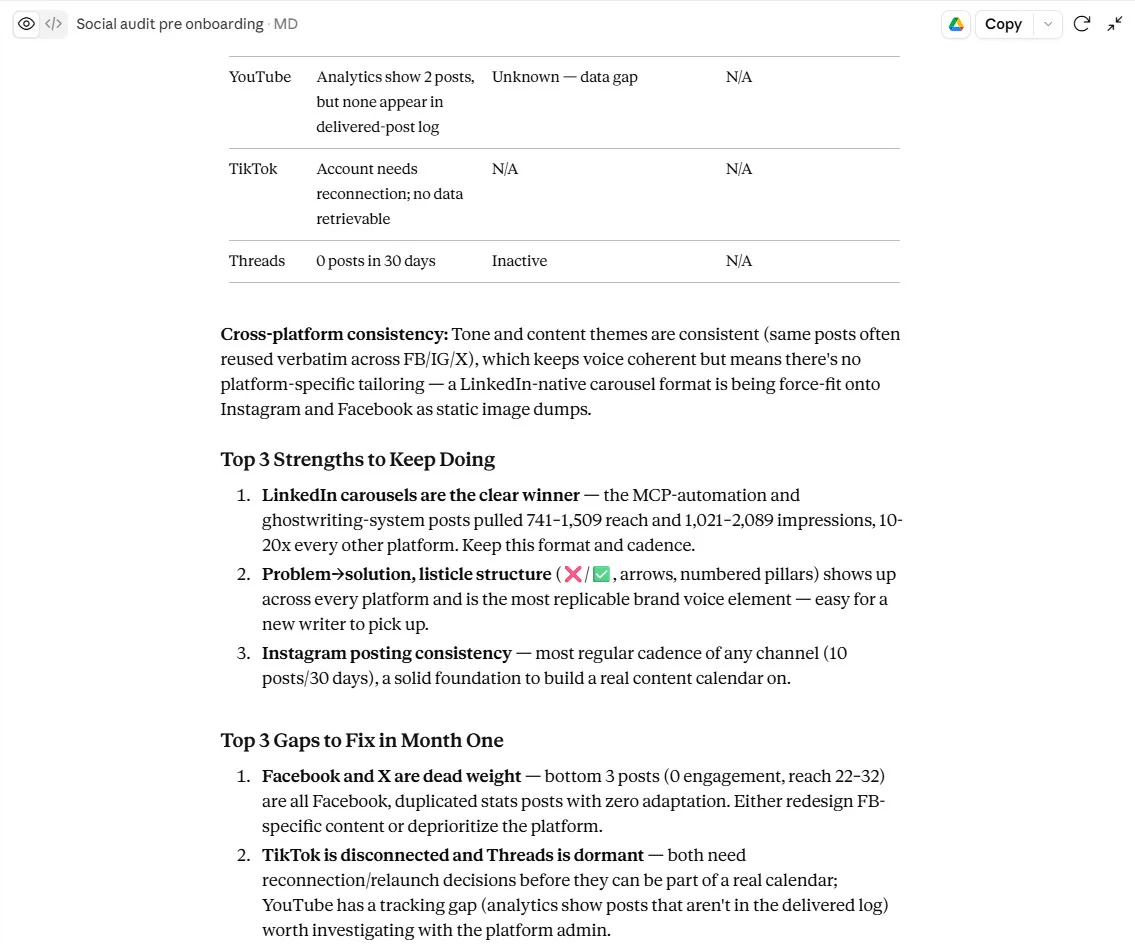
The Automated Workflow:
- Dynamic UTM Tagging: Claude appends the correct campaign parameters to every link, ensuring your agency’s tracking is consistent without manual input.
- Bulk Scheduling: Once formatting is verified, the SocialPilot MCP schedules the entire batch across all accounts simultaneously. This removes the risk of "platform fatigue," where an account manager might miss a channel in a multi-platform campaign.
4. Client Reporting: The Data Bottleneck
Reporting is the "silent killer" of agency profit margins. It requires aggregating data from GA4, Search Console, and native social insights.
The Automated Workflow:
- Automated Data Pulls: Through the GA4 and GSC APIs, Claude fetches only the metrics defined in your template.
- Anomaly Detection: Claude compares current data against the previous three months, flagging any metric that shifted by more than a pre-set threshold (e.g., 20%). This allows the account manager to provide "proactive insights" rather than "reactive explanations."
5. The "Client-Side" Bottleneck
Agencies rarely document what happens when the client fails to deliver. This creates a hidden, unmanaged delay.
The Automated Workflow:
- Automated Nudges: Using Slack MCP, the system monitors deadlines. If a client fails to provide an asset by the due date, the system sends an automated, polite nudge. If the deadline passes, it triggers an escalation to the account manager, ensuring that no project dies in silence.
6. Client Offboarding
Offboarding is usually an afterthought, leading to security risks like forgotten access credentials.
The Automated Workflow:
- Access Audits: Claude checks your master client list against active connections and generates a revocation checklist.
- Asset Handover: Claude aggregates all historical assets—calendars, brand files, and reports—into a single, organized folder for the client, providing a clean professional exit.
Why Most SOPs Fail: The "Human Factor"
As agency consultant Isaac T. Cohen aptly noted, "SOPs assume humans follow instructions. They don’t. They skim. They skip. They guess."
The failure of traditional SOPs can be categorized into three systemic flaws:
- The "Wish" Problem: SOPs often ask humans to perform creative feats—like "write an engaging caption"—which is not a process, but an aspiration. Effective SOPs must limit human involvement to review and judgment, leaving the mechanical execution to automation.
- Stale Documentation: If an SOP isn’t "living" within the tool it governs, it will inevitably go stale. By embedding the SOP into the workflow itself, you ensure that the process remains relevant.
- Lack of Ownership: Every automated workflow must have a designated "owner" who monitors the AI’s performance. If nobody owns the process, the AI’s output will drift.
Implications for the Future of Agencies
The transition to AI-augmented operations is not just about saving time; it is about changing the agency business model. When your team stops being "manual laborers" who copy and paste, they become "automation architects" and "strategic consultants."
The implications are profound. Agencies that embrace this shift will see significantly higher margins and lower burnout rates. They will be able to handle higher volumes of clients without a linear increase in headcount.
As we look toward 2026, the question is not whether AI will manage your social media operations, but whether you will be the one to orchestrate that transition or be left behind by those who do. The technology is here, the protocols are standardized, and the workflows are ready to be built. Your SOPs are currently just documents—it is time to turn them into a system.











