

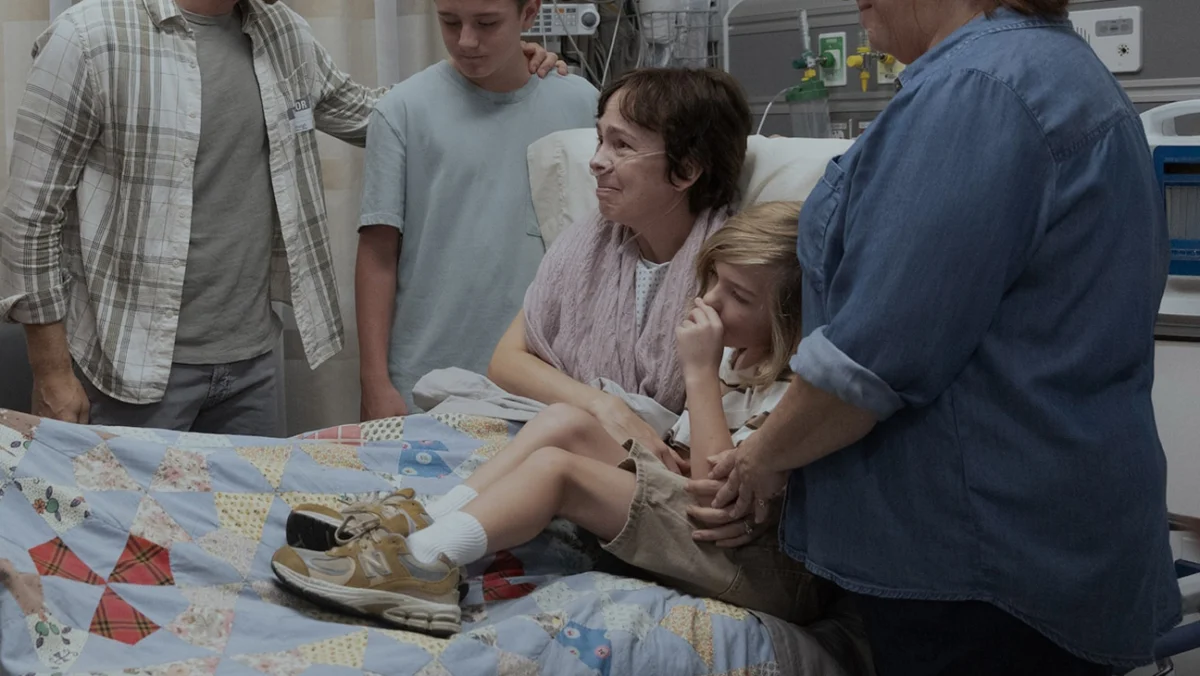
In the high-stakes ecosystem of prestige television, the path to an Emmy nomination is typically paved by powerful publicists, deep-pocketed network campaigns, and the strategic maneuvering of major studios. For most actors, the "For Your Consideration" (FYC) process is a passive experience, leaving their fate in the hands of corporate gatekeepers. However, actress Brittany Allen, whose haunting performance as the terminally ill Roxie Hamler in HBO’s The Pitt captured the hearts of audiences, chose a different route. When HBO declined to submit her for contention, Allen bypassed the traditional hierarchy, self-submitting her work and launching a grassroots digital campaign that ultimately earned her a nomination for Outstanding Guest Actress in a Drama Series.
The Performance That Sparked a Movement
Brittany Allen’s portrayal of Roxie Hamler—a woman who arrives at a hospital with a broken leg only to face the devastating reality of a terminal cancer diagnosis—anchored a six-episode arc that became a focal point of The Pitt’s second season. The character’s choice to remain in the hospital to face the end of her life, rather than return to the familiarity of her family, required a delicate, raw, and profoundly human performance.
As the episodes aired, the audience response was immediate. Viewers took to social media to praise the vulnerability and depth Allen brought to the role. This groundswell of support was soon reflected in early industry predictions, with reputable sources like the Feinberg Forecast and Gold Derby flagging Allen as a serious contender. Despite this clear momentum, HBO’s internal strategy for The Pitt—a show boasting a sprawling ensemble cast—did not include an official submission for Allen.
A Chronology of Empowerment
The journey from being overlooked by the network to achieving industry recognition was a calculated, albeit risky, move for the actress.
- Early Season 2: The Pitt begins airing. Allen’s performance as Roxie Hamler receives significant critical and fan acclaim.
- Contention Window: As awards season approaches, Allen notices her name appearing on early buzz lists. She soon learns she is not on the network’s submission slate.
- The Decision: Facing a familiar industry pattern of being sidelined, Allen chooses to take control. She self-submits her name for consideration in the guest actress category.
- The Campaign: With limited resources and no backing from a major studio marketing machine, Allen and her husband orchestrate a DIY "For Your Consideration" campaign. They leverage an emotional scene from her audition tape and share the reality of her self-submission on social media.
- The Announcement: On a Wednesday morning, the Television Academy confirms Allen’s nomination, validating her decision to advocate for herself.
The Reality of the "Working-Class" Actor
Allen is candid about the financial and emotional realities of her decision. In an era where the narrative of Hollywood often focuses on A-list stars, Allen identifies as a "working-class actor"—a professional who relies on consistent work rather than the luxury of long-term financial security.
"As a working-class actor, I have become very familiar with being overlooked in my career," Allen shared. "You toughen your skin, you keep your head down, and you keep bettering yourself. And then you reach a point where you go, you know what? I don’t want to get overlooked anymore."
This sentiment underscores a broader struggle within the industry: the disconnect between the high quality of performances delivered by guest stars and the limited capacity of networks to market them. Allen’s story is not one of animosity toward the studio, but rather one of pragmatic independence. She acknowledges that HBO faced a monumental task, managing a call sheet of over 100 actors. "Their job could not have been easy whittling down who they would be submitting," she admits. "It stung a little initially, but you pick yourself up and you figure out, what’s another angle? What’s another way in?"
Official Responses and Industry Context
The narrative surrounding Allen’s nomination has sparked a necessary conversation about the mechanics of Emmy campaigning. HBO, through Head of Content Casey Bloys, addressed the strategy behind their submission lists.
"The Pitt has hundreds of performers and we simply, just strategically, can’t submit everybody," Bloys stated in a recent interview with The Hollywood Reporter. "It’s just the reality. But we encourage people to self-submit, and I love that she got nominated."
This official stance highlights the logistical constraints of prestige television. For series with massive ensembles, the cost and strategy required to promote every worthy performance is often prohibitive. However, by publicly encouraging self-submission, the network acknowledges that the traditional gatekeeper model is increasingly porous.
The Role of Past Experience
Allen’s path to this moment was informed by her previous tenure on the long-running soap opera All My Children. Her experience there was a "microcosm" of the industry’s volatility. After being recast and let go due to a lack of fan resonance, she spent months out of work, only to later earn a Daytime Emmy nomination and eventual win for the same role.
That period served as a formative lesson. "I remember thinking, ‘I’m still the same actor I was a week ago,’" Allen reflects. "I’m still bringing the same work to the table, but now suddenly people want to meet me. You couldn’t get too attached to other people’s excitement or their lack of excitement. You just had to keep pushing through."
Implications: The High Cost of Visibility
As Allen prepares for the upcoming awards ceremony, she faces the logistical hurdles of the campaign trail—a process she describes as "an expensive venture." Beyond the emotional labor of self-promotion, there is the literal financial cost of publicists, stylists, and the aesthetic expectations of the awards circuit.
"It’s important at every stage to invest in yourself, but at certain stages to invest more heavily in yourself—that’s just something I’m weighing right now," she explains. This transparency regarding the costs of an Emmy campaign is rarely discussed, yet it is a defining feature of the modern awards landscape.
The nomination has already begun to shift the trajectory of her career. After months of unsuccessfully trying to secure an agent in the United States, the recognition from the Television Academy has acted as a catalyst, opening doors that were previously closed.
A Legacy of Complexity
Looking ahead, Allen’s primary goal is not just the trophy, but the opportunities the nomination will afford her. She is hungry for roles that mirror the depth of Roxie Hamler—characters that are complex, challenging, and profoundly human.
"My biggest goal with this moment is that I can use it as a jumping-off point to do more roles like Roxie," Allen says. "I was so grateful to step inside such a complex, deep, profound human. When you touch that, it only makes you want to do it more."
Brittany Allen’s journey is a testament to the fact that while the industry infrastructure is rigid, the power of a compelling performance—when coupled with the agency to fight for its visibility—can still disrupt the status quo. In a business that often makes actors feel like their careers are entirely outside of their hands, Allen has proven that when the system fails to recognize talent, the talent can, and will, recognize itself.










