


The landscape of modern superhero cinema is currently undergoing a tectonic shift. As Warner Bros. and DC Studios attempt to establish a cohesive, interconnected DC Universe (DCU) under the creative stewardship of James Gunn and Peter Safran, the industry is watching closely. However, the early trajectory of this new shared universe has hit a significant snag. Director Craig Gillespie’s Supergirl, envisioned as a cornerstone of the new DC slate, has underperformed dramatically at the global box office.
While the industry discourse surrounding the film’s failure is understandably bleak, a deeper analysis reveals a historical parallel that suggests this "speed bump" might be a rite of passage rather than a terminal diagnosis. In fact, the DCU’s opening chapter bears a striking, uncanny resemblance to the infancy of the Marvel Cinematic Universe (MCU)—a franchise that eventually grew to dominate global pop culture.
The Chronology of a Rough Start: From Iron Man to Supergirl
To understand the current state of the DCU, one must look at its two-film foundation. The launch of the new DCU was marked by 2025’s Superman, a film that commanded significant prestige and performed admirably, pulling in $618 million worldwide. Much like the foundational success of Jon Favreau’s Iron Man in 2008—which defied expectations to earn $585 million—Superman signaled a strong, if not revolutionary, start for the new regime.
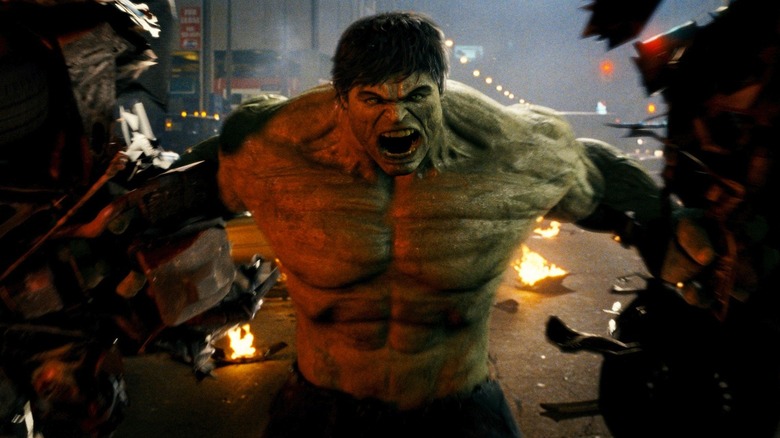
However, the second act is where the mirror images diverge from success and enter the realm of the "sophomore slump." In 2008, Marvel Studios followed the triumph of Iron Man with Louis Leterrier’s The Incredible Hulk. Starring Edward Norton, the film was intended to expand the scope of the universe but sputtered at the box office, grossing a disappointing $265 million against a $150 million production budget.

Similarly, Supergirl was intended to be the secondary pillar of the DCU’s launch strategy. With a reported budget of $170 million and significant marketing muscle behind it, the film was projected to be a major tentpole. Instead, it opened to tepid numbers and has failed to gain traction, with current projections suggesting it may ultimately earn less than The Incredible Hulk when adjusted for inflation and market reach. This creates a fascinating, if unintended, historical symmetry: both the MCU and the DCU launched with one breakout success followed by a major, unexpected theatrical failure.
Supporting Data: Why the Numbers Tell a Nuanced Story
The comparison between Supergirl and The Incredible Hulk is not merely anecdotal; it is supported by the economic realities of the modern theatrical market.
- Budgetary Pressures: Supergirl carries a production budget of $170 million, excluding massive global advertising costs. To achieve profitability, a film of this scale generally needs to reach two-to-three times its budget in global box office receipts. With its current performance, the film is on track to represent one of the most significant financial losses of 2026.
- The "A-List" Factor: There is a fundamental difference in how these franchises are perceived. In 2008, Iron Man was a B-tier character in the eyes of the general public. His success was a triumph of execution. Conversely, Superman is an A-list titan of global culture, and the stakes for his film were inherently higher. While Superman met expectations, the failure of Supergirl is arguably more damaging because the character is a secondary lead in the DC stable, yet the studio invested first-tier capital into her solo debut.
- Market Saturation: Unlike 2008, when the "superhero genre" was still a novelty in the form of a shared universe, the current market is fatigued. Audiences have been bombarded with comic book adaptations for over a decade. The sheer volume of content, coupled with a general decline in international box office interest, has made the barrier to entry for new franchise entries much higher.
Examining the Institutional Response
Neither Warner Bros. nor DC Studios has officially commented on the long-term strategic adjustments following the Supergirl performance, but the industry rumor mill and trade reports suggest a shift in philosophy. Sources indicate that Gunn and Safran are keenly aware of the need to pivot away from high-budget risks on characters with unproven commercial track records.
The response, it appears, is to diversify the types of films produced under the DC banner. The upcoming release, Clayface, represents a calculated deviation from the traditional "four-quadrant" blockbuster model. As a Batman-adjacent, R-rated horror film with a significantly leaner budget—estimated in the $40 million range—it is designed to be a high-reward, low-risk venture. By leaning into genre-specific storytelling rather than attempting to force every project into the "epic superhero blockbuster" mold, DC Studios is attempting to mitigate the risk that Supergirl highlighted.

Furthermore, the creative team is doubling down on their core assets. James Gunn is currently helming the sequel to Superman, titled Man of Tomorrow, which will feature high-profile character additions like Lex Luthor. The studio is betting that consistency—or, as some critics call it, "quality control"—is the key to reclaiming the audience’s trust.
The Road Ahead: Can the DCU Rebound?
The question remains: Can the DCU mirror the MCU’s path to recovery? It is easy to forget that after The Incredible Hulk, Marvel faced a period of intense scrutiny. It wasn’t until the release of The Avengers in 2012 and the maturation of the Captain America franchise that the MCU truly solidified its status as a $32 billion juggernaut.
For the DCU to replicate this success, they must address three critical pillars:
- Fiscal Discipline: The most immediate lesson from Supergirl is that the "blank check" era of superhero filmmaking is over. Budgets must be commensurate with the character’s known draw.
- Narrative Cohesion: Marvel’s success was predicated on a ten-year streak of "must-see" quality control. Every film, even the weaker ones, served the broader narrative. DC must ensure that their upcoming projects feel like essential chapters rather than disconnected experiments.
- Audience Engagement: With interest in superhero films waning, the DCU cannot rely on the "brand name" alone. They must deliver unique, distinct cinematic experiences that stand on their own merits.
Implications for the Superhero Genre
The struggle of Supergirl is emblematic of a broader transition within the film industry. We are witnessing the end of the era of superhero dominance. As the genre enters a post-saturation phase, studios can no longer rely on the spectacle of capes and powers to drive ticket sales. The audience has become more discerning, and the "formula" that worked for the first two decades of the 21st century is no longer a guarantee of success.
If DC Studios can internalize these lessons, the failure of Supergirl may ultimately be viewed as a necessary correction. By pruning their strategy and focusing on lower-budget, high-concept, and critically driven films, they may find that the path to a healthy cinematic universe is not through constant expansion, but through intentional, sustainable growth.
In conclusion, while the early days of the DCU have been marred by the box office disappointment of Supergirl, the history of the MCU proves that a shaky start does not dictate a franchise’s destiny. The question is no longer whether DC can build a massive, interconnected universe, but whether they have the agility to adapt to a changing market that is no longer satisfied with business as usual. As Supergirl concludes its theatrical run, the focus shifts to Clayface and beyond—the true test of whether the new DC Universe can learn from its own "Incredible Hulk" moment and evolve into something far more sustainable.










