The landscape of science fiction continues to evolve, bridging the gap between historical preservation and future-forward discovery. This week’s dispatch covers the latest in literary accolades, the passing of a titan in the fandom community, groundbreaking astrophysical developments, and the enduring cultural impact of iconic genre figures.
1. Celebrating New Voices: The 2026 Mike Resnick Memorial Award
On July 1, the literary world turned its attention to the next generation of storytellers with the announcement of the 2026 Mike Resnick Memorial Award finalists. This prestigious honor, dedicated to recognizing the best unpublished science fiction short story by an emerging author, continues to serve as a vital pipeline for new talent in the industry.

Honoring a Legacy
The award is jointly sponsored by Arc Manor Publishers and Dragon Con, organizations committed to preserving the spirit of Mike Resnick—a prolific author and editor celebrated for his dedication to mentoring "writer children." By paying his expertise forward, Resnick helped launch the careers of countless authors. This annual competition serves as a tribute to that legacy, providing a platform for fresh perspectives to reach a wider audience.
The Stakes and Recognition
The competition is rigorous, and the rewards are designed to provide both prestige and professional advancement. The first-place winner will receive a commemorative trophy and a $250 cash prize. Furthermore, their work will be acquired by Galaxy’s Edge at the magazine’s prevailing professional rate, ensuring the winner secures their first major publication. Second and third-place honorees will receive $100 and $50, respectively. The winners will be formally recognized at the annual Dragon Awards ceremony held during Dragon Con.

2. Archival Precision: Mapping the Hugo History
In a monumental effort to organize the history of the genre’s most celebrated award, fan researcher Tammy Coxen has unveiled a comprehensive "History of Hugo Category Definitions." Available via a public Google Sheet, the document provides an exhaustive breakdown of category criteria dating back to 1970.
Coxen, reflecting on the three-day "nerdy" marathon required to compile the data, noted that the project was born out of a personal need for better documentation in fan history research. While she jokingly suggested she might be the only person interested in such granular detail, the resource is already being hailed as a vital tool for historians, scholars, and superfans seeking to understand the evolution of science fiction’s cultural markers.

3. The End of an Era: Remembering Robin Johnson (1937–2026)
The international science fiction community is mourning the loss of Robin Johnson, a legendary fan and a pivotal figure in the history of the World Science Fiction Convention (Worldcon). Johnson passed away on July 6 at the age of 89 in Ballarat, Australia.
A Life of Fandom
Born in 1937, Johnson’s contributions to the genre were immense. He is perhaps best remembered for his leadership in the mid-1970s, during which he spearheaded the successful bid for and execution of Aussiecon in 1975—the first Worldcon ever held in Australia. His influence extended globally; he was a frequent traveler to conventions across the U.S., Europe, and Japan.

Accolades and Impact
Johnson’s peers often described him as Australia’s "most international fan." His dedication was recognized with numerous honors, including two Ditmar Awards for "Contributions to Fandom" (1974 and 1983) and the prestigious Big Heart Award, which he received at the 2007 Worldcon in Japan. As a Guest of Honor at Aussiecon Four in 2010, his legacy was cemented as a bridge-builder between the Australian fan community and the rest of the world. He leaves behind a legacy of hospitality and institutional service, particularly in his later years in Tasmania, where he helped organize the Thylacon conventions.
4. Pop Culture Icons: Anjelica Huston’s Enduring Appeal
As of July 8, 2026, actress Anjelica Huston celebrates her 75th birthday. Known for her chameleon-like ability to inhabit macabre and fantastical roles, Huston remains a touchstone for genre fans.

The Morticia Phenomenon
Huston’s portrayal of Morticia Addams in The Addams Family (1991) and Addams Family Values (1993) remains arguably her most iconic contribution to the genre. Critics note that her performance brought a perfect synthesis of "warmth and macabre humor" to the character. However, the role was physically grueling. Director Barry Sonnenfeld’s vision of a cartoonishly slim silhouette required Huston to wear a custom metal corset and undergo hours of rigorous makeup and hair styling. Despite the physical toll, her performance earned the films Hugo Award nominations at MagiCon and ConAdian, respectively.
Beyond the Addams Family
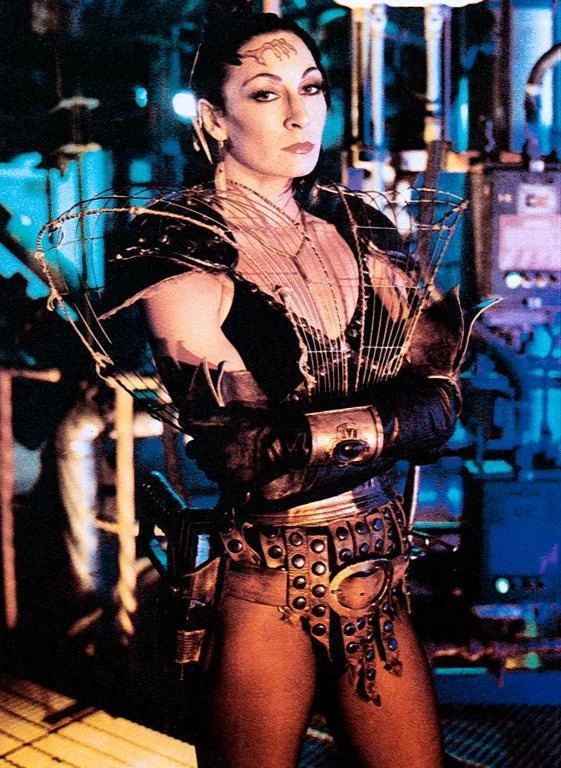
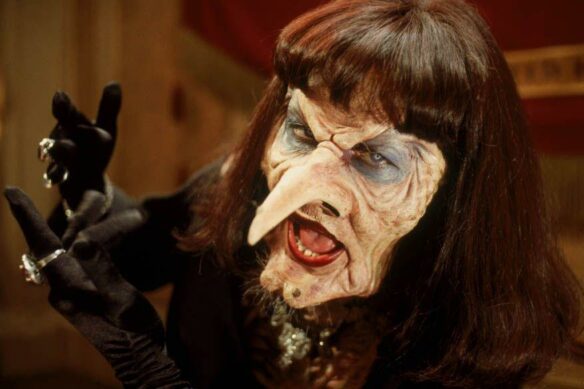
Huston’s genre footprint is surprisingly deep. From her early work as Maida in the cult classic The Ice Pirates to her terrifyingly transformative role as the Grand High Witch in The Witches, Huston has consistently chosen roles that push the boundaries of visual storytelling. Her ability to blend sophisticated acting with high-concept genre production remains a gold standard for performers in speculative fiction.

5. Scientific Frontiers: The Legacy Survey of Space and Time
While the world of fiction looks to the stars, the world of science is currently pointing a "camera the size of a small car" toward them. The Vera C. Rubin Observatory in Chile has officially launched its Legacy Survey of Space and Time (LSST), a decade-long endeavor to map the southern sky with unprecedented clarity.
The Mechanics of Discovery
The observatory utilizes a 6,600-pound digital camera that captures detailed images of the cosmos every 40 seconds. By employing a series of advanced color filters, the telescope achieves "superhuman vision," allowing researchers to track the morphing of celestial objects in real-time—from asteroid trajectories to the violent beauty of supernovae.
Implications for Research
This effort is expected to revolutionize our understanding of intergalactic evolution. By creating a continuous time-lapse panorama of the universe, the LSST will provide global observatories with the data necessary to coordinate multi-institutional studies of rare cosmic events. This is not merely an observational project; it is a fundamental shift in how humanity catalogs the history and future of the cosmos.
6. Literary Weirdness and Biological Foundations
The intersection of the surreal and the biological is a theme appearing in recent literary and scientific news.
- The Strangest of Stories: Starship Sloane Publishing has released The Strangest of Stories: A Collection of the Weird and Surreal by Zdravka Evtimova. Edited by Nigel Suckling and Justin T. O’Conor Sloane, the collection is being lauded for its "haunting and beautiful" imagery, bringing a unique Bulgarian perspective to the surrealist canon.
- The Algae Connection: In a fascinating piece from the New York Times, the role of algae in the history of life on Earth is highlighted. Scientists now estimate there are upwards of a million species of algae, many of which were the biological precursors to complex life. The article notes that humans share roughly one-third of their functional DNA with these organisms, serving as a reminder that the "green pond scum" we often overlook is, in fact, the foundation of our existence—a concept that offers rich, untapped potential for science fiction world-building.
Summary of Recent Developments
| Category | Key Development |
|---|---|
| Awards | 2026 Mike Resnick Memorial Award finalists announced. |
| Fandom | Death of Worldcon chair and fan icon Robin Johnson. |
| Research | Creation of a definitive Hugo Category Definitions tool. |
| Astronomy | Vera Rubin Observatory begins 10-year LSST deep-space survey. |
| Culture | Retrospective on Anjelica Huston’s 75th birthday. |
As we move forward into the latter half of 2026, these developments highlight the ongoing vitality of the science fiction genre. Whether through the meticulous archiving of award rules, the celebration of long-standing acting careers, or the technological advancement of our view of the universe, the community remains as focused on the past as it is on the infinite possibilities of the future.