

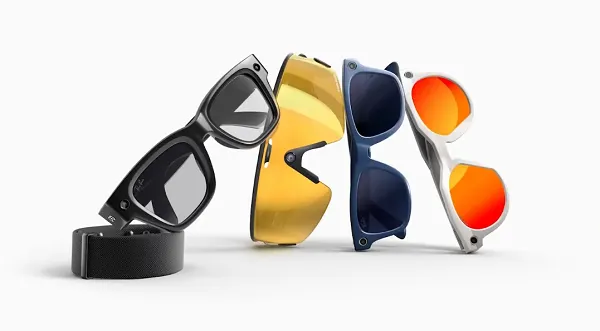
Meta’s ongoing quest to dominate the wearable computing market has reached a critical, and controversial, juncture. After months of aggressive public denials and heated confrontations with tech journalists, Meta CTO Andrew Bosworth has finally confirmed that the company is actively exploring the integration of facial identification capabilities into its Ray-Ban Meta smart glasses.
While the company frames this development as a revolutionary assistive technology tool, the admission underscores a deep-seated tension between Meta’s ambitious AI roadmap and the public’s mounting privacy concerns. The move suggests a calculated shift in narrative, transitioning from outright denial to a carefully curated defense of "user-centric" functionality.
The Core Concept: Solving the "Cocktail Party Problem"
In a recent interview with journalist Nicholas Thompson, Bosworth offered the most concrete look yet at how Meta envisions facial identification. The feature is not, according to the CTO, intended to function as a mass-surveillance dragnet or a global database of facial geometry. Instead, it is being pitched as a solution to two distinct user needs: accessibility and memory augmentation.
For the visually impaired, the utility is clear. Bosworth noted that a primary request from the blind community is a simple, real-time answer to the question: "Who is in the room with me?" By utilizing the glasses to identify known associates, Meta argues it can offer newfound independence to those who struggle to navigate social environments.
Beyond accessibility, Meta is also targeting what Bosworth calls the "cocktail party problem." This refers to the universal difficulty of remembering the names, faces, and previous conversational contexts of acquaintances encountered at social or professional events. In this application, the glasses would act as a memory prosthetic, providing the wearer with "digital name tags" for people they have already met and opted to store in their device’s local, encrypted memory.
A Chronology of Conflict: From Denial to Confirmation
The path to this confirmation has been paved with contradictions. Meta’s handling of the development process has been characterized by a "deny-and-deflect" strategy, leading to significant friction between the company and the tech press.
The Early Rumors (February 2024)
Reports first surfaced in early 2024 suggesting that Meta was looking to bypass traditional scrutiny by quietly introducing facial recognition updates to its smart glasses. The hypothesis was that Meta intended to capitalize on a distracted geopolitical climate to roll out controversial features with minimal pushback.
The Wired Exposé and the "Shoddy" Response
The tension reached a breaking point last month when Wired published an investigative report detailing evidence of facial recognition code within the Meta AI device driver. The response from Meta was swift and uncharacteristically aggressive. Spokesperson Andy Stone publicly dismissed the reporting as "shoddy" and "intellectually dishonest." CTO Andrew Bosworth joined the fray, labeling the claims "incredibly misleading."
The Strategic Shift
Despite these vehement denials, Bosworth’s recent comments validate the core premise of those reports. This reversal raises significant questions regarding corporate transparency. Analysts suggest that Meta’s initial hostility was a tactical maneuver—an attempt to discredit early reporting to dampen public outcry while the feature remained in the experimental phase. By framing the critics as inaccurate, the company created a buffer zone to manage the eventual public rollout on their own terms.
Historical Context: The Shadow of Facebook’s Facial Recognition
Meta’s sensitivity regarding this technology is not unfounded; it is a product of deep historical scars. In 2021, the company was forced to shut down its long-standing facial recognition system on Facebook following massive backlash. The system, which automatically tagged users in uploaded photos, became the poster child for the "surveillance capitalism" criticism that has dogged the company for a decade.
The fallout from that incident led to the deletion of over a billion individual facial templates. For a company that has spent years attempting to rebrand itself from a social media giant into a "metaverse" and AI-first pioneer, the reintroduction of facial scanning is a high-stakes gamble. The company is acutely aware that any misstep—such as a data breach or a lack of granular user consent—could trigger a regulatory catastrophe similar to, or worse than, its previous brushes with privacy watchdogs.
The Technical and Ethical Architecture
To avoid the pitfalls of the past, Meta is emphasizing a "privacy-first" design philosophy for its glasses. The key components of this strategy include:
- Local Encryption: Unlike the legacy Facebook system, which processed facial data in the cloud, Meta claims this new implementation would rely on local, on-device processing. This theoretically keeps biometric data out of Meta’s central servers.
- Opt-in Recognition: The feature would reportedly rely on "digital handshakes," where a user explicitly saves a contact or is introduced to someone, creating a local "memory" on the glasses rather than pulling from a public database.
- The "User-Only" Clause: The functionality would be restricted to the wearer, serving as a personal aide rather than a public-facing monitoring tool.
However, privacy advocates remain skeptical. They point out that "local processing" can easily become a stepping stone to cloud integration as product requirements evolve. Furthermore, the presence of cameras on wearable devices—even with LED indicators to signal recording—is already a point of contention. Adding facial recognition to the mix fundamentally changes the nature of the device from a passive tool into an active, analytical sensor.
Implications for the Future of Wearables
The integration of facial identification into smart glasses marks a turning point in the evolution of personal technology. If Meta successfully navigates the privacy minefield, it could set a new standard for how wearable AI interacts with the physical world.
Social Dynamics
The social contract is likely to be strained. If a wearer can "look up" anyone they have met previously, it changes the power dynamic of casual social interactions. It creates a world where anonymity is harder to maintain, even among acquaintances.
The Regulatory Landscape
Meta is clearly preparing for a battle with global regulators. By emphasizing the "assistive" nature of the tech—focusing on veterans with traumatic brain injuries (TBI) and the visually impaired—Meta is attempting to build a moral firewall around the technology. It is a classic lobbying tactic: if the technology is presented as a life-improving tool for vulnerable populations, it is significantly harder for lawmakers to implement outright bans.
Competitive Pressure
Meta is not alone in this race. With Apple’s Vision Pro and various other AR/VR initiatives, the pressure to provide "context-aware" AI is immense. The first company to successfully deliver a socially acceptable, useful, and private-by-design facial recognition feature will likely secure a massive competitive advantage in the burgeoning wearables market.
Final Thoughts
The irony of Meta’s current position is not lost on observers. After spending years distancing itself from the "surveillance" label, the company is now betting its future on the very technology that defined its most damaging era.
Bosworth’s confirmation is more than just a product update; it is an admission that the lure of high-utility AI outweighs the PR risks of re-entering the facial recognition fray. Whether Meta can convince the public that this is a helpful assistant rather than an invasive eye is the ultimate test of the company’s new, post-scandal era. As the technology moves from the lab to the real world, the "cocktail party problem" may soon be solved, but at the potential cost of the fundamental right to remain anonymous in a public space.











