

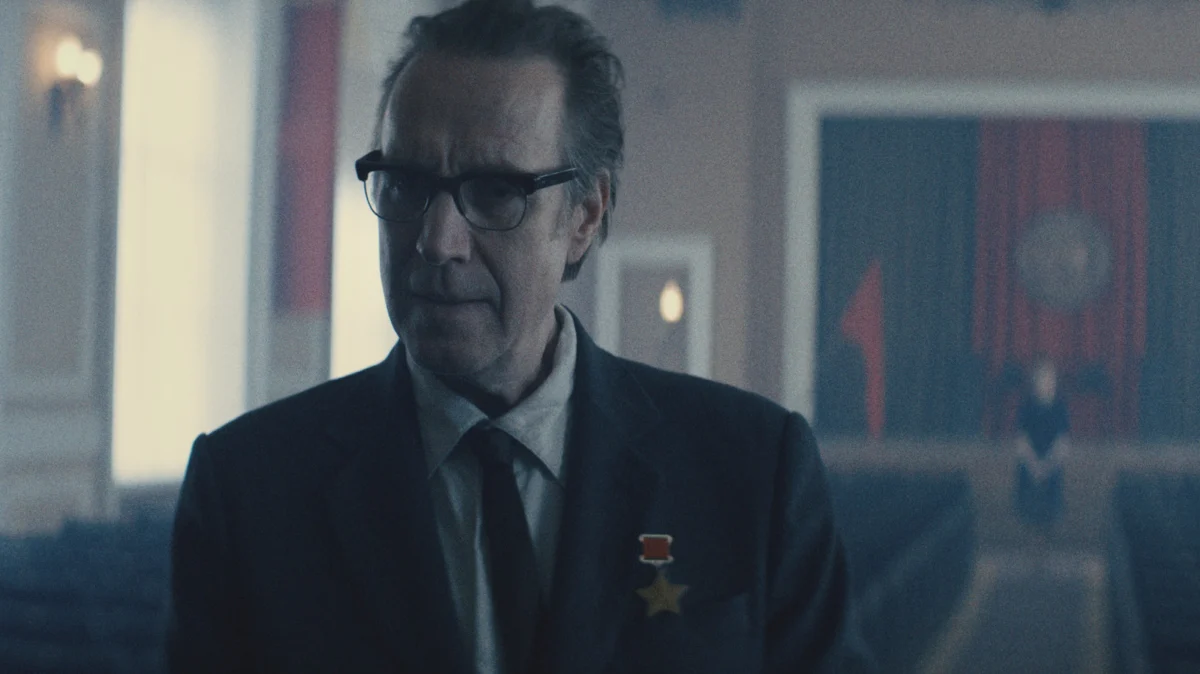
In the rapidly expanding universe of high-concept science fiction, Apple TV+’s Star City has emerged as a formidable successor to the legacy of For All Mankind. While the series functions as an essential companion piece to its predecessor, it distinguishes itself through a grim, cerebral atmosphere that evokes the paranoid tension of a Cold War thriller and the bureaucratic claustrophobia of Chernobyl. However, beneath its surface-level exploration of the Soviet space program, the show hides a profound intellectual secret.
The second episode, "A Bear on a Chain," features a subtle yet transformative nod to Nikolai Fyodorov—a 19th-century Russian philosopher whose radical "cosmist" theories serve as the narrative backbone for the series’ broader ambitions. For viewers willing to look past the political posturing and the technical jargon of rocket science, this reference offers a window into the show’s true thematic soul: the quest for human transcendence through technological advancement.
The Intersection of Bureaucracy and Vision
A Chronology of the Chief Designer’s Secret Ambition
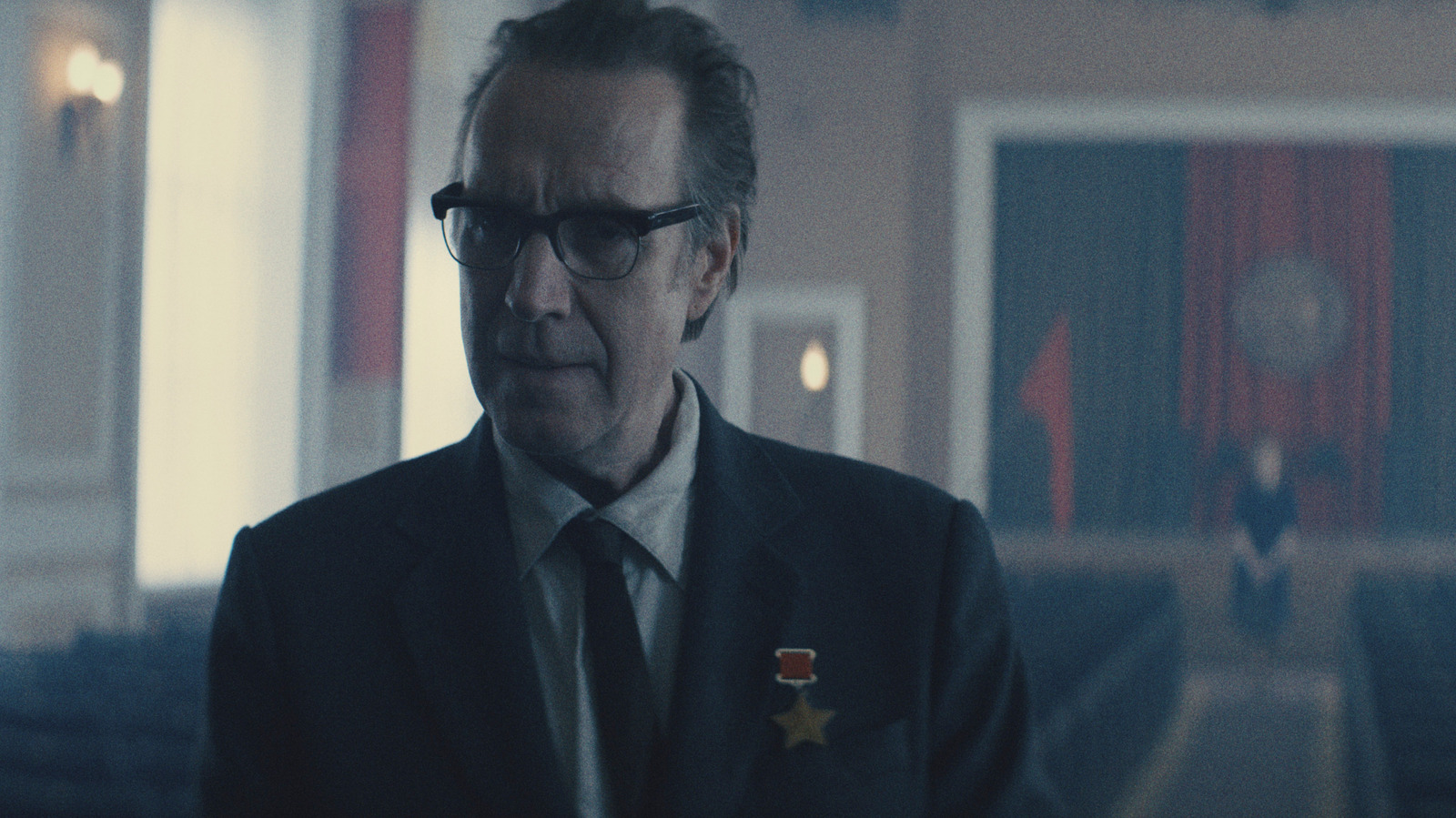
To understand the weight of the Fyodorov reference, one must first map the narrative trajectory of the series’ central antagonist—or perhaps, its most ambitious protagonist. The Chief Designer, portrayed with haunting intensity by Rhys Ifans, finds himself stifled by the rigid, unimaginative demands of the Soviet state. Tasked with accelerating lunar base missions to satisfy political optics rather than scientific progress, he becomes a man out of time, chafing against the limitations of his era.
The chronology of his transformation is subtle:
- The Encounter: The Chief Designer identifies Sergei Nikulov (Josef Davies), a young, unconventional engineer, as a potential protégé. Sergei’s brilliance lies not in his adherence to party doctrine, but in his ability to think laterally.
- The Discovery: During a visit to Sergei’s private quarters, the Chief Designer discovers a copy of a forbidden text by Nikolai Fyodorov.
- The Alliance: Rather than reporting the possession of illicit philosophical material, the Chief Designer uses it as a litmus test. By acknowledging the text, he signals to Sergei that they are both outsiders—men who view the stars not as political territory, but as the final frontier for the human species.
This sequence establishes the show’s primary tension: the conflict between the bureaucratic "chained bear" of Soviet politics and the soaring, cosmic ambition of those who believe humanity’s destiny lies beyond the atmosphere.
The Philosophy of Cosmism: Who Was Nikolai Fyodorov?
To fully appreciate the narrative weight of Star City, one must understand the man who inspired the Chief Designer’s secret agenda. Nikolai Fyodorov (1829–1903) was a librarian and philosopher whose work, while suppressed by the Soviet regime, exerted a profound, subterranean influence on the Russian scientific community.
Fyodorov’s core philosophy, known as "Russian Cosmism," was a strange, singular blend of Christian mysticism and proto-transhumanism. His central tenet was the "Common Task"—the idea that humanity has a moral obligation to overcome the limitations of the physical world, specifically death itself. Fyodorov argued that since science had the potential to solve the problems of famine, disease, and eventually mortality, it was the duty of all mankind to unite in a massive, technological resurrection of the dead.
In the context of the space race, Fyodorov’s ideas were repurposed. His followers argued that if humanity were to conquer death, we would eventually run out of space on Earth. Thus, the colonization of the cosmos became a prerequisite for human immortality. It is this specific intellectual lineage that the Chief Designer invokes when he speaks to Sergei. When he mutters, "Immortality, Sergei. Victory over the final enemy," he is not merely talking about space exploration; he is referencing the Fyodorovian dream of a humanity that has outgrown its own mortality.
Supporting Data: Why Literature Matters in Television
The use of literature in high-stakes drama serves as a powerful shorthand for character motivation. In Star City, the inclusion of Fyodorov is not a mere "Easter egg" for the academically inclined; it is a narrative device that defines the moral stakes of the show.
In modern television writing, there is a tendency to over-explain character arcs through dialogue. Star City opts for a more sophisticated approach. By grounding the Chief Designer’s motivations in Russian philosophy, the writers allow the audience to infer his endgame without relying on clunky exposition. This mirrors the "show, don’t tell" ethos that has made the For All Mankind franchise so successful.
The reference also highlights the "forbidden" nature of visionary thinking under the Soviet regime. By depicting the book as contraband, the show reinforces the idea that true innovation is inherently subversive. In a state that demands conformity, the pursuit of knowledge—especially knowledge that challenges the state’s definition of reality—becomes an act of rebellion.
Official Responses and Creative Intent
The production team behind Star City has remained tight-lipped regarding the specific narrative beats of future episodes, but their focus on the "human cost of progress" is well-documented. In interviews accompanying the series launch, producers have noted that Star City was designed to explore the "what if" scenarios of the space race not just through hardware, but through ideology.
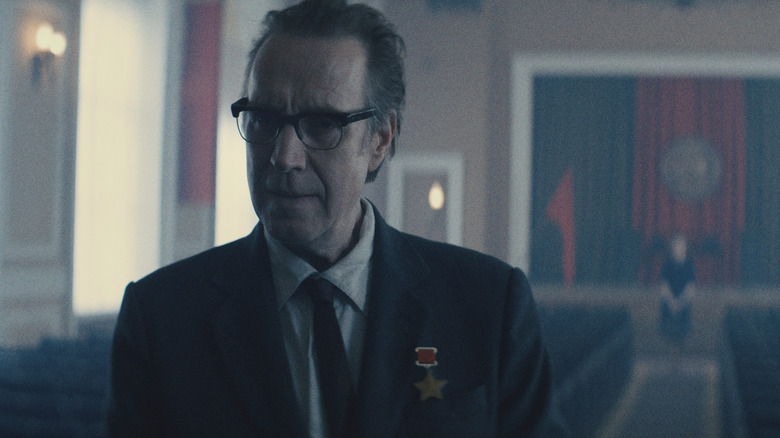
The Chief Designer’s character, heavily inspired by the real-life Sergey Korolev—the lead Soviet rocket engineer and spacecraft designer—serves as the perfect vessel for this exploration. Korolev was a man who lived in the shadow of the Gulag and the constant scrutiny of the KGB, yet managed to lead the USSR to the first successful satellite launch and the first human in space. By injecting the fictionalized "Chief Designer" with a philosophical obsession with Fyodorov, the show provides a layer of psychological depth that justifies his willingness to defy the Soviet state.
Implications: The Long-Term Trajectory of the Series
As Star City progresses, the Fyodorov reference will likely serve as the bridge between the grounded, political struggles of the early episodes and the grander, more metaphysical themes that define the later years of the For All Mankind universe.
If the Chief Designer succeeds in his clandestine operations, the implications for the timeline of the series are massive. The show is clearly positioning itself to move beyond the traditional "Cold War" narrative, transitioning instead into an era of deep-space exploration driven by a messianic, almost cult-like devotion to the future of humanity.
The reference to Fyodorov implies that the "Star City" of the title is not just a geographical location, but a state of mind. It is a place where the brightest minds in the Soviet Union—men and women who have been told that their only goal is to beat the Americans—begin to realize that the race is not against the West, but against the clock of human existence itself.
Conclusion: The Race to Transcendence
Star City is proving to be a rare breed of television: a show that respects the intelligence of its audience enough to demand research. By weaving the radical, life-extending philosophy of Nikolai Fyodorov into the fabric of its plot, the series transforms from a simple historical drama into a profound meditation on the purpose of progress.
Whether or not the Chief Designer will succeed in his "victory over the final enemy" remains to be seen. However, as the series continues its weekly rollout on Apple TV+, one thing is clear: the characters are no longer just looking at the moon. They are looking at the stars, and they are carrying the weight of a century of philosophy on their shoulders. For those watching, the message is simple: keep your eyes on the horizon, because the stakes are far higher than a mere flag on the lunar surface. The future, according to Star City, is not just about survival—it is about forever.









No comments yet. Be the first to join the conversation!