

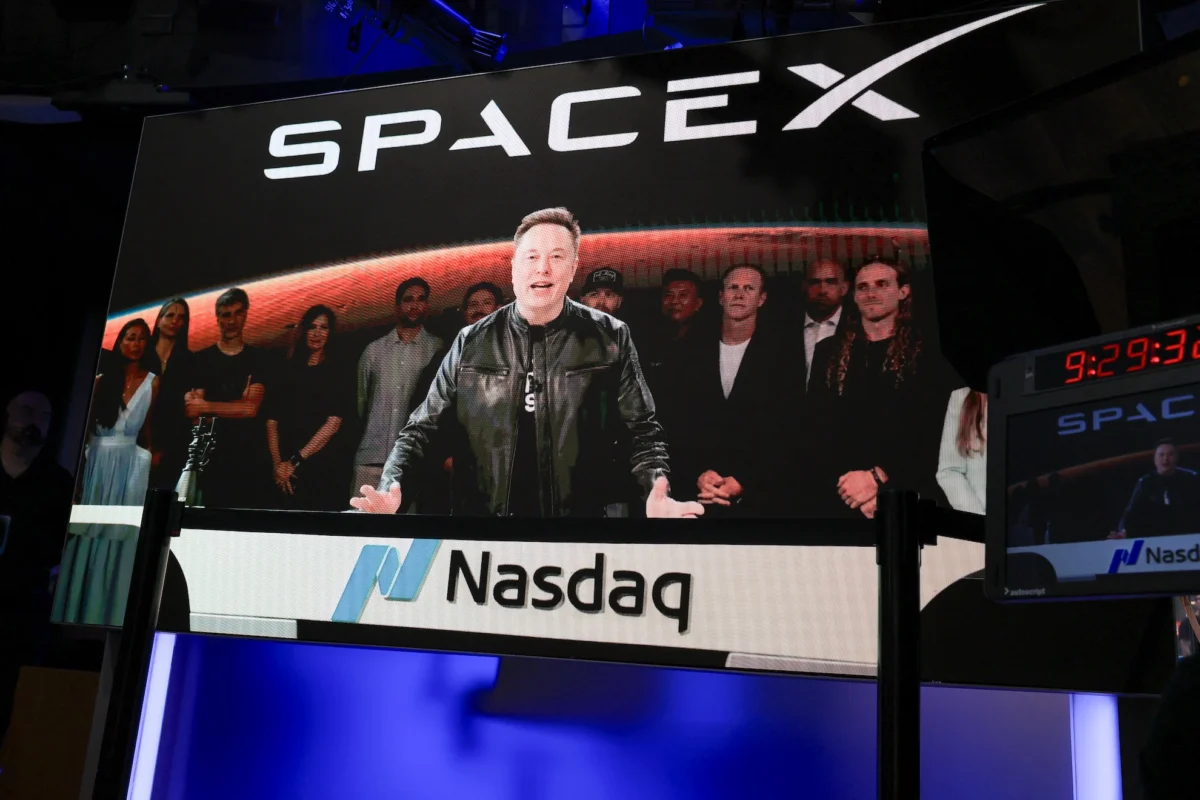
For years, the financial narrative surrounding Elon Musk was one of unbridled optimism. Investors clamored for a piece of Tesla’s meteoric rise, and early SpaceX employees found themselves holding golden tickets as the aerospace giant moved toward a landmark IPO. However, the tide of public sentiment—and consequently, market strategy—is shifting. A new breed of investment vehicle has emerged, designed not to capture Musk’s growth, but to systematically avoid him.
Subversive Capital, an ETF creator known for its penchant for provocative, niche-market products, has officially filed for two exchange-traded funds (ETFs) that explicitly exclude companies associated with the world’s wealthiest individual. As polarization in American life reaches new heights, these funds represent the intersection of social sentiment and modern portfolio theory, offering investors a way to “vote with their wallets” against a man whose influence spans from the corridors of government to the depths of social media.
The Main Facts: A Clean Break from the Musk Empire
The two new funds, registered under Tidal Trust I and branded under Subversive Markets Lab LLC, are the Nasdaq-100 Ex-Elon Enterprises ETF and the S&P 500 Ex-Elon Enterprises ETF. As the tickers QQNE and SPNE suggest, these funds mirror the performance of the Nasdaq-100 and S&P 500 indices, respectively, while applying a strict “Musk-free” filter.
According to the SEC prospectus, the exclusion is not merely limited to the present; it is designed to be dynamic. At launch, the primary targets for exclusion are Tesla (TSLA) and Space Exploration Technologies Corp. (SPCX). However, the mandate is broader, covering any entity founded, controlled, or led by Elon Musk, or with which he is “otherwise primarily associated.” This leaves the door open for the fund managers to divest from future ventures, such as Neuralink or The Boring Company, should they reach public markets or become sufficiently entangled in the fund’s underlying index components.
For the average retail investor, achieving this level of exclusion has historically been nearly impossible. Because Tesla and SpaceX are staples of the major indices, a standard S&P 500 index fund automatically allocates a portion of the investor’s capital to Musk’s ventures. By providing a “sanitized” alternative, Subversive Capital is tapping into a growing demographic of investors who prioritize alignment between their portfolio and their personal values.
A Chronology of Sentiment: From Innovator to Lightning Rod
The motivation behind these ETFs is a direct response to a series of events that have redefined Elon Musk’s public image. To understand the creation of QQNE and SPNE, one must look at the timeline of his shifting reputation.
- The Tesla Peak: For most of the 2010s, Musk was viewed as the vanguard of the green energy transition. Tesla was the darling of ESG (Environmental, Social, and Governance) funds, and his reputation as a visionary entrepreneur was largely uncontested.
- The Shift to X (Twitter): Musk’s acquisition of the social media platform X marked a turning point. His increasingly erratic public commentary, controversial moderation policies, and vocal political alignments began to alienate a portion of his once-loyal investor base.
- DOGE and Political Integration: Musk’s involvement in the Department of Government Efficiency (DOGE) and his deepening ties to the Trump administration moved him from the role of a business executive to a political power player. This transition invited a level of scrutiny—and backlash—rarely seen by corporate leaders.
- The Inauguration Controversy: Perhaps the most significant catalyst for the "Ex-Elon" movement was the widespread public outcry following Musk’s behavior at the 2026 presidential inauguration. An infamous gesture, widely interpreted by critics as a Nazi salute, served as a flashpoint, turning a niche political annoyance into a mainstream moral objection for many institutional and retail investors.
Subversive Capital’s decision to launch these ETFs during this specific window of time is a calculated business move, capitalizing on the friction between Musk’s personal brand and the traditional values of a significant segment of the investing public.
Supporting Data: The Concentration Problem
The necessity for these ETFs is underscored by the concentration of wealth in the hands of a few tech titans. In modern index-based investing, the S&P 500 and Nasdaq-100 are heavily weighted toward "Magnificent Seven" stocks. When a company like Tesla becomes a core component of these indices, passive investors have no choice but to participate in its volatility.
Recent data indicates that Tesla’s inclusion in the Nasdaq-100 and its continued presence in the S&P 500 have made it a mandatory holding for millions of passive accounts. For an investor who fundamentally disagrees with Musk’s governance style or political activities, the current market structure offers no "opt-out" mechanism.
Subversive Capital’s research suggests that there is a significant, albeit unquantified, market for "values-based exclusion." By mirroring the indices minus the Musk-linked assets, these funds aim to provide the same broad-market exposure as their counterparts, with the only variable being the specific exclusion of the Musk "risk factor."
Official Responses and Market Skepticism
The financial community has met the announcement of the Ex-Elon ETFs with a mixture of curiosity and skepticism.
“It’s a clever marketing play,” says one analyst familiar with the filing. “Subversive Capital has a track record of using political division as a hook for their products.” Indeed, the firm previously made headlines with ETFs designed to track the stock picks of Democratic and Republican members of Congress—products that gained traction not necessarily for their alpha, but for their voyeuristic appeal into the perceived corruption or insider knowledge of Washington.
However, the SEC registration process requires these firms to prove that they are legitimate investment vehicles, not just political stunts. The prospectus highlights the funds’ goal to provide “capital appreciation through exposure to a broad universe of large-capitalization U.S. equity securities.” Whether these funds can maintain a tracking error low enough to satisfy serious investors remains to be seen.
Elon Musk, for his part, has historically shown profound hostility toward short sellers and those who bet against his companies. While these ETFs are not "short" funds, they represent a form of institutional divestment that could, in theory, exert downward pressure on the stocks they exclude if they gain significant scale. Whether Musk will acknowledge these funds publicly remains a point of speculation, though his penchant for sparring with critics on X suggests that a reaction is well within the realm of possibility.
Implications: The Future of Values-Based Finance
The emergence of the QQNE and SPNE funds signals a broader trend in financial services: the hyper-personalization of index investing. Historically, indices were designed to be neutral reflections of the economy. Today, investors are increasingly demanding that their portfolios reflect their ideological identities.
1. The Fragmentation of Indices
If investors begin to demand "Ex-X" or "Ex-Y" versions of the S&P 500, we may see a fragmentation of the index market. This could lead to a proliferation of "bespoke indices" where specific individuals, industries, or practices are excluded based on the moral or political preferences of the fund holder.
2. The Impact on Governance
If a significant amount of capital flows into these "Ex-Elon" funds, it could theoretically impact the cost of capital for the excluded companies. While Tesla and SpaceX are currently massive enough that a few new ETFs won’t cause a liquidity crisis, the symbolic weight of such a move cannot be ignored. It sends a message to boardrooms that executive behavior carries a direct financial cost.
3. The "Anti-Personality" Risk
The primary risk for investors in these funds is the "personality premium." If Musk’s companies continue to innovate and outperform the broader market, investors in the Ex-Elon ETFs will face a performance drag. The decision to invest in these funds is, in essence, a bet that the reputational and political risks associated with Musk will eventually outweigh the growth potential of his companies.
4. A New Frontier for Subversive Capital
For the creators, the goal is clear: capture the zeitgeist. By positioning themselves as the alternative for the "anti-Musk" investor, Subversive Capital is proving that in the current market, brand identity and social signaling are just as important as the underlying assets.
Conclusion
The launch of the Nasdaq-100 Ex-Elon Enterprises ETF and the S&P 500 Ex-Elon Enterprises ETF is more than a financial filing; it is a cultural artifact. It marks the moment when the cult of the "Great Founder" reached its limits, and the market responded with a mechanism for collective divestment.
Whether these funds will outperform the standard benchmarks is a question for the coming years. But in the short term, they have achieved something far more potent: they have provided a tangible, liquid, and accessible way for the public to express their discontent with the world’s most prominent entrepreneur. As the lines between business, politics, and personal celebrity continue to blur, the rise of the "Ex-Elon" portfolio may be just the first of many such products designed to curate the market according to the values of the individual investor.
For now, the financial world waits to see if these tickers—QQNE and SPNE—will become household names, or if they will fade into the niche of financial curiosities. One thing is certain: in the world of Elon Musk, neutrality is no longer an option.











