

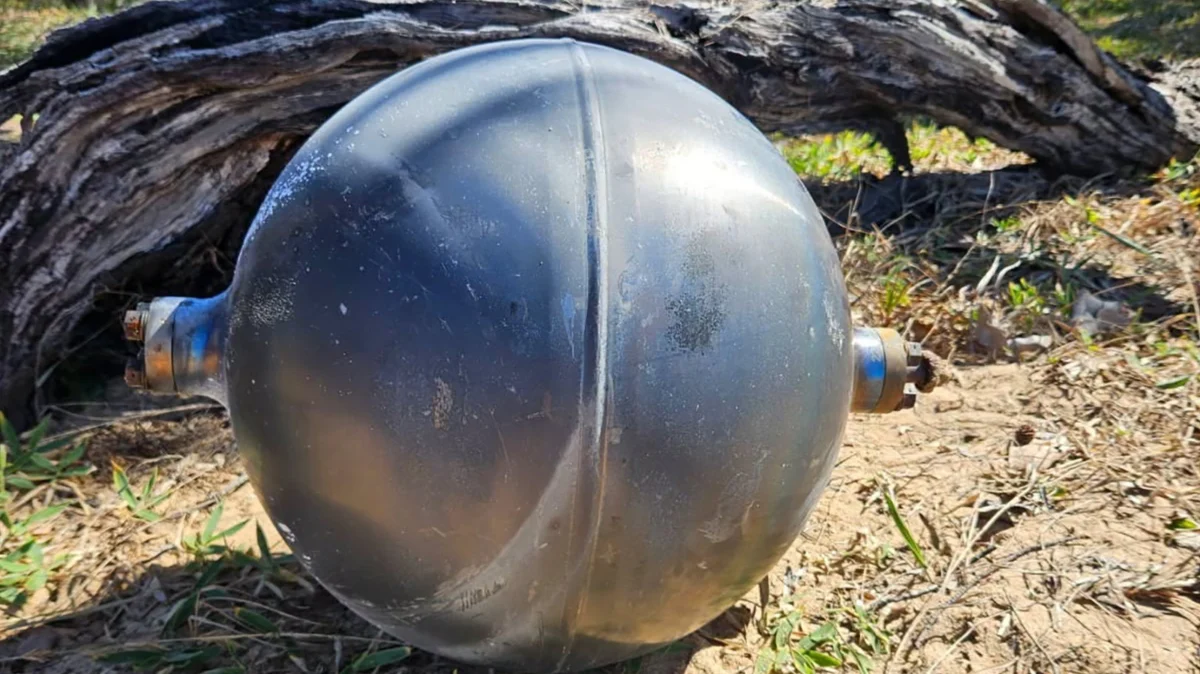
For the residents of the quiet coastal town of Forrest Beach, Queensland, the weekend began with a scene pulled straight from the pages of a science fiction novel. As the tide receded, it revealed six large, metallic, spherical objects scattered across the sand. Each roughly double the size of a basketball, these mysterious, heavy-duty spheres triggered a wave of public intrigue, local humor, and a swift, albeit mundane, response from national authorities. While the local community leaned into the spectacle with UFO-themed promotions and tongue-in-cheek panic, the reality of these "space balls" serves as a tangible reminder of our increasingly cluttered orbital environment.
The Discovery: A Coastal Curiosity
The appearance of the six spheres on Forrest Beach over the weekend transformed the sleepy town of 1,364 people into an impromptu site of investigation. Within hours of the initial sightings, the Queensland Fire and Emergency Services arrived on the scene, clad in hazardous materials gear. Acting out of an abundance of caution, authorities established a 50-meter (164-foot) exclusion zone to ensure public safety.
The objects were treated with the gravity afforded to unidentified potential hazards. Five of the spheres were safely secured into drums for transport, while the sixth was deemed safe to handle after an on-site assessment. Despite the initial alarm, authorities were quick to emphasize that the debris posed no immediate threat to the local population. However, the Forrest Beach Fire Department issued a stern advisory to the public: should more debris wash up in the coming days, residents must refrain from touching or attempting to move the objects.
Chronology of the "Space Ball" Phenomenon
The saga of the Forrest Beach spheres unfolded rapidly, moving from confused local discovery to official identification in just a few days.
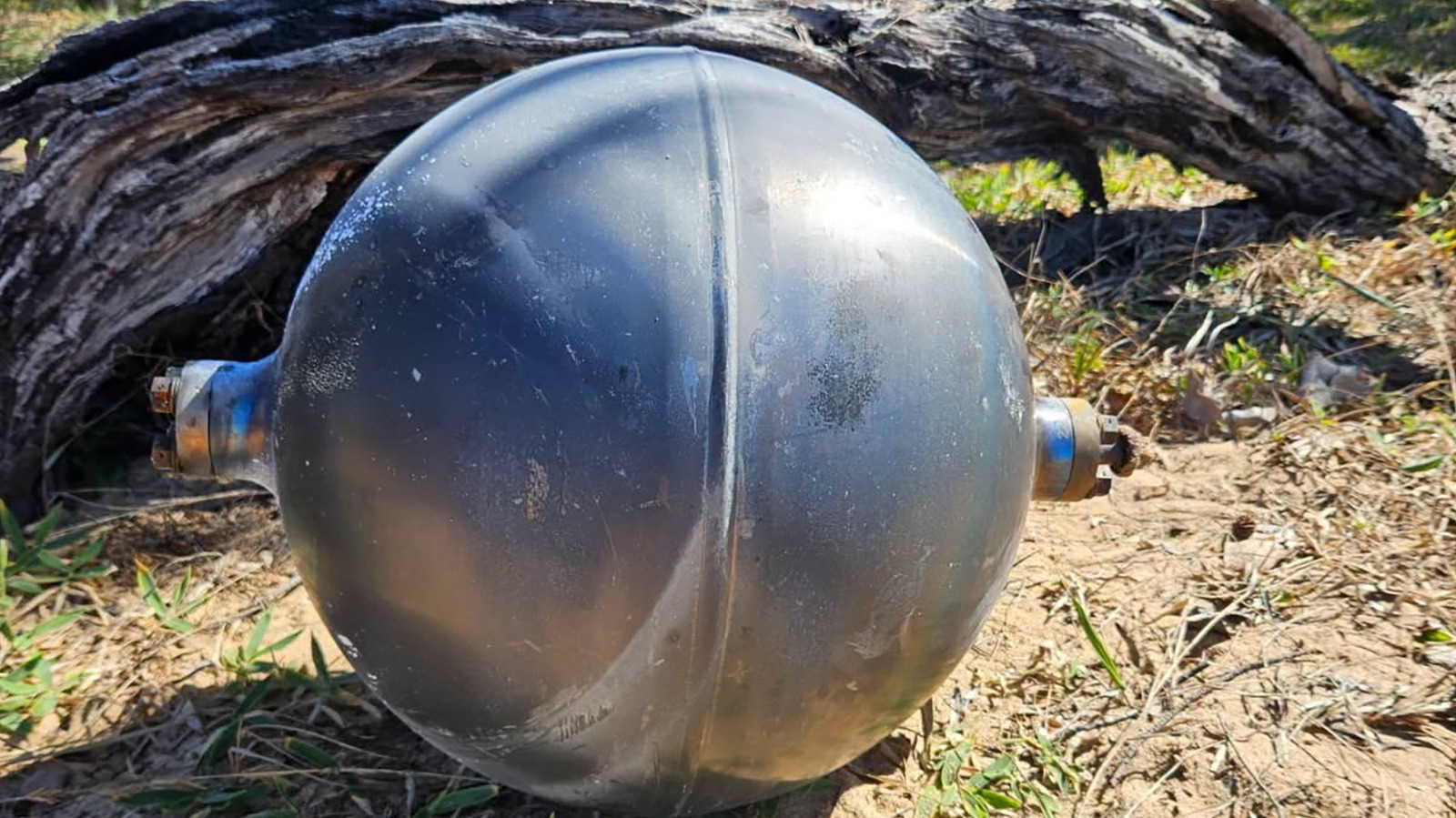
- Initial Discovery: Over the weekend, residents alerted authorities to the presence of six metallic, spherical objects washing up along the shoreline.
- Emergency Response: Local fire and rescue teams cordoned off the beach, treating the area as a potential hazardous materials site.
- Scientific Identification: Within 48 hours, the Australian Space Agency conducted an assessment, confirming that the objects were likely man-made pressure vessels from a rocket.
- Community Reaction: As the threat of an alien invasion was debunked, local businesses quickly pivoted to capitalize on the news, turning a potential safety incident into a regional talking point.
- Ongoing Investigation: The Australian Space Agency continues to work with international partners to pinpoint the exact launch vehicle, the country of origin, and the specific mission that resulted in the debris.
Capitalism Finds a Way: The Lighter Side of the Crash
In a display of uniquely Australian humor, the residents of Forrest Beach did not let the threat of space-borne toxins dampen their spirits. The local supermarket, Forrest Beach Supermarket, took to social media to play on the "UFO" hysteria, jokingly advising locals to "panic buy" in response to the mysterious arrival.
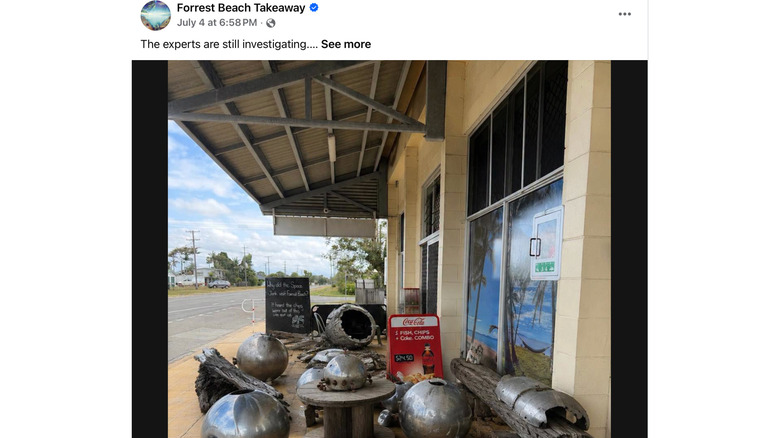
Perhaps more notably, the Forrest Beach Takeaway embraced the chaos with a mix of digital artistry and commerce. The restaurant posted an AI-generated image depicting the spheres serving as stylized, sci-fi-inspired entryway decorations. Taking the trend a step further, the shop began offering a limited-edition "space junk snack box." The restaurant’s marketing slogan—"Unlike some stuff that washes up on our beach, you’ll be able to identify these objects"—became an instant local meme, highlighting the community’s ability to find levity in the face of the bizarre.
Technical Analysis: What Exactly Are These Objects?
While the term "space ball" sounds like a B-movie trope, it is actually standard nomenclature within the aerospace industry. Alice Gorman, a renowned space archaeologist and debris expert at Flinders University, provided essential context for the discovery.
According to Dr. Gorman, the spheres are clearly identified as titanium pressure vessels. These components are used in rocket propulsion systems to store high-pressure gases, such as helium, which are essential for maintaining tank pressure during flight. Because titanium is an incredibly durable, heat-resistant material, these vessels are among the few components of a rocket capable of surviving the intense heat and friction of atmospheric reentry.
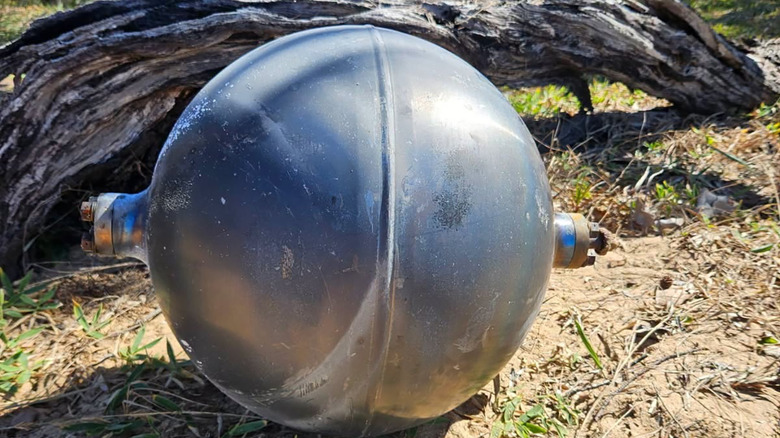
Dr. Gorman noted that the lack of extensive, charred surface scarring suggests that these specific vessels likely separated from their host rocket at a lower altitude, perhaps during a routine stage separation rather than a fiery, high-orbit disintegration. "They are one of the most common types of rocket debris to make it back to Earth intact," she explained.
The Broader Implications: A Crowded Orbit
The incident at Forrest Beach is not an isolated event but rather a symptom of a much larger, global issue. As the number of satellites, commercial rockets, and orbital missions increases, so too does the density of space junk. While the vast majority of debris burns up in the atmosphere, the growing frequency of "survivor" debris hitting the Earth’s surface—often in remote areas or oceans—is prompting renewed conversations about orbital sustainability.
The probability of being struck by falling space debris remains infinitesimally small. The vast majority of the Earth is covered by oceans, and the majority of its landmass remains sparsely populated. However, the fact that these objects are washing up in inhabited areas highlights the need for stricter international regulations regarding rocket design and the mitigation of debris.
Historical Precedent: The 1972 New Zealand Incident
This is not the first time the Oceania region has played host to wayward space hardware. History provides a fascinating parallel in the 1972 incident involving the Soviet Kosmos 482 mission. When several titanium spheres fell onto farmland in New Zealand, the reaction was far more apprehensive than the current Australian response.
At that time, the Cold War was at its height, and the sudden appearance of unidentified, potentially radioactive spheres caused significant panic. One of the New Zealand spheres was famously locked in a police cell overnight, as authorities were uncertain if it posed a radiological threat. In a bizarre turn of events, a local pony club even petitioned the government to clear the debris quickly, fearing it might interfere with an upcoming equestrian event. The contrast between the 1972 response and the modern, internet-savvy reaction in Forrest Beach serves as a testament to how our collective understanding of space exploration has evolved over the last half-century.
Looking Forward: The Question of Liability
As the Australian Space Agency continues to work with international partners, the focus remains on identifying the source. Under international space law—specifically the 1972 Space Liability Convention—the launching state is absolutely liable for damage caused by its space objects on the surface of the Earth.
Once the specific rocket and the responsible nation are confirmed, the process of recovery and diplomatic communication will begin. For now, however, the "space balls" of Queensland remain a fascinating curiosity, a reminder that we live on a planet that is increasingly connected to the vast, metal-strewn graveyard of our own orbital ambitions.
Whether they end up in a museum, a scrap heap, or as the centerpiece of a local takeaway’s decor, these spheres have certainly left their mark on the community of Forrest Beach. They serve as a peculiar, metallic bridge between the high-stakes world of aerospace engineering and the day-to-day life of a small coastal town—a reminder that in the modern era, the sky is never truly empty.











