

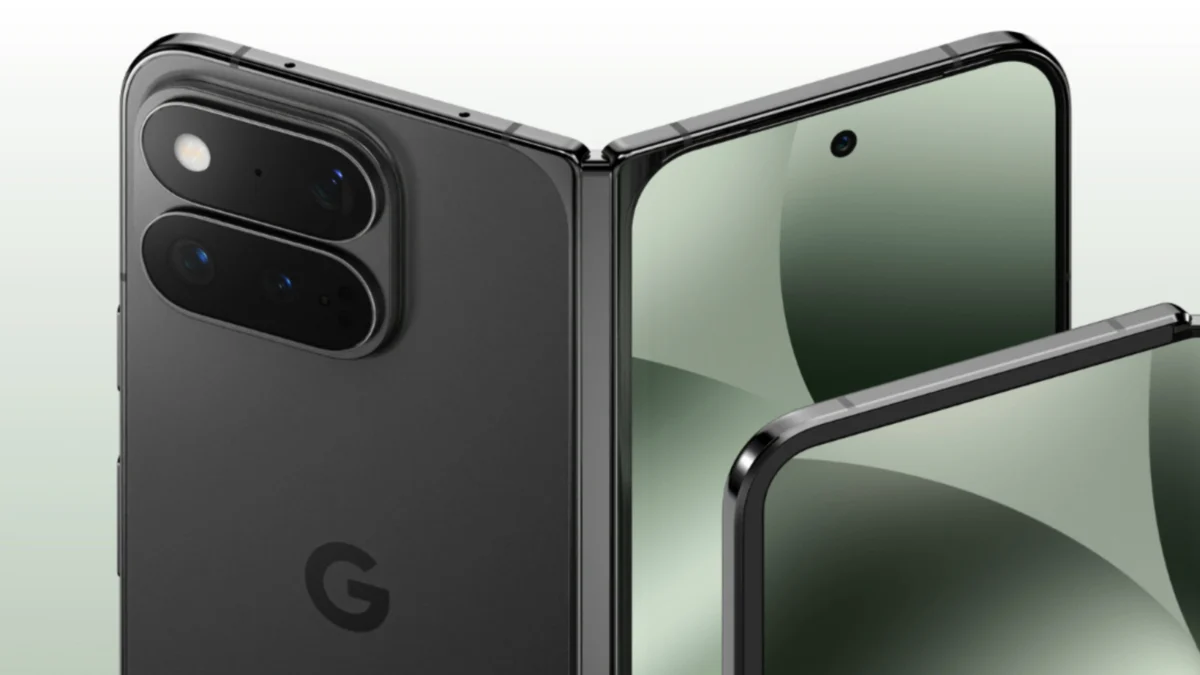
As the mid-August launch date for the highly anticipated Google Pixel 11 series draws near, the rumor mill has officially collided with regulatory reality. In a significant development for enthusiasts of the Mountain View giant’s hardware ecosystem, the Google Pixel 11 Pro Fold—identified by model number GZDQ6—has successfully passed through the Federal Communications Commission (FCC) database. This regulatory milestone not only confirms the existence of the device but also provides a concrete blueprint of its connectivity features, setting the stage for what promises to be one of the most competitive smartphone launches of 2026.
The Main Facts: What the FCC Filing Reveals
The FCC documentation is the final gatekeeper for consumer electronics before they reach the mass market. For the Google Pixel 11 Pro Fold, the filing confirms that the device is nearing full commercial readiness. The most critical takeaway from the registration is the model number GZDQ6, which has been definitively linked to the foldable iteration of the upcoming Pro lineup.
Beyond the administrative confirmation, the filing sheds light on the device’s connectivity suite. The Pixel 11 Pro Fold is slated to be a powerhouse of interoperability, supporting:
- Bluetooth LE (Low Energy): For optimized power consumption when connected to wearables and audio devices.
- LTE and 5G Connectivity: Standard for modern flagship performance.
- Ultra-Wideband (UWB): Providing high-precision spatial awareness, essential for features like digital car keys and proximity-based file sharing.
- NFC: Enabling seamless contactless payments and device pairing.
- Thread Support: A significant inclusion, signaling Google’s deepening commitment to the Matter smart home standard, allowing the phone to act as a sophisticated hub for connected home devices.
- Hearing Aid Compatibility (HAC): Ensuring the device meets accessibility standards for a broad range of users.
Chronology: A Path to the August Unveiling
The journey to this point has been marked by a steady drip of leaks and strategic corporate signaling.
- Early 2026: Initial murmurs regarding the "Pixel 11" series began to circulate, with industry analysts predicting a diversification of the foldable line.
- Spring 2026: Reports emerged detailing potential battery capacity shifts, specifically hinting at a 4,658mAh minimum capacity for the Pro Fold model.
- June 2026: Google began sending out official "Save the Date" invitations to media outlets and industry partners, confirming an mid-August event that will encompass the Pixel 11, Pixel 11 Pro, Pixel 11 Pro XL, and the star of the show, the Pixel 11 Pro Fold.
- July 2026: The FCC listing (GZDQ6) appears in the public domain, providing the most credible proof of the device’s technical specifications and physical design.
This accelerated timeline suggests that Google is attempting to front-run the busy fall smartphone season, aiming to capture the market’s attention before the traditional September flagship announcements from competitors.
Supporting Data: Technical Specifications and Expectations
While the FCC filing focuses on regulatory compliance and wireless protocols, previous leaks and supply chain intelligence have painted a more vivid picture of the hardware. The Pixel 11 Pro Fold is shaping up to be a display-centric powerhouse.
The Display Architecture
According to industry insiders, the device is expected to feature a two-tiered screen configuration:
- Outer Display: A 1,080 x 2,342 OLED panel designed for quick interactions, featuring an adaptive refresh rate between 60Hz and 120Hz.
- Inner Display: The main folding OLED screen is rumored to boast a resolution of 2,076 x 2,160. Most notably, this panel is expected to utilize LTPO (Low-Temperature Polycrystalline Oxide) technology, allowing for a dynamic refresh rate ranging from 1Hz to 120Hz. This capability is crucial for balancing visual fluidity with battery longevity.
Memory and Power
Performance is a cornerstone of the "Pro" branding. Reports indicate that Google will offer the device with two distinct RAM configurations: 12GB and 16GB. This suggests that the Pixel 11 Pro Fold is being positioned as a multitasking device, capable of running sophisticated productivity applications simultaneously on the expanded inner screen. The 4,658mAh battery, while smaller than some non-folding flagships, is optimized for the power-efficient Tensor architecture, which Google claims will maintain all-day battery life despite the screen size.
Official Responses and Corporate Strategy
Google has remained characteristically tight-lipped regarding the specifics of the device before the official keynote. However, the company’s recent trajectory—specifically the emphasis on "AI-First" hardware—suggests that the Pixel 11 Pro Fold will be the primary vessel for their latest Gemini integrations.

In previous statements, Google executives have underscored that their hardware is not just about the silicon, but about the "Ambient Computing" experience. The integration of Thread support, noted in the FCC filing, is a strategic move to position the Pixel 11 Pro Fold as the command center for the modern household. By moving the smartphone beyond a communication tool and into a central controller for the smart home, Google is attempting to differentiate itself from competitors who focus solely on raw processing power or camera megapixels.
Implications: What This Means for the Market
The entry of the Pixel 11 Pro Fold into the FCC database sends a clear signal to the industry: the foldable market is maturing, and Google is no longer experimenting—they are competing for the top tier.
1. The Consolidation of the Foldable Segment
With the "Pro" branding applied to the fold, Google is signaling that this device is intended for power users and enterprise professionals. It is no longer a niche luxury item; it is a serious workstation. This move forces other manufacturers to reconsider their own "Pro" foldable strategies, likely pushing for thinner designs and more robust software integration.
2. The Smart Home Ecosystem
The inclusion of Thread support is perhaps the most underrated aspect of the new hardware. As Google continues to build out its ecosystem, the Pixel 11 Pro Fold is designed to be the "glue" that binds disparate IoT devices together. This creates a "walled garden" effect that provides a seamless user experience, potentially increasing customer retention.
3. Pricing and Accessibility
With the announcement of four distinct models in the Pixel 11 series, Google is casting a wide net. By segmenting the lineup into standard, Pro, Pro XL, and Pro Fold, the company is attempting to capture every rung of the premium market. The Pixel 11 Pro Fold will likely command a premium price tag, but by offering multiple RAM configurations, Google is creating a "gateway" for those who want the foldable experience without the maximum price point of the top-tier 16GB model.
4. Software as the Differentiator
The hardware is only as good as the software it runs. With the Android ecosystem continuing to evolve its support for foldable form factors, the success of the Pixel 11 Pro Fold will rely heavily on how well Google optimizes its apps to transition between the outer and inner screens. The August launch will be a litmus test for whether Google can successfully harmonize its software suite with the unique hardware constraints of a foldable device.
Conclusion: A High-Stakes August
As the August 12 launch date looms, the excitement surrounding the Pixel 11 Pro Fold is palpable. The FCC filing acts as the final confirmation that the device is not merely a prototype, but a production-ready handset destined for store shelves.
The integration of advanced connectivity like Thread and UWB, combined with the expected high-resolution OLED displays, positions the Pixel 11 Pro Fold as a formidable contender in the premium segment. For Google, the goal is clear: to prove that a foldable device can be more than just a novelty—it can be the most capable, integrated, and essential tool in a user’s digital arsenal. Whether the market is ready for a flagship foldable at this scale will be determined in the weeks following the official unveiling, but one thing is certain: the foldable wars have officially entered a new, more sophisticated phase.











