

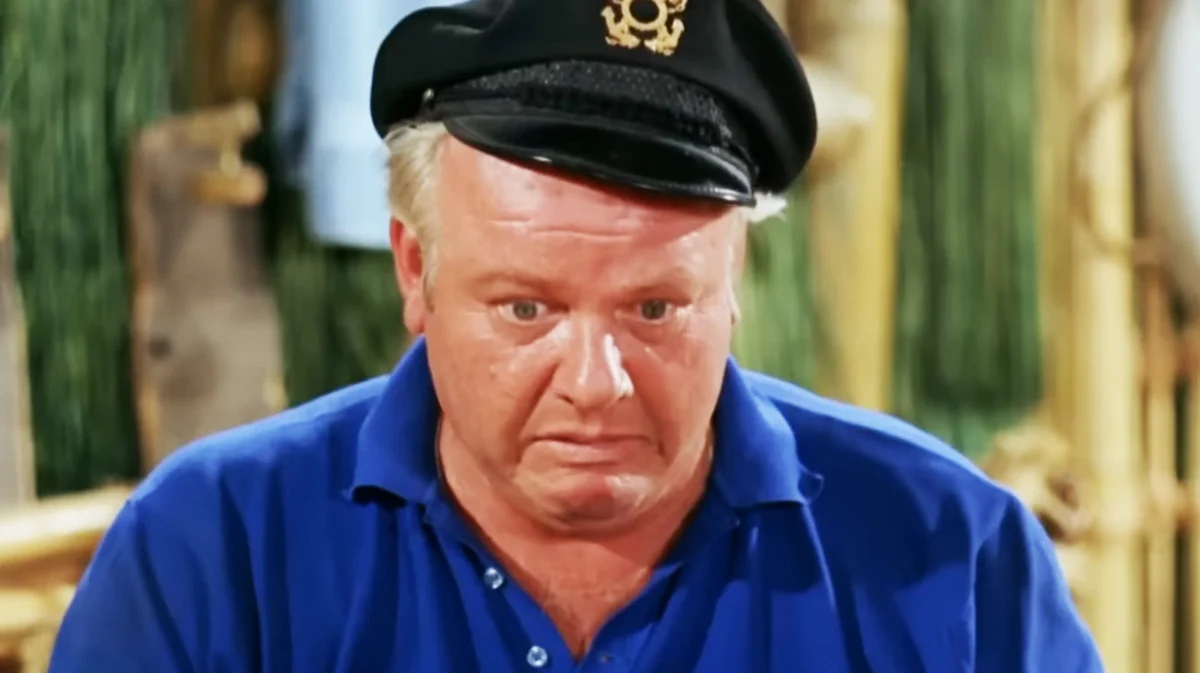
In the annals of television history, few programs hold a place as firmly embedded in the collective cultural consciousness as Gilligan’s Island. The 1964 sitcom, created by Sherwood Schwartz, transformed a group of character actors into household names, locking them into archetypal roles that would follow them for the rest of their professional lives. Among these, Alan Hale Jr. (The Skipper) and Jim Backus (Thurston Howell III) stood out not just for their on-screen chemistry, but for the depth of their respective resumes prior to their shipwreck.
While the cast remained tethered to the "castaways" identity through numerous television reunions, specials, and animated iterations, there exists a curious, often overlooked footnote in their collaborative history: the 1979 action-exploitation film Angels Revenge. A low-budget, high-concept B-movie, Angels Revenge served as a bizarre vessel for a mini-reunion of two of television’s most beloved figures, albeit in a project that stands in stark, gritty contrast to the sunny, slapstick shores of their most famous work.
The Professional Pedigree: Beyond the Island
To understand the oddity of their pairing in Angels Revenge, one must first acknowledge the stature of Hale and Backus before they were ever stranded in the Pacific.
Alan Hale Jr. was a Hollywood veteran, a character actor of immense range who had worked alongside the titans of the Golden Age of Cinema. Before Gilligan’s Island, he shared the screen with legends such as Gregory Peck, Kirk Douglas, Gary Cooper, and James Cagney. He was a master of the supporting role, possessing a versatility that allowed him to move seamlessly between Westerns and dramatic character studies. His commitment to his craft was absolute—a dedication famously illustrated by his willingness to go to extreme, often exhausting lengths to secure the role of Jonas "The Skipper" Grumby.
Jim Backus, conversely, arrived at Gilligan’s Island with a level of fame that arguably eclipsed his castmates. Beyond his prolific voice-acting career as the iconic, nearsighted Mr. Magoo, Backus was a dramatic powerhouse. His performance as James Dean’s father in the seminal 1955 classic Rebel Without a Cause remains a masterclass in mid-century dramatic tension. He also helmed his own successful sitcom, The Jim Backus Show, and was a staple of the nightclub and radio circuit. Sherwood Schwartz was so convinced of Backus’s talent that he signed him to Gilligan’s Island without a script—a testament to the actor’s bankability and inherent charisma.
Chronology of a Curio: The 1979 Landscape
By 1979, the cultural landscape had shifted dramatically. Gilligan’s Island had been off the air for over a decade, though it lived on in perpetual syndication and the occasional reunion special. The late 1970s were characterized by the rise of the high-octane, female-led action series, most notably ABC’s Charlie’s Angels.
Angels Revenge (also known as Angels Brigade) emerged as a direct, unashamed attempt to capitalize on the "Charlie’s Angels" mania. Directed by Greydon Clark—a filmmaker known for his low-budget, exploitation-adjacent horror and action fare—the film was an attempt to blend the glamour of television action with the grit of grindhouse cinema.
The plot, while secondary to the film’s "star power," follows a Las Vegas singer named Michelle Wilson (Susan Kiger) who assembles a squad of specialized women to dismantle a massive drug operation run by a kingpin played by Peter Lawford, with Jack Palance serving as his heavy. Into this volatile, low-budget mix stepped Alan Hale Jr. and Jim Backus.
The Cameo Conundrum: Supporting Roles or Marketing Gimmicks?
When analyzing the participation of Hale and Backus, it becomes clear that their involvement was as much about the marketing potential of their names as it was about the narrative. Both actors were in the twilight of their primary careers, and the film clearly sought to leverage their status as "beloved television icons" to add a veneer of legitimacy to a production that, by most critical metrics, was fundamentally flawed.
However, the reality of their performances was a far cry from the billing. Despite the marketing, both actors occupy the film for mere minutes. Their appearances feel disconnected, inserted into the narrative to provide a momentary jolt of recognition for audiences who grew up watching them on CBS.
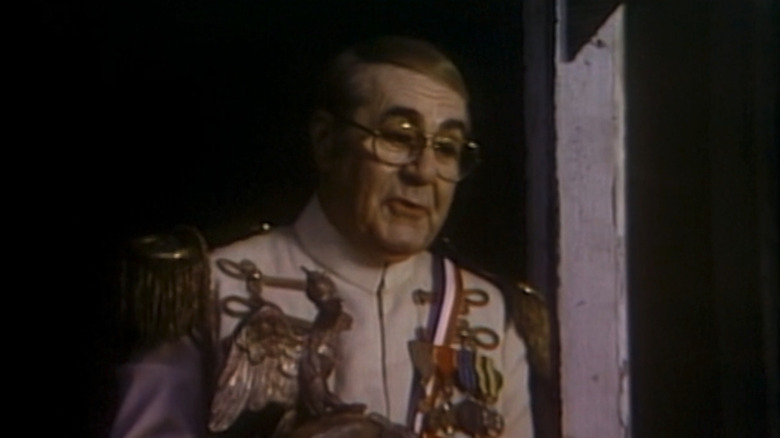
Most notably, Jim Backus was cast in a role that played entirely against his public persona. He portrayed Commander Lindsey March, the leader of a group of "right-wing military fanatics" with white supremacist leanings. Seeing the man who voiced the bumbling Mr. Magoo and played the foppish Thurston Howell III portraying an extremist ideologue was a jarring experience for viewers of the time. It was a role that felt not only out of character but arguably miscalculated in its attempt to shock.
Implications and Critical Reception
The critical reception of Angels Revenge was, to put it mildly, unkind. The film was widely dismissed as a "schlocky" imitation of better-produced television properties. The inclusion of Hollywood heavyweights like Jack Palance and Peter Lawford, neither of whom were at the peak of their prestige in 1979, further underscored the film’s reputation as a production that relied on the past glory of its cast rather than the strength of its script.
The "Mystery Science Theater 3000" Legacy
The film’s legacy was eventually cemented when it was featured on the cult classic series Mystery Science Theater 3000. This appearance effectively canonized Angels Revenge as a piece of "so-bad-it’s-good" cinema. The mockery provided by the show’s hosts highlighted the film’s derivative nature, its questionable editing, and the bizarre spectacle of seeing television legends like Hale and Backus drift through a film that felt lightyears away from the comfortable, safe humor of the S.S. Minnow.
A Modern Re-evaluation
Despite the critical drubbing, the film has found a niche audience in the modern era. Online platforms such as Letterboxd have become home to a contingent of viewers who appreciate the film’s earnest, if clumsy, attempts at the action genre. Some fans argue that there is a certain "joy" to be found in the film’s lack of polish—a raw, unrefined energy that characterizes 1970s exploitation cinema. The sight of a former "Castaway" being punched through a wall by an "Angel" provides a surreal, postmodern humor that, while likely unintentional, remains a point of fascination for film historians.
The Human Element: Why They Did It
Why would two such established, respected actors sign on to a project like Angels Revenge? The answer likely lies in the nature of the Hollywood industrial complex of the late 1970s. For character actors of their generation, work was work. There was no social media or 24-hour news cycle to hyper-analyze a career choice. Taking a role in a low-budget action movie was a way to stay active, collect a paycheck, and maintain visibility in an industry that was rapidly transitioning toward a younger, more "New Hollywood" aesthetic.
For Alan Hale Jr., his identity remained inextricably linked to The Skipper. He famously considered it his favorite role and spoke fondly of the character until the end of his life. His reunion with Backus in Angels Revenge, even if they shared no scenes and the film was a disaster, likely held a sentimental value that superseded the quality of the script. It was a brief, professional nod between two men who had shared a unique experience that very few others in the world could comprehend.
Conclusion: A Footnote in the Story of the Castaways
Angels Revenge is not a film that defines the careers of Alan Hale Jr. or Jim Backus. It is, by all reasonable standards, a failed attempt at an action flick that suffered from poor direction, a disjointed script, and a lack of resources. However, it remains an essential piece of trivia for those who study the lives of the Gilligan’s Island cast.
It serves as a stark reminder of the reality of life after a massive television success. The roles disappear, the prestige fluctuates, and the actors are left to navigate a world that is often less kind than the fictional islands they once inhabited. While the film may be remembered today as "bargain-bin" content, the presence of Hale and Backus elevates it from a mere curiosity to a tragicomic testament to their endurance. They were professionals until the very end, willing to step into the most unlikely of arenas, reminding us that even the most iconic of stars are subject to the unpredictable, often bizarre, whims of the Hollywood machine.











No comments yet. Be the first to join the conversation!