The Evil Dead franchise has long defied the constraints of traditional horror, evolving from a low-budget cabin-in-the-woods fever dream into a multifaceted cinematic universe. From the slapstick, Ray Harryhausen-inspired antics of Army of Darkness to the claustrophobic, grit-soaked exploration of addiction in the 2013 reboot, the series has proven remarkably flexible. Its latest installment, Evil Dead Burn, continues this trend of subversion. Directed by Sébastien Vaniček and co-written with Florent Bernard, Burn introduces a uniquely French-tinged extremity, focusing on the psychological and supernatural rot of a grieving family.
As the series expands, Evil Dead Burn serves as a grim reminder that the most terrifying monsters are not always the ones with fangs—sometimes, they are the ones sitting across from you at the dinner table.
The Anatomy of a Funeral: A Family Implodes
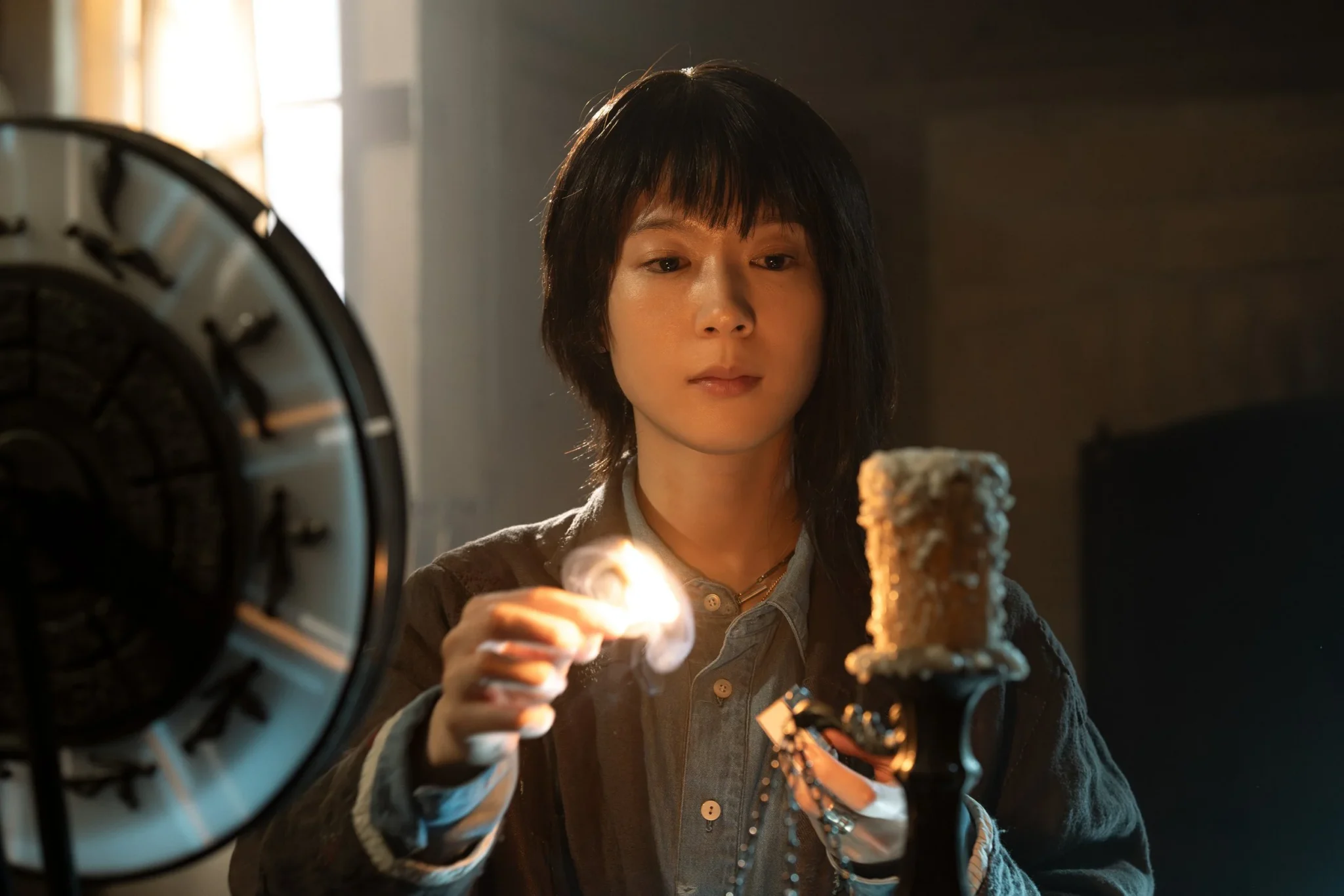
The narrative trajectory of Evil Dead Burn is grounded in the mundane misery of a fractured family unit. The story follows Alice (Souheila Yacoub), a woman mourning the sudden death of her husband, Will Price, who perished in a tragic car accident. Reluctantly, Alice returns to the Price family estate to attend a memorial weekend. The house, now under the stewardship of Will’s younger brother, Joe (Hunter Doohan), has fallen into a state of disrepair that mirrors the family’s collective decay.
The ensemble cast provides a masterclass in domestic tension. While Alice shares a tentative bond with Joe and his girlfriend, Thya (Luciane Buchanan), she is met with open hostility by her in-laws, Susan (Tandi Wright) and Edgar (Erroll Shand). Susan, a woman who has entirely sacrificed her identity to the role of a martyr, projects her grief onto Alice, demanding a level of deference that borders on the sadistic. Edgar, meanwhile, looms like a paramilitary relic, his gruff, volatile demeanor serving as a constant threat.
The household is further destabilized by the presence of grandmother Polly (Maude Davey), whose advanced dementia has left her trapped in a loop, perpetually mistaking Susan for her long-deceased sister, Bonnie. By the time the family gathers for a post-funeral lunch—a scene defined by biting insults, thinly veiled accusations, and the desperate resentment of a family forced to confront their shared failures—the film has established a horror of the human condition that rivals any supernatural threat.
Chronology: The Descent into the Occult
The transition from domestic drama to visceral horror is masterfully paced. While the audience is initially occupied by the family’s internal strife, the film slowly introduces the "Kandarian" elements that define the Evil Dead mythos. It is revealed that the late patriarch of the Price family was not merely a distant figure, but a researcher deep into the occult. The attic, a repository of forgotten artifacts, becomes the catalyst for the supernatural infestation.
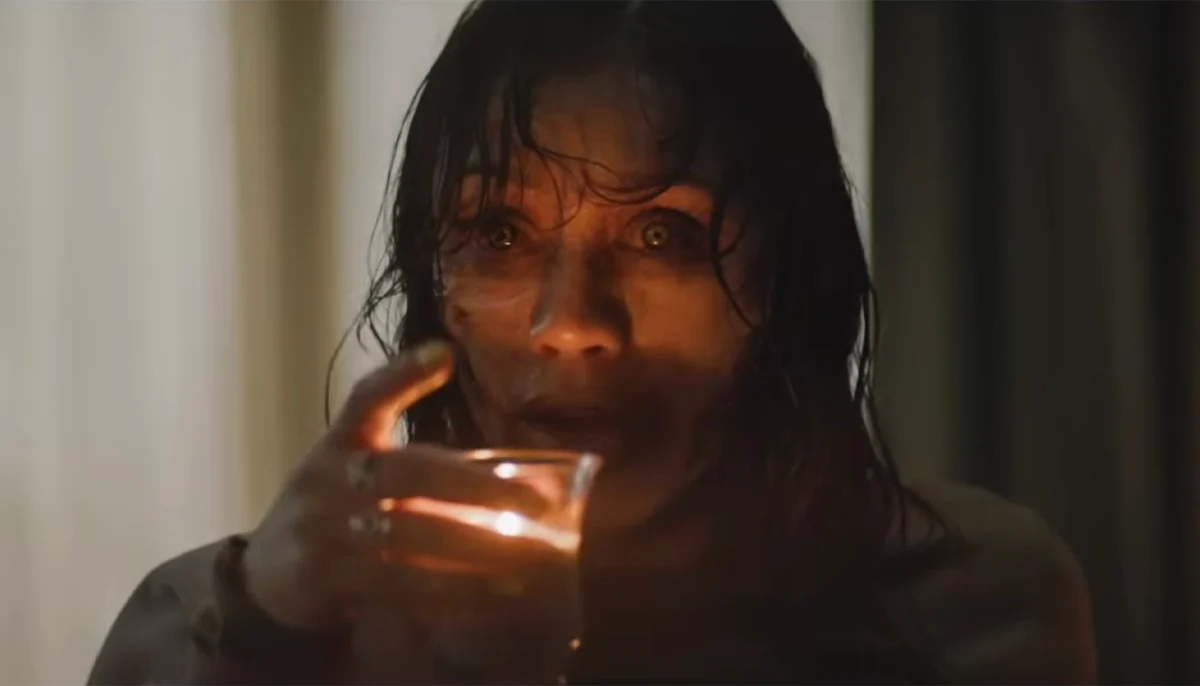
The film’s structure is split into two distinct acts: the slow-burn psychological unraveling of the Price family and the subsequent, unrelenting assault of the Deadites. Once the demons cross the threshold, the film discards its restraint. The middle act, which served as the basis for the film’s high-energy trailer, marks a point of no return. From that moment forward, Vaniček provides the audience with almost no reprieve, utilizing the "meat-grinder" aesthetic that has become a hallmark of the franchise’s more violent entries.
The Horror of the Mundane: Supporting Data and Craft
What sets Evil Dead Burn apart from its predecessors is its clever use of "Chekhovian" weaponry. In this film, every household item is a potential instrument of destruction. A dishwasher left open is not just a chore—it is a death trap. Power drills, weed-whackers, and serrated turkey carving knives are repurposed with gruesome efficiency. The film’s commitment to "Grand Guignol" excess is palpable, with the production team ensuring that every sharp edge and heavy object plays a significant role in the carnage.
Souheila Yacoub’s performance as Alice is the film’s emotional anchor. Tasked with portraying a spectrum of grief—ranging from numb shock to white-hot rage—Yacoub delivers a performance that demands the audience’s empathy even as the world around her descends into hell. Her dynamic with Tandi Wright’s Susan is particularly noteworthy. Even as their home is being systematically dismantled by demonic forces, the two women maintain a level of passive-aggressive hostility that is as chilling as the blood-soaked scenes surrounding them.
Official Perspectives and Creative Intent
Director Sébastien Vaniček, known for his work on the critically acclaimed Infested, brings a distinct sociopolitical lens to the horror genre. While Infested utilized a spider invasion to comment on xenophobia in Paris, Evil Dead Burn is less of a one-to-one allegory and more of a study on intergenerational trauma.
In interviews, Vaniček and Bernard have noted that they were less interested in the demons as metaphors for grief, and more interested in how supernatural interference exacerbates existing family dynamics. By introducing the demons at the peak of the family’s emotional implosion, they argue that the supernatural becomes a "feast" for the pre-existing resentment. The absentee father figure, the terminal illness of a sibling, and the cognitive decline of an elder are real-world tragedies that, when coupled with the Necronomicon, elevate the film from a standard slasher to a dark, operatic tragedy.
Implications for the ‘Evil Dead’ Franchise
Evil Dead Burn occupies a curious space in the series’ chronology. While it shares the same universe as 2023’s Evil Dead Rise—evidenced by a brief opening sequence and a post-credits sting—it stands firmly on its own. For the uninitiated, the film is a self-contained, albeit brutal, story. For long-time fans, the inclusion of the Necronomicon and the specific lore-heavy moments offer a satisfying, if terrifying, payoff.
The film signals a shift in the franchise’s trajectory. It is darker and more tragic in tone than the camp-heavy Rise, aligning itself more closely with the 2013 Evil Dead reboot’s somber approach. Yet, it retains a "blackly hilarious" edge that prevents it from becoming entirely nihilistic.
Ultimately, Evil Dead Burn succeeds because it dares to treat the Evil Dead mythos as a vehicle for complex, adult storytelling. It acknowledges the history of the franchise while pushing into new territory, proving that even after decades, the series has plenty of life—and death—left to offer. As the franchise moves forward, the success of this installment suggests that the audience is ready for stories that balance the visceral, "un-survivable" violence of the genre with the weight of real-world human experience. Whether the Price family survives the night is secondary to the question of whether they, or the franchise itself, can ever truly move on from the shadows of the past.
As the credits roll on Evil Dead Burn, it is clear that the Evil Dead brand remains one of the most resilient and imaginative entities in contemporary horror, capable of transforming a simple family dinner into a symphony of gore, tragedy, and, occasionally, hope.