

Date: July 10, 2026
In the historic city of Sakai, Osaka, the rhythmic chime of hammer against anvil has echoed for over six centuries. This city, once a medieval merchant stronghold, remains the heart of Japan’s professional cutlery industry. Today, a unique bridge between East and West is breathing new life into this ancient craft. Eric Chevalier, a French blacksmith who has dedicated his life to the mastery of Japanese forging, is now inviting travelers to step inside the furnace’s glow. Through an immersive guided tour, Chevalier offers a rare, sensory-rich apprenticeship into the art of the Sakai forged blade—a tool so revered that it remains the global gold standard for top-tier chefs.
Main Facts: The Legacy of Sakai Steel
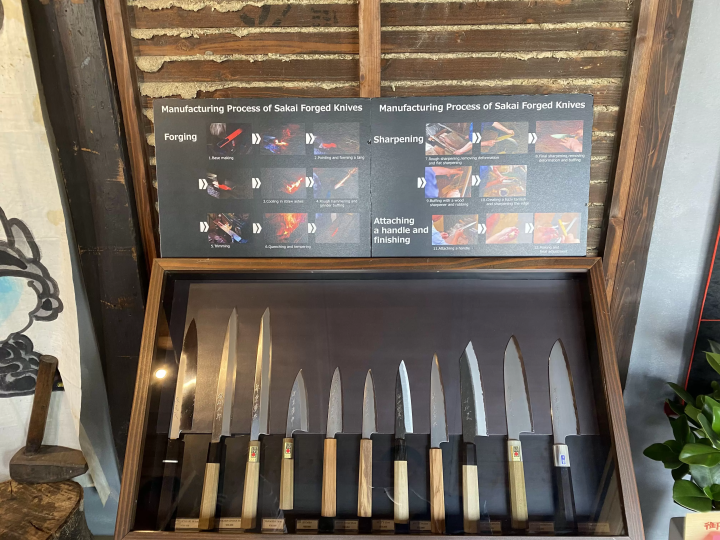
The prestige of a Sakai-made knife is rooted in a technique known as honyaki or forge-welding, which marries soft iron to high-carbon steel. This marriage of materials creates a blade that is simultaneously remarkably durable and capable of an edge so sharp it can slice through a falling silk thread.
In 2015, the Ministry of Economy, Trade and Industry officially recognized Sakai’s traditional cutlery as a "Traditional Craft of Japan." Unlike mass-produced industrial blades, Sakai knives are born from a furnace. The process is one of intense physical labor, precise temperature control, and a level of intuition that can only be cultivated over years of apprenticeship. The tour led by Chevalier provides an unprecedented look at this "manufacturing soul," stripping away the polished exterior of the final product to reveal the sweat, fire, and steel that define its creation.
Chronology: From France to the Heart of the Forge
The journey of Eric Chevalier is a narrative of cross-cultural dedication.
- 2012: Captivated by the complexity of the Japanese language and the philosophy of Japanese craftsmanship, Chevalier relocated from France to Sakai.
- 2012–2015: Chevalier began his intensive training at Sasuke, a historic ironworks in Sakai. Here, he mastered the traditional methods of blade-making, moving beyond mere technique to understand the "spirit" of the material.
- 2015: His dedication was formally recognized by the French government, which awarded him the "Rising Star" honor—a testament to his role in elevating the prestige of Japanese craftsmanship on the international stage.
- 2015–Present: Following five years of rigorous apprenticeship, Chevalier transitioned into the role of an overseas market development coordinator for the Sakai City Industrial Promotion Center. He has since dedicated his career to acting as a cultural ambassador, using his fluency in French, English, and Japanese to bridge the gap between local artisans and the global community.
Supporting Data: An Immersive Deep Dive
The tour is structured as a chronological exploration of the blacksmith’s day, beginning with the foundational act of "fire-starting."
The Alchemy of the Furnace
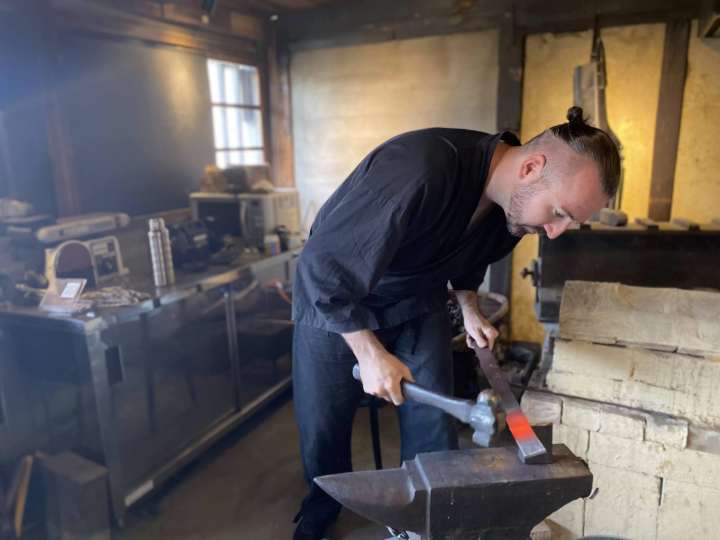
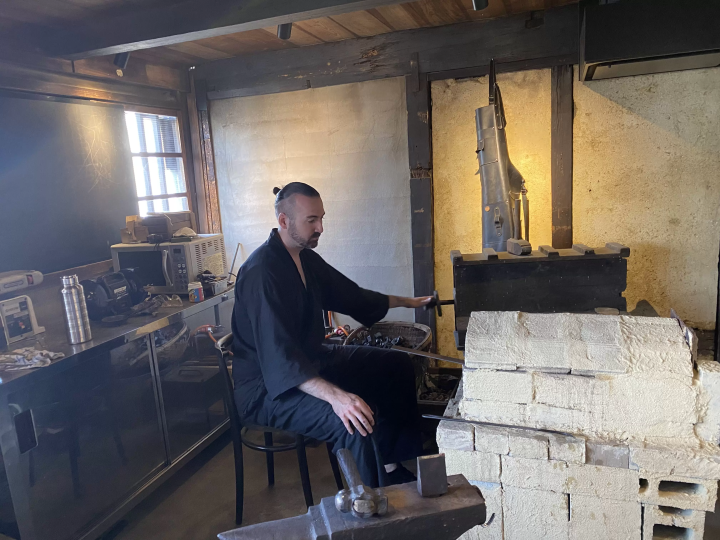
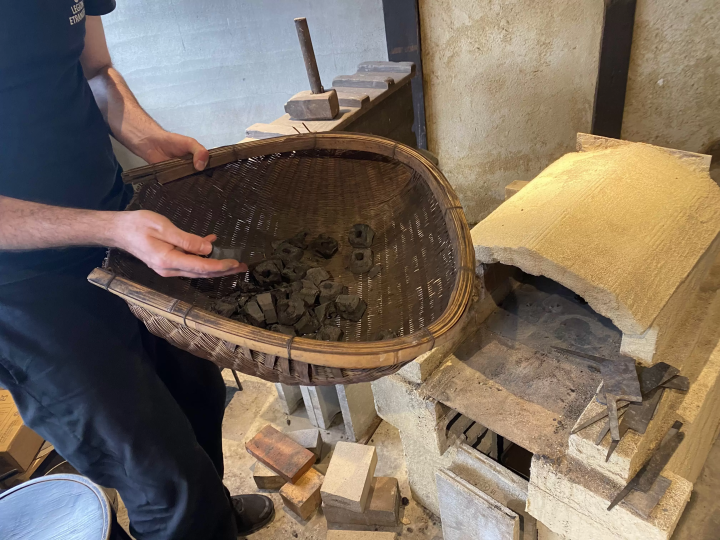
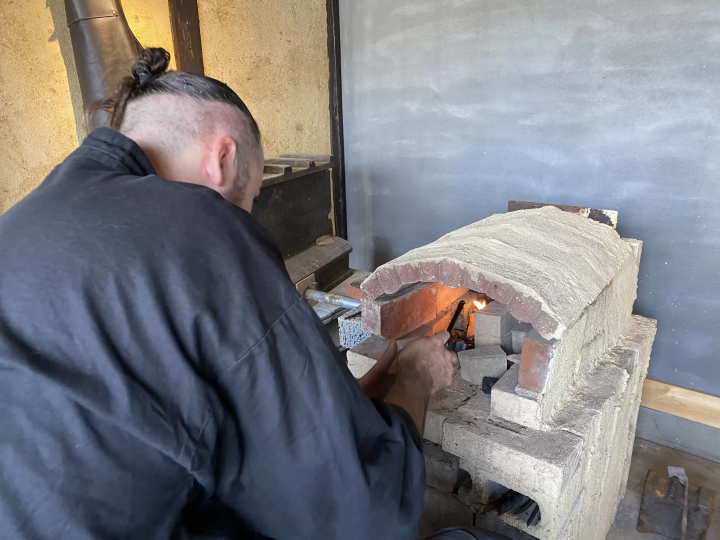
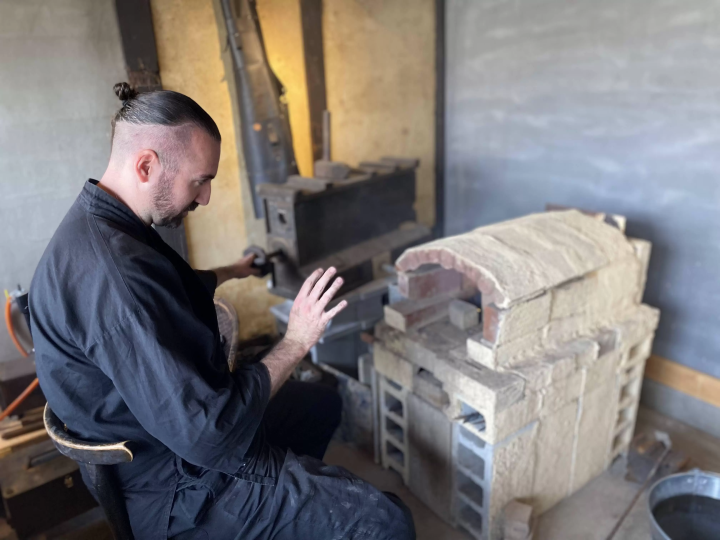
Unlike modern industrial forges that rely on gas or electric heating, Chevalier’s workshop preserves the use of traditional hand-operated bellows. The furnace is fueled by Binchotan—a premium, hollow-core charcoal that burns with minimal smoke and allows for precise, localized temperature control. Participants observe the charcoal as it crackles and transitions from a dull ember to a blinding, intense red—often reaching temperatures exceeding 800 degrees Celsius.
The Strike: Hands-on Forging
The pinnacle of the experience is the opportunity for guests to take the hammer. Under the guidance of an expert, visitors experience the physical reality of metallurgy. The "clang" of the hammer is not just a sound; it is a transfer of energy. As the iron extends under the impact, participants gain a visceral understanding of why these blades are considered superior. It is a moment that shifts the perception of a knife from a kitchen tool to a piece of art shaped by human will.
Official Perspectives: The Value of Cultural Transmission
The significance of these tours extends beyond tourism. It is a vital effort in heritage preservation. By teaching international guests the nuances of charcoal selection, metal temperature, and knife maintenance, Chevalier is ensuring that the "why" of the craft is as well-understood as the "how."
"I’ve always been interested in Japanese blade-making culture," says Ms. A, a traveler from Hawaii who recently participated in the tour. "This experience exceeded my expectations. Eric’s explanations made it easy to understand the traditions behind it all. My child especially loved helping start a fire—it felt like a real adventure."
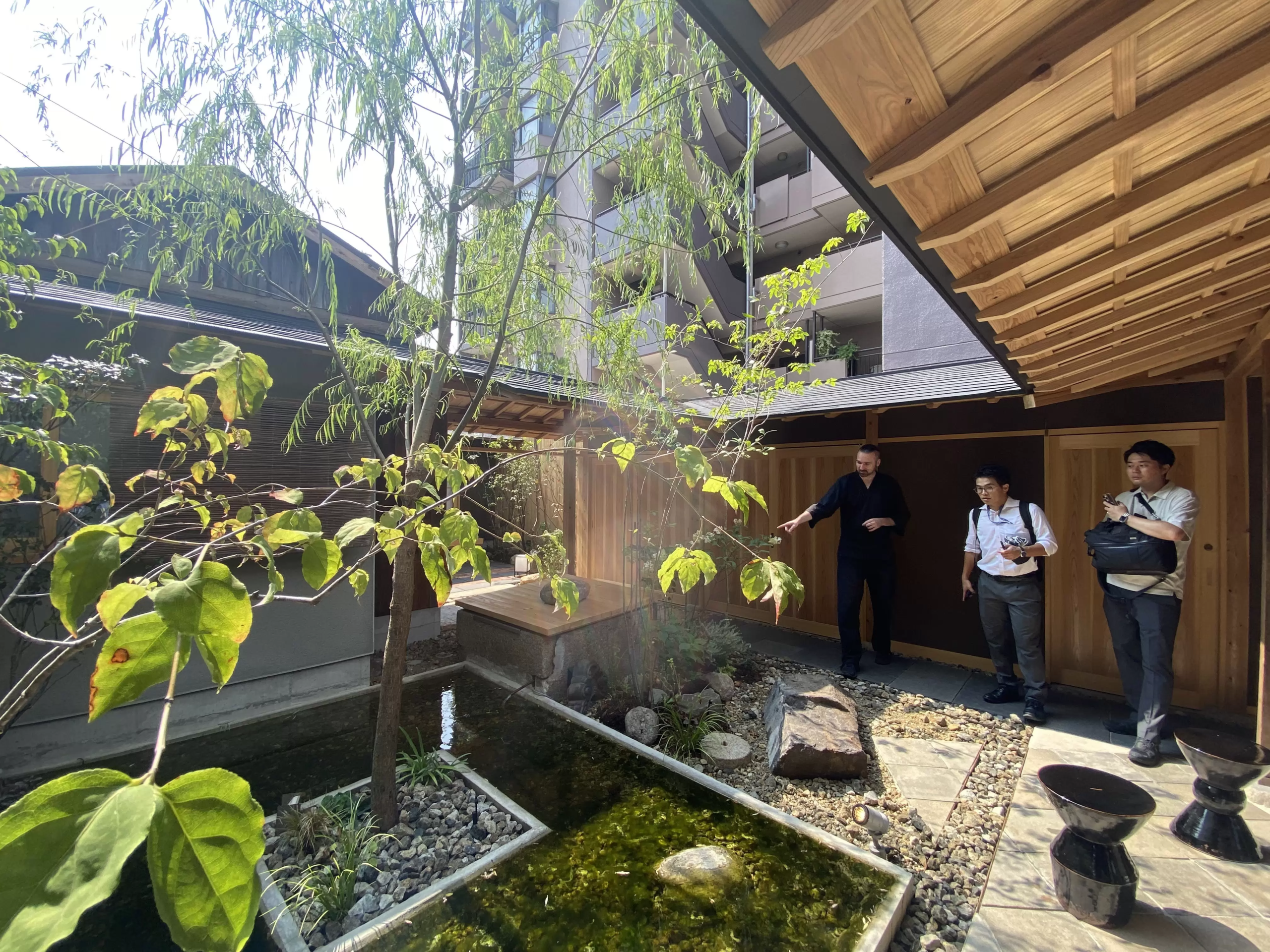
Beyond the blacksmith shop, the tour encompasses the grounds of a renovated Edo-period merchant residence. Here, guests are treated to an exploration of Japanese landscape design. Chevalier, who also serves as a guide to the site’s curated gardens, explains the aesthetic philosophy behind the space, highlighting how the tranquility of the garden complements the intensity of the workshop.
Implications: A Sustainable Future for Sakai
The implications of Chevalier’s work are profound for both the local economy and the future of traditional Japanese manufacturing. By opening these workshops to the public, Sakai is successfully diversifying its economic model, transforming from a purely industrial hub into a destination for experiential tourism.
This "Educational Tourism" model addresses several challenges:
- Cultural Literacy: It educates the public on the difference between artisanal handmade tools and mass-produced substitutes.
- Market Expansion: By training visitors from abroad, Chevalier creates a global network of informed consumers who value and advocate for traditional Sakai steel.
- Heritage Preservation: The tour provides a financial lifeline to traditional workshops, encouraging younger generations to consider the blacksmithing trade.
Tour Specifications
For those interested in participating, the logistics are designed to be as accessible as they are authentic:
- Pricing: Starts from 25,300 yen (tax included) per group, depending on language requirements.
- Capacity: Accommodates groups from 1 to 20 people.
- Duration: 60 to 90 minutes.
- Language Support: Full interpretation available in English, French, and Japanese.
- Reservations: Must be made at least one week in advance via the official booking portal.
Contact and Inquiry
For those requiring more specific arrangements, scheduling consultations, or technical information, inquiries can be directed to the Industrial Tourism team via the official inquiry form. Whether you are a professional chef, a collector, or a family looking for a unique educational experience, the Sakai forging tour offers a rare opportunity to touch the history of Japan—one strike at a time.
In a world increasingly dominated by the digital and the mass-produced, the forge at Sakai remains a defiant, glowing reminder of the power of the human hand. As Eric Chevalier continues his mission, the echoes of the hammer in Sakai seem set to ring out for another six centuries.











