Nila Kartika Wati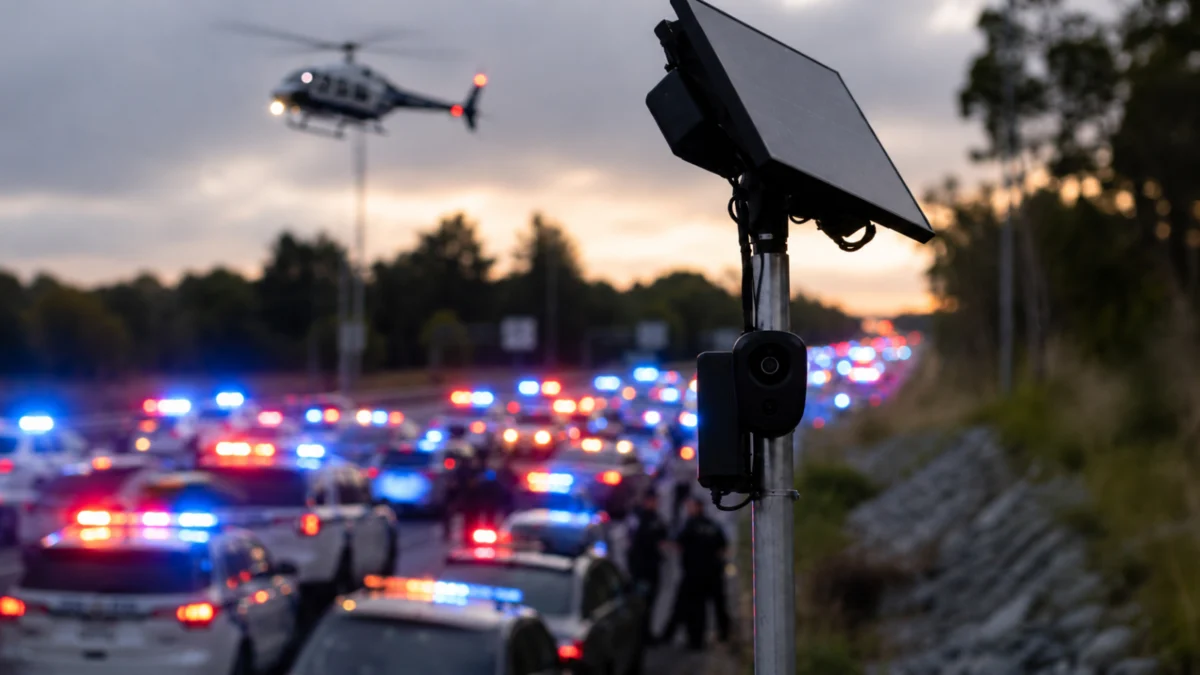
In an era where artificial intelligence is increasingly integrated into the fabric of public safety, the line between proactive policing and dangerous technological fallibility is blurring. For Joel Feder, an automotive journalist, the transition from a routine road test to a high-stakes standoff with armed law enforcement occurred in a matter of seconds. His experience, in which AI-powered surveillance cameras incorrectly flagged his vehicle as stolen, serves as a chilling case study in the risks of relying on automated systems to dictate police response.
The Standoff: A Routine Drive Turned Nightmare
The incident took place in late June in the suburbs of Plymouth, Minnesota. Feder, who was conducting a routine test drive of a $155,000 Range Rover, was accompanied by his wife when the situation escalated with jarring speed. As the couple pulled into a Kohl’s parking lot, they found themselves boxed in by four police vehicles.
Officers swarmed the scene with weapons drawn, their demeanor reflecting the urgency of a high-risk felony stop. "Are you armed?!" one officer shouted, his hand hovering near his holster. "Get out of the car!"
For Feder, the confusion was total. As he complied with the officers’ commands, he was subjected to a search and a series of aggressive interrogations regarding the vehicle’s ownership. The tension did not dissipate until the officers revealed the source of their suspicion: a network of Flock Safety license plate reader (LPR) cameras had been tracking the Range Rover across the city for several days, repeatedly flagging it as a stolen vehicle linked to a specific, albeit erroneous, license plate report. Above the scene, a police drone hovered—a silent, technological witness to the unfolding error.
Chronology of a Technological Failure
The root of this dangerous encounter lay in a fundamental breakdown of data interpretation. The Range Rover in question was equipped with a New Jersey manufacturer plate—specifically, "34 10 DTM." On this plate, the number "10" was printed in a smaller font than the alphanumeric characters flanking it.
A Jaguar Land Rover dealership in Los Angeles had previously reported a different plate, "34 03 DTM," as missing. However, the police entry for the stolen plate was recorded simply as "34 DTM."
When Flock’s AI-powered cameras scanned Feder’s vehicle, they failed to account for the smaller "10" nestled in the center. The software processed the image, stripped away the nuance of the smaller character, and registered the plate as "34 DTM"—a perfect, and perfectly wrong, match for the stolen property record.
For days, the system had been silently logging Feder’s movements throughout Plymouth. Law enforcement, operating on the assumption that the "hit" provided by the AI was an objective truth, waited for a strategic moment to apprehend the driver. It was only after a lengthy detention and direct verification with Jaguar Land Rover that the police realized the "stolen" plate had never been stolen at all; it had merely been misplaced during a promotional photo shoot in California.
The Broader Landscape of AI Misidentification
The incident involving Mr. Feder is not an isolated anomaly; it is part of a growing pattern of AI-driven errors that have resulted in civil rights violations and public trauma.

In 2025, a Baltimore student found himself the target of an armed police swarm after an AI surveillance system identified a bag of Doritos in his hand as a deadly weapon. The terrifying miscalculation forced the student to the ground at gunpoint before officers realized the absurdity of the alert.
Similarly, in the world of private security, a man was arrested after facial recognition software used by a casino falsely identified him as a banned customer. The repercussions were severe, leading to an arrest and a loss of reputation based on a flawed algorithm. Perhaps most disturbing is the case of a Tennessee grandmother who spent nearly six months in jail after being misidentified by an AI system as a suspect in a crime committed over 1,000 miles away—a case that underscores the profound human cost of algorithmic bias and data errors.
Implications for Public Safety and Civil Liberties
The case of Joel Feder raises critical questions regarding the "black box" nature of AI in policing. When a machine informs an officer that a suspect is driving a stolen vehicle, the officer’s internal risk assessment shifts instantly. The presumption of innocence is often sidelined in favor of "officer safety," leading to the rapid escalation seen in the Plymouth parking lot.
The Problem of "Automation Bias"
Sociologists and technology experts point to "automation bias"—a psychological tendency for humans to favor suggestions from automated decision-making systems, even when those suggestions contradict their own observations. When police departments rely on software to prioritize their response, the software effectively becomes the decision-maker, while the human officer becomes the agent of execution, often without the opportunity to verify the underlying data.
Accountability and Transparency
Flock Safety and similar companies argue that their technology provides invaluable tools for solving crimes. However, critics argue that the lack of transparency in how these algorithms are trained and how they process "noise" (such as smaller font characters) is a significant liability. In this instance, the police were warned by their own peers: one officer told Feder, "You’re lucky we’re in Plymouth. If you were in Minneapolis, they definitely would’ve come at you with guns drawn." This admission suggests that the technology has created an environment where the severity of police response is dictated by the perceived "hit" rather than the reality of the situation.
The Path Forward: Human-in-the-Loop Safeguards
As these technologies continue to proliferate, the need for robust oversight is paramount. Several policy changes have been proposed by civil liberty groups to mitigate the risks:
- Mandatory Verification Protocols: Police agencies should be prohibited from executing high-risk stops based solely on an automated "hit" without secondary verification from a human dispatcher or a cross-check of the original incident report.
- Algorithmic Auditing: Surveillance companies must be subject to independent audits to test for failure rates, particularly in edge cases like non-standard license plate fonts or poor lighting conditions.
- Public Transparency: Jurisdictions should disclose the extent to which AI surveillance is used and the specific metrics used to evaluate the accuracy of these systems.
- Redress Mechanisms: There must be a clear, expedited path for citizens to challenge and clear their names when they are wrongly targeted by AI, preventing the long-term legal and personal consequences seen in cases like the Tennessee grandmother.
Conclusion
The encounter in Plymouth serves as a sobering reminder that technology, while powerful, is not infallible. As AI systems become more deeply embedded in law enforcement, the risk of "false positives" grows. When those errors translate into drawn weapons and the threat of lethal force, the public’s trust in both the police and the technology they employ is fundamentally compromised.
For Joel Feder, the experience was an hour of terror that ended in an apology and a warning to drive carefully. For others, the consequences have been far more permanent. As society grapples with the integration of AI, we must ensure that human judgment, skepticism, and the constitutional rights of citizens remain the final, un-automatable authority in the justice system. The "efficiency" of AI should never be purchased at the cost of the safety and liberty of the innocent.


 Pevita Pearce
 Reynand Wu