Rifan Muazin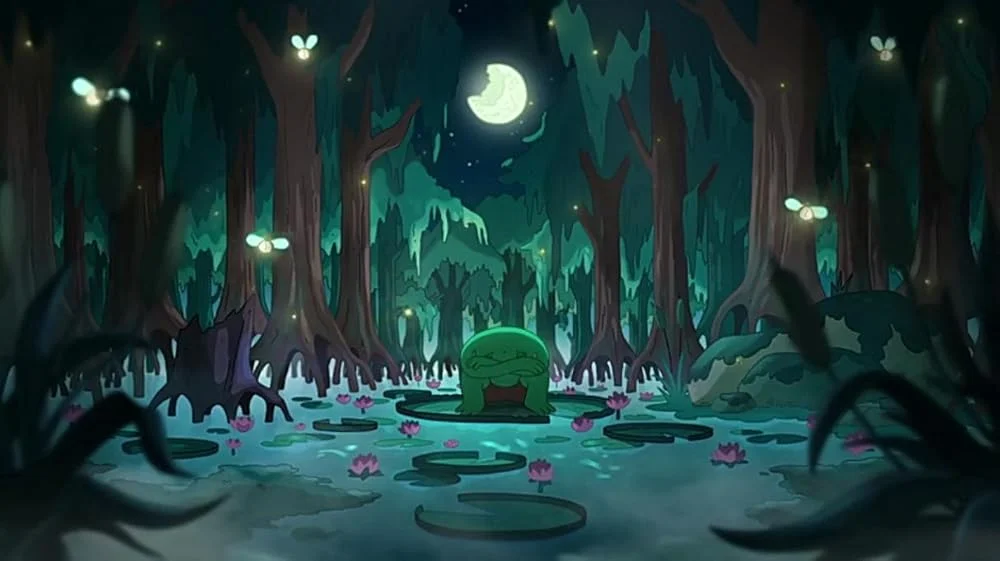
This story originally appeared in the Sketch to Screen newsletter. Subscribe to receive industry insights and analysis directly in your inbox.
The Primetime Emmy Awards have long been criticized for a stubborn, almost gravitational pull toward the status quo. In the high-stakes world of awards politicking, the most reliable path to a nomination—or a golden statuette—is rarely a radical departure from the norm; it is, more often than not, a history of having been nominated before. This "incumbent advantage" has kept legacy sitcoms on the podium long after their cultural resonance has faded and has frequently crowded out innovative, burgeoning series in favor of established, comfortable brands.
When the nominations for the 78th Primetime Emmy Awards were announced this Wednesday, the industry saw a mix of familiar patterns and a few welcome shifts. While some categories displayed a refreshing influx of new blood, the Animated Series category stood out as a particularly egregious example of the Television Academy’s penchant for regression. Instead of highlighting the vibrant, evolving landscape of modern animation, the current lineup feels less like a survey of 2026’s best work and more like a curated selection from a 2015 cable box.
The Anatomy of a Static Category
The 2026 Animated Series lineup is, by almost any objective metric, an exercise in inertia. Among the six nominees, zero are freshman series. Four of the six are multi-time winners who have dominated the category for over a decade.
Leading the charge are titans like "The Simpsons" and "Bob’s Burgers." Combined, these two shows boast over 50 nominations. To question their inclusion is not to disparage their historical significance—both are, without debate, among the greatest sitcoms ever produced—but rather to question the function of the award itself. If the Emmys are meant to celebrate excellence in the current television landscape, is it truly reflective of the state of animation to honor the same shows in their third decade of production?

The continued presence of these series suggests a voting body that relies on name recognition and "voting comfort" rather than a rigorous engagement with the year’s actual output. When a program is nominated for ten consecutive years, the nomination ceases to be a badge of honor and begins to look like an automatic, administrative box-check.
Chronology of the "Comfort" Bias
To understand how we reached this point, one must look at the recent history of the category. The last few years had, in fact, shown promise. The wins for "Arcane" and "Blue Eyed Samurai" signaled a shift toward rewarding visually daring, narrative-heavy projects that pushed the boundaries of the medium. These choices felt like a maturation of the Academy, suggesting a willingness to look beyond traditional sitcom formulas.
However, the 2026 nominations feel like a jarring pivot back to the status quo. The inclusion of "South Park"—receiving its first nomination since 2021—serves as a case study in how the Academy conflates "cultural noise" with "creative achievement."
While the show’s 27th season generated headlines for its biting, viral critique of the Trump administration, the actual episode submitted for consideration, "Sermon on the Mount," is a formulaic outing. It relies on the series’ long-standing tropes: a cynical, "both-sides" approach to satire that feels increasingly stagnant in an era of rapid political shifts. Its nomination is clearly a statement of intent from the voters, who appear eager to reward a show that positions itself as a political provocateur, even if the creative execution has grown tired.
Supporting Data: The Road Not Taken
The frustration surrounding these nominations is amplified when one considers the vast, untapped potential of the 37 series currently on the category’s ballot. While the Academy opted for the familiar, they bypassed several works of profound ambition.

Consider, for instance, the absence of Raphael Bob-Waksberg’s "Long Story Short." As a kaleidoscopic, multi-generational portrait of a Jewish family, the series was, by most critical accounts—including IndieWire’s own ranking—the best animated series of 2025. It possessed the emotional depth and formal ingenuity that the Emmys claim to value, yet it failed to break through to the mainstream voting block.
Similarly, Adult Swim offered a treasure trove of alternatives. Projects like "The Elephant"—a bold, experimental piece of visual storytelling—and "Haha, You Clowns," which balanced humor and heart in a way few comedies manage, were left in the cold. Even "Invincible," an Amazon powerhouse that has dominated audience discourse for four seasons, was relegated to the sidelines, restricted only to vocal performance categories.
The lone bright spot in the lineup is "Smiling Friends." As the only first-time nominee in the pack (not counting "Star Wars: Visions," which was a short-form nominee in 2022), it represents a rare win for the "weird." Its evolution from a cult-favorite internet oddity to a mainstream phenomenon is one of the few instances where the Academy actually tracked a show’s growing influence.
Official Responses and Industry Dynamics
While the Television Academy rarely comments on individual nominations, the voting process is governed by a complex, multi-tiered system that often favors those with the most robust "For Your Consideration" campaigns.
The industry reality is that established studios—like those backing "The Simpsons" and "South Park"—have the resources to dominate the mailboxes and screens of Emmy voters. A new, experimental series like "Long Story Short" faces a gargantuan task: it must capture the attention of a voter who is likely inundated with hundreds of hours of content.

There is also the matter of the "Prestige Gap." In the eyes of many voters, animated series are still viewed through a lens of "comfort viewing." There is a persistent, if unspoken, bias that animation should be easy to digest, episodic, and light. When a show like "Primal" or "Long Story Short" demands emotional labor or intellectual engagement, it is often viewed as a "niche" product, whereas a standard 22-minute sitcom is seen as the "default" for the category.
Implications for the Future of Animation
The implications of this stagnation are significant for the medium of animation. If the industry’s highest honor consistently rewards the past, it sends a chilling message to creators and studios alike: don’t innovate, just endure.
When the Emmy stage is occupied by shows that haven’t shifted their fundamental structure in twenty years, it creates a "prestige ceiling." Emerging creators see that the path to recognition isn’t necessarily through pushing the medium forward, but through building a long-running, recognizable brand that voters can rely on for a sense of nostalgic comfort.
This is a disservice to the medium’s potential. Animation is currently in a golden age, with advancements in AI-assisted workflows, 2D-3D hybridization, and a broader demographic appeal than ever before. We are seeing stories about trauma, heritage, complex morality, and experimental philosophy—all told through an animated lens. By choosing to honor the same legacy acts year after year, the Academy is not just ignoring the current year’s best work; it is actively distancing itself from the future of television.
Conclusion: A Call for Courage
The Creative Arts Emmys, scheduled for September 5 and 6, will likely crown one of the usual suspects. If "South Park" takes the win, it will be hailed as a victory for "fearless" satire. If "The Simpsons" wins, it will be viewed as a lifetime achievement.

But there is a missed opportunity here. The voters have the chance to recognize that animation is more than a comfortable routine; it is a vital, expansive medium capable of redefining what television can be. For the Emmys to remain relevant, they must learn to look past the safety of the known. They must be willing to let go of the comfort of the past and embrace the experimental, the challenging, and the new.
Until the Television Academy updates its definition of what constitutes an "Outstanding" Animated Series, the award will continue to function less as a barometer of quality and more as a reminder of how much the industry fears change. It is time to let the new guard in.

 Siti Muinah
 Lina Hope