Laily UPN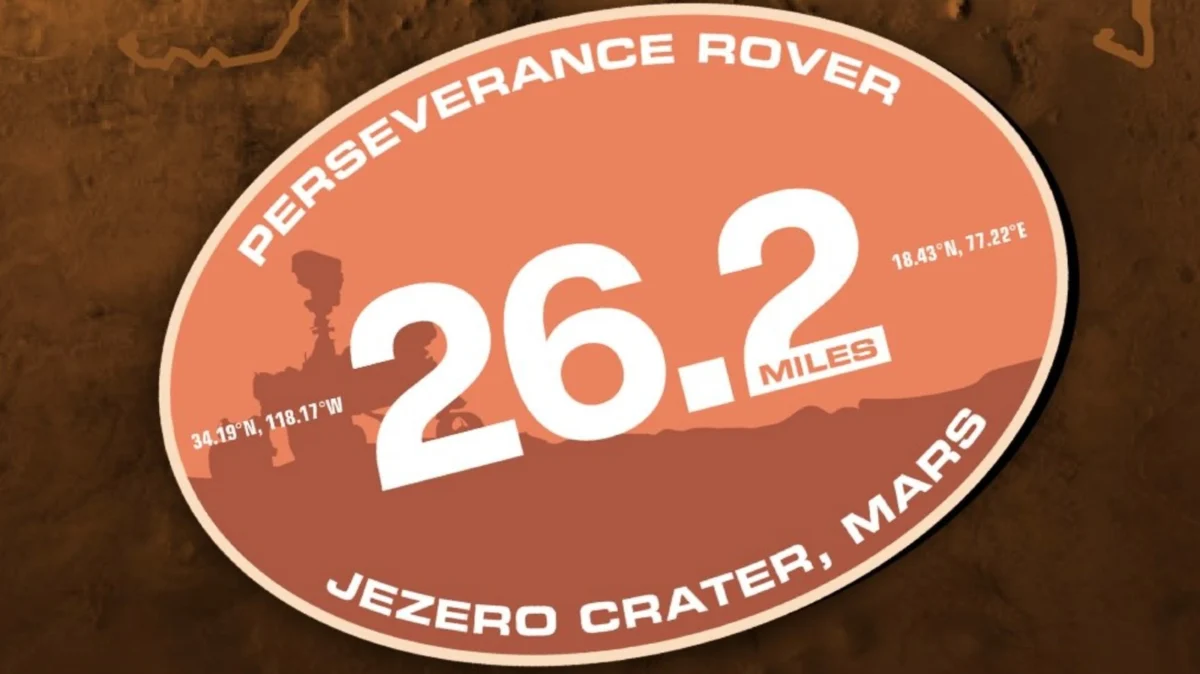
In a monumental achievement for interplanetary exploration, NASA’s Perseverance rover has officially crossed the 26.2-mile threshold on the surface of Mars. The robotic explorer reached this "marathon" distance on June 14, marking a significant milestone in its ongoing mission to uncover the secrets of the Red Planet. Accomplishing this feat in just five years, Perseverance has demonstrated not only the durability of modern space robotics but also a remarkable efficiency in navigating the treacherous, alien terrain of the Jezero Crater.
Main Facts: A Robotic Marathoner
The 26.2-mile distance represents the gold standard for human endurance athletics on Earth, but on Mars, it is a testament to engineering precision and autonomous navigation. Perseverance, which landed on Mars in February 2021, has spent the last five years traversing the rocky, dusty, and cratered landscape of the Jezero Crater.
Despite its top speed—which, under ideal conditions, reaches a modest 0.1 miles per hour—the rover has maintained a consistent pace that has allowed it to outstrip the travel records of its predecessors in terms of speed-to-distance efficiency. The rover is currently positioned to the west of the Jezero Crater, an area of high scientific interest that has yielded some of the most compelling evidence to date regarding Mars’ ancient hydrological history.
This accomplishment places Perseverance in an elite class of space explorers, as it is only the second mission in history to complete a marathon on another world. The distinction highlights the rover’s role as a mobile laboratory, capable of sustained, long-term geological surveying.
Chronology of the Journey
The road to 26.2 miles began with a "seven minutes of terror" descent sequence that successfully placed the rover on the floor of the Jezero Crater in early 2021. Since that historic landing, the mission has moved through several distinct phases:
- 2021: The Landing and Initial Surveys: Shortly after arrival, Perseverance focused on characterizing its immediate surroundings. It served as a base for the Ingenuity helicopter—the first aircraft to achieve powered, controlled flight on another planet—before beginning its long trek.
- 2022: The Delta Exploration: The rover began its ascent toward the remnants of an ancient river delta. This period was characterized by intense sampling, as the rover began drilling and sealing rock cores that might contain biosignatures.
- 2023: Testing Autonomy: By utilizing its AutoNav system, Perseverance began to navigate around hazards more independently, allowing mission controllers to push the rover further and faster than previous models.
- 2024: Western Excursion: The mission entered its current phase, exploring the rugged terrain west of the crater. It was during this phase that the rover hit its stride, consistently logging mileage while investigating diverse geological formations.
- 2025: The Marathon Milestone: On June 14, telemetry confirmed that the odometer had officially surpassed 26.2 miles.
Supporting Data: Comparing the Titans of Mars
To understand the significance of Perseverance’s speed, one must look at the history of long-distance driving on the Martian surface. NASA has operated several rovers, each pushing the boundaries of what is possible in extreme environments.
The Opportunity Benchmark
The Opportunity rover, which landed in 2004, held the record for years. It took Opportunity over 11 years and two months to complete a full marathon. The fact that Perseverance completed the same distance in less than half that time is a direct result of advancements in wheel design, autonomous navigation software, and improved power management systems.
The Curiosity Standard
Curiosity, which arrived on Mars in 2012, remains a workhorse of the Martian surface. While it has logged over 23 miles, its mission profile differs significantly from that of Perseverance. Curiosity is tasked with longer, more deliberate stationary experiments, whereas Perseverance was designed specifically for rapid traversal between multiple diverse geological sites to collect a cache of samples for a future Mars Sample Return mission.
Technical Limitations
It is important to contextualize the "0.1 mph" top speed. While slow by human standards, this speed is blistering for a vehicle navigating an unknown environment without a GPS network. The danger of getting stuck in "sand traps" or damaging wheels on sharp, basaltic rocks makes speed a secondary concern to safety. The success of the marathon is, therefore, a victory for the ground teams at the Jet Propulsion Laboratory (JPL) who carefully plot every meter of the journey.
Official Responses and Scientific Context
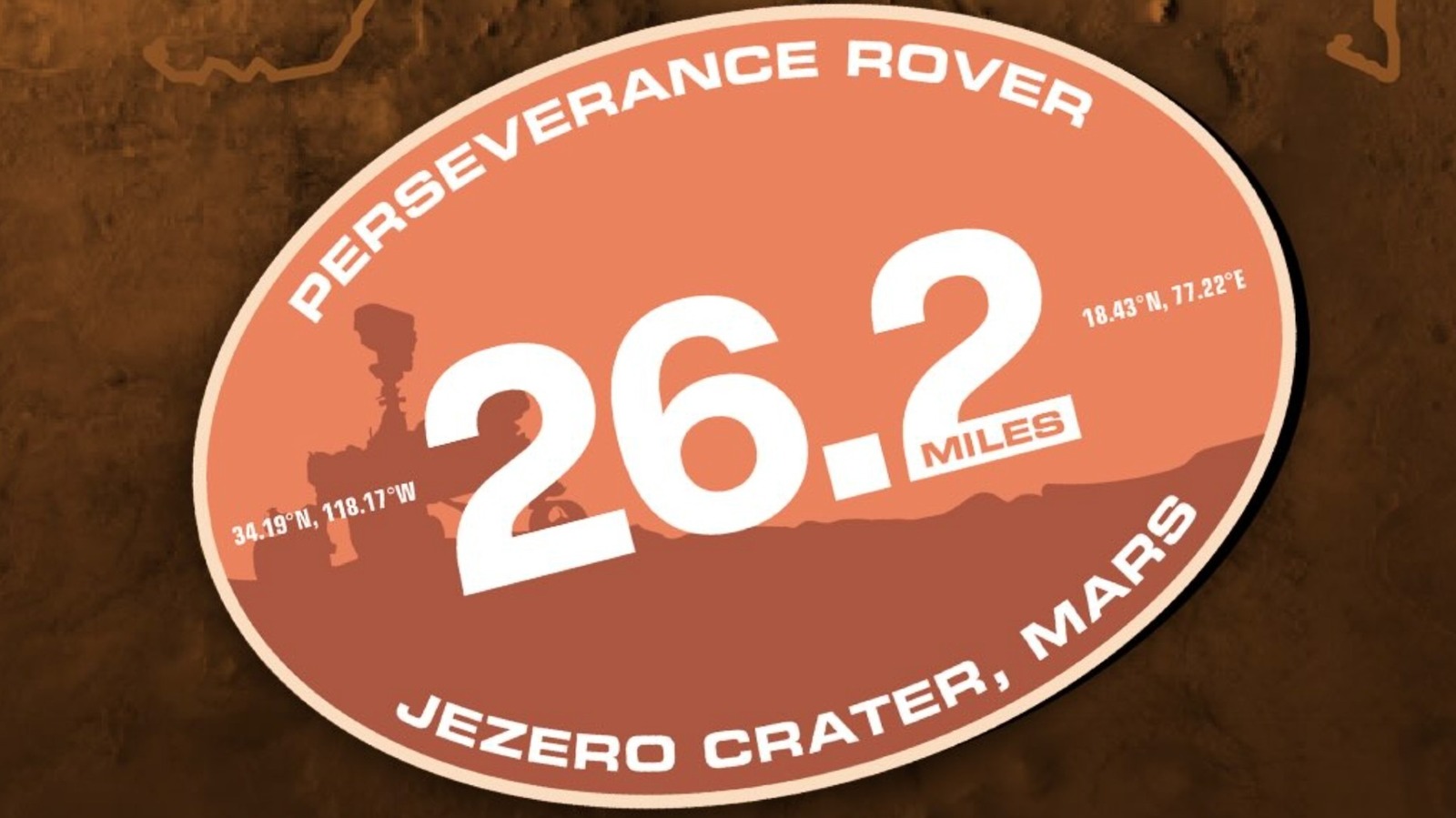
NASA officials have expressed immense pride in the achievement. In an official statement via social media, the agency remarked, "Perseverance is only the second explorer to travel the distance of a marathon on another world, following NASA’s Opportunity rover."
Dr. Katie Stack Morgan, Deputy Project Scientist for the Perseverance mission, noted that the distance is not merely a number for the sake of records. "Every meter we travel is an opportunity to see a new rock, a new mineral, or a new piece of the puzzle that is Mars’ history," she said.
The rover’s recent "western excursion" has been particularly productive. NASA confirmed that the rover has been exploring remnants of an ancient lake, which scientists believe once held liquid water billions of years ago. The images transmitted back, including a recent high-resolution selfie, serve as a reminder of the machine’s ongoing utility. These photos are not just for public engagement; they are critical for engineers to inspect the state of the rover’s hardware after years of exposure to the abrasive Martian dust.
Implications for Future Exploration
The completion of this marathon serves as a "proof of concept" for several critical areas of space exploration:
1. The Viability of Long-Range Autonomy
The ability of Perseverance to navigate 26.2 miles autonomously provides NASA with the confidence to plan even more ambitious missions. Future rovers, potentially those capable of covering even greater distances, will be able to map large swathes of the planet, increasing the probability of finding localized, ancient biological remains.
2. Preparing for Human Exploration
Every mile traveled by a robotic rover helps characterize the soil mechanics, atmospheric conditions, and topographical challenges that human explorers will eventually face. By testing how wheels and chassis hold up over a marathon distance, NASA is gathering the necessary data to design future pressurized rovers for human crews.
3. Advancing the Sample Return Mission
The ultimate goal of the Perseverance mission is to collect a diverse suite of samples for return to Earth. The "marathon" mileage has allowed the rover to visit multiple distinct environments—the crater floor, the delta, and the western rim—ensuring that the samples represent a broad geological history rather than a single site.
4. Technological Legacy
The success of Perseverance (and its companion, Ingenuity) proves that the "design-test-iterate" cycle of the Mars Exploration Program is working. The move from the 11-year marathon of Opportunity to the 5-year sprint of Perseverance suggests that we are entering an era of more efficient, highly capable planetary science.
Looking Ahead
As Perseverance continues its journey beyond the 26.2-mile mark, the focus remains firmly on the science. The rover is currently scouting terrain that has been shielded from the harsh radiation of the Martian surface for eons, potentially hiding organic molecules that could answer the age-old question: Was there ever life on Mars?
The marathon milestone is not the end of the road; it is a checkpoint. With the rover’s systems still reporting nominal health and the mission budget secured for the coming years, the scientific community expects many more miles—and many more discoveries—from this tireless explorer.
As the rover moves further into the unknown, it carries with it the aspirations of a global scientific community, proving that even at 0.1 miles per hour, we can move the needle on our understanding of the universe. The marathon on Mars is a reminder that in the search for knowledge, persistence—much like the rover that bears the name—is the most valuable asset of all.

 Raul Delapena Setiawan
 Asep Darmawan