Nana
Nana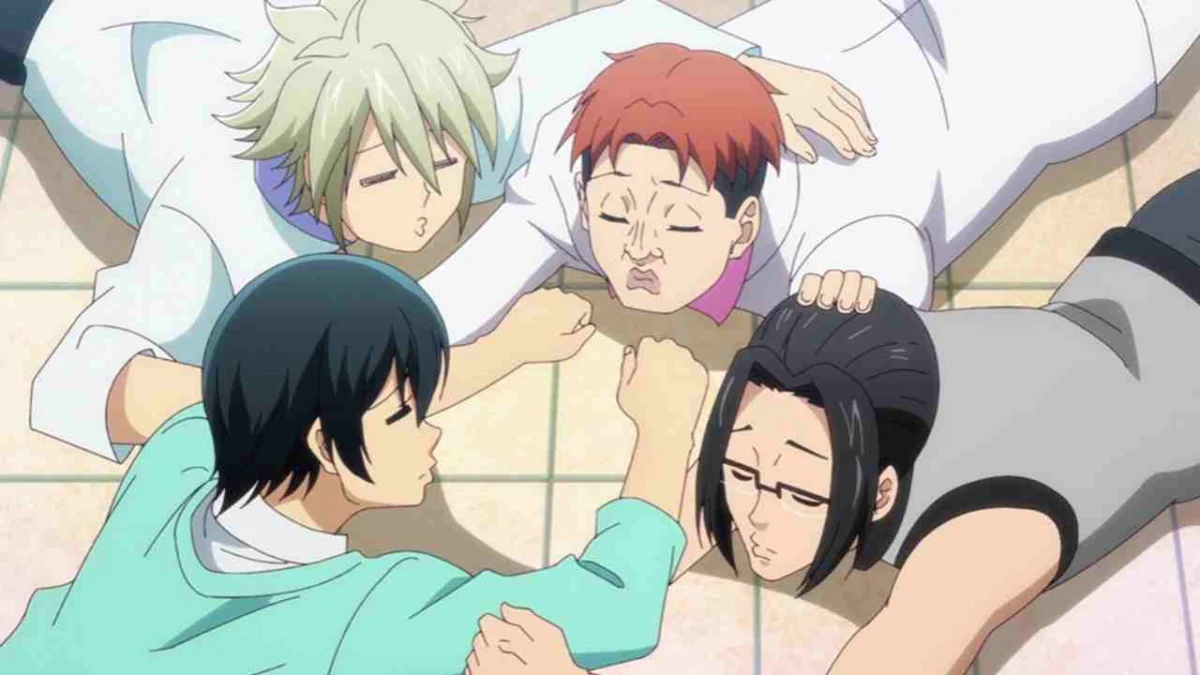
The highly anticipated second season of Grand Blue Dreaming (simply known as Grand Blue) continues to deliver its signature blend of high-octane collegiate comedy, absurdist humor, and questionable lifestyle choices. As the narrative enters the heart of the Oumi Women’s Festival arc, the stakes for Iori Kitahara and his band of eccentric peers have escalated from mere social embarrassment to full-scale campus expulsion. Following the chaotic events of Episode 5, fans are eagerly looking forward to the next installment of this aquatic—though rarely water-focused—comedy.
I. Main Facts: Release Schedule and Streaming Information
As the Summer 2025 anime season progresses, Grand Blue Season 2 remains a flagship title for comedy enthusiasts. The production committee and licensing partners have confirmed that the momentum will not be interrupted by any mid-season hiatuses.
Grand Blue Season 2, Episode 6 is scheduled for official release on Monday, August 11th, 2025.
The series continues its simulcast partnership with Crunchyroll, allowing international audiences to access the episode shortly after its Japanese broadcast. For viewers tracking the production schedule, there are no reported delays or "recap episodes" planned for this window, ensuring that the Oumi Women’s Festival arc concludes its current narrative thread without interruption.
II. Chronology: A Detailed Recap of Episode 5
Episode 5 served as a pivotal moment in the festival arc, shifting the focus from the diving club’s internal antics to their disastrous integration into the broader campus community.
The Maid Cafe Initiative
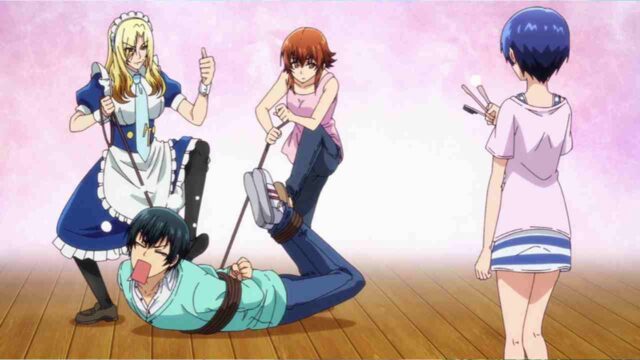
The episode opened with Iori Kitahara and Kouhei Imamura finding themselves trapped in an unexpected predicament. Under the insistent pressure of Aina Yoshiwara (commonly referred to as "Cakey"), the duo—alongside the stoic Chisa Kotegawa—was recruited to assist with a maid cafe organized by Aina’s academic major.
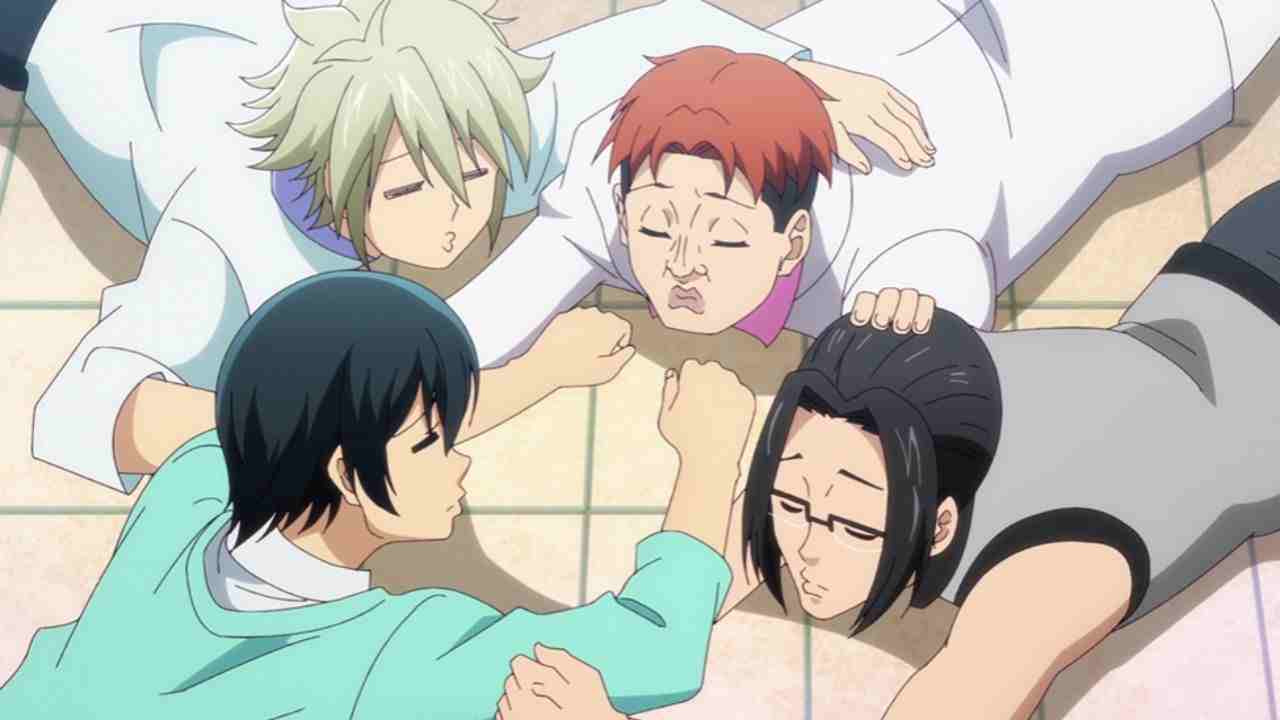
In a classic Grand Blue subversion of the "cute maid cafe" trope, the establishment was staffed by students wearing excessively thick, "cakey" makeup, a visual gag that has become a recurring motif for Aina’s social circle. Despite their intense reluctance, Iori and Kouhei were forced into crossdressing. While Iori viewed the maid outfit as a badge of ultimate humiliation, Kouhei, ever the professional otaku, handled the transition with a terrifying level of composure, further highlighting the psychological divide between the two protagonists.
Recognition and Humiliation
The narrative tension escalated when familiar faces arrived at the cafe. Aina’s friends from the first season—who served as the primary source of the "cakey" aesthetic—immediately recognized Iori despite his disguise. The resulting mockery and the subsequent photo-taking session served to further degrade Iori’s social standing. The arrival of Azusa Hamayama added another layer of complexity; her effortless recognition of Iori, even in full maid attire, underscored the futility of his attempts to maintain any semblance of dignity.
The Voice Actor Subplot
While Iori suffered in the cafe, Kouhei’s trajectory took a turn toward his personal obsession. Azusa revealed that one of her acquaintances was working as stage staff for the festival’s headline event: a live performance by a famous seiyuu (voice actor) whom Kouhei idolizes. Due to technical difficulties, the concert schedule was shifted, prompting Kouhei to abandon his post at the cafe to assist backstage.
This moment provided a rare glimpse into the "honor among thieves" within the Peek-a-Boo (PaB) diving club. Despite being severely understaffed, Iori and Chisa allowed Kouhei to leave, recognizing that for a hardcore fan like Kouhei, helping his favorite idol is a sacred duty that supersedes part-time labor.
The Prank and the Expulsion
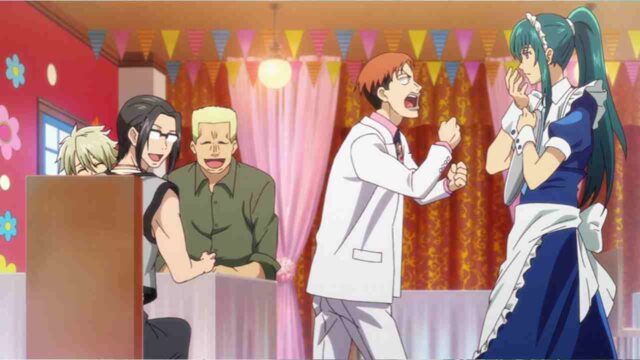
The climax of the episode occurred when Iori’s "normal" college friends—the group of desperate, girl-crazy students—visited the cafe. Failing to recognize Iori in his maid outfit, they began discussing their plans to abandon him, citing his penchant for public nudity and general boisterousness as a social liability.
Enraged by this betrayal, Iori leveraged his disguise to enact revenge. Playing the role of a mistreated waitress, he manipulated the situation to make it appear as though his friends were harassing him. The scheme was a resounding success in terms of vengeance, resulting in the security team forcibly removing his friends from the campus. However, the victory was short-lived. Aina, who had specifically warned Iori not to cause a disturbance, discovered the ruse. In a fit of justified rage, she had Iori himself expelled from the premises, leaving him and his friends locked outside the festival gates.
III. Supporting Data: Production Context and Character Analysis
To understand the impact of Grand Blue Season 2, one must look at the technical and creative foundations of the series.
The Pedigree of Zero-G
The second season continues to be handled by studio Zero-G, which has developed a reputation for mastering the "reaction face" animation style essential for Grand Blue’s comedy. The art direction in Episode 5 specifically highlighted the contrast between the "pretty" character designs of Chisa and Azusa and the "monstrous" caricatures of the male cast and the "cakey" makeup girls. This visual dissonance is a hallmark of Kimitake Yoshioka’s original manga illustrations, and the anime adaptation remains remarkably faithful to this aesthetic.
Voice Acting Excellence
The vocal performances remain a primary driver of the show’s success. Yuma Uchida (Iori) and Ryohei Kimura (Kouhei) have perfected the art of the "comedic scream," transitioning from mundane dialogue to high-pitched hysterics with seamless precision. In Episode 5, Kimura’s performance during the seiyuu realization scene added an extra layer of authenticity to the otaku subculture being parodied.
Narrative Themes
At its core, Episode 5 explored the theme of "Social Suicide," a recurring concept in Kenji Inoue’s writing. Whether it is Iori being forced into a maid outfit or his friends being labeled as harassers, the comedy stems from the permanent damage done to the characters’ reputations. This "no-stakes/high-stakes" balance is what separates Grand Blue from more traditional "slice-of-life" anime; while the physical danger is minimal, the social consequences are treated with the gravity of a Shakespearean tragedy.
IV. Official Responses and Fan Reception
While official statements from the production committee regarding specific plot points are rare, the fan response to Episode 5 has been overwhelmingly positive. On platforms such as MyAnimeList and Reddit, viewers have praised the adaptation for its pacing, noting that the "Maid Cafe" chapters are among the most beloved in the manga’s history.
Critics have noted that Grand Blue Season 2 has successfully avoided the "sophomore slump" by leaning harder into the ensemble dynamics. The decision to focus on the festival—a setting that allows for maximum interaction between different social circles—has been lauded as a strong narrative choice. The "cakey makeup" gag, in particular, continues to be a polarizing but iconic element of the series, representing the show’s willingness to commit to a joke even if it is visually repulsive.
V. Implications: Speculation for Episode 6
The cliffhanger ending of Episode 5 sets the stage for a high-stakes heist-style comedy in the upcoming installment.
The Great Break-In
The primary conflict for Episode 6 involves Iori and his group of "scum-bro" friends attempting to re-enter the Oumi Women’s Festival. Having been blacklisted by security, they can no longer walk through the front gates. Speculation suggests that their "break-in" attempt will involve the various skills they have (theoretically) learned in the diving club—such as physical endurance and stealth—applied to a completely illegal and idiotic goal.
The Nanaka Factor
A major looming threat is Nanaka Kotegawa. Iori is currently under strict orders to ensure no men flirt with Chisa during the festival. Now that Iori is stuck outside the campus, Chisa is effectively "unprotected" in Nanaka’s eyes. If Iori fails to regain entry, he faces a wrath far more terrifying than campus security: the sisterly fury of a legendary "siscon."
Kouhei’s Success or Failure
While Iori struggles with security, Kouhei is positioned to have the night of his life. However, in the world of Grand Blue, success is rarely uncomplicated. There is a high probability that Kouhei’s attempt to help his favorite seiyuu will result in a catastrophic misunderstanding, likely involving his lack of clothes or his overwhelming intensity as a fan.
Conclusion: The Cultural Footprint of Grand Blue
Grand Blue remains a unique entity in the anime landscape. While marketed as a diving series, it is, in reality, a satire of the Japanese college experience—focusing on the absurdity of youth, the bonds of friendship formed through shared embarrassment, and the pursuit of hedonism. As we approach Episode 6, the series continues to prove that even when the characters are at their lowest point, the comedic ceiling remains incredibly high.
Viewers are encouraged to catch up on the previous episodes on Crunchyroll before the August 11th premiere to fully appreciate the escalating chaos of the Oumi Women’s Festival. Regardless of how the break-in concludes, one thing is certain: Iori Kitahara’s dignity is unlikely to survive the night.

 Rifan Muazin
 Ammar Sabilarrohman