If one were tasked with designing a stage for a titan of hip-hop—an artist whose catalog spans decades and defines the cultural topography of New York City—the impulse would almost certainly be to lean into the spectacular. One might imagine an array of pyrotechnics, complex hydraulic lifts, or a throne-like platform rising from the center of the field. Yet, when visionary creative director Willo Perron sat down to plan the anniversary shows for Jay-Z’s seminal albums Reasonable Doubt and The Blueprint at Yankee Stadium, he landed on a radical antithesis: restraint.
"I think the statement piece in a Jay-Z show is Jay-Z," Perron tells me. "This is more about storytelling than it is about stage design." In an era of high-octane, digital-first spectacle, the decision to prioritize the performer over the production values was a gamble—but it was one that paid off in a way that felt profoundly, undeniably New York.
The Main Facts: A Homecoming at the Cathedral of Baseball
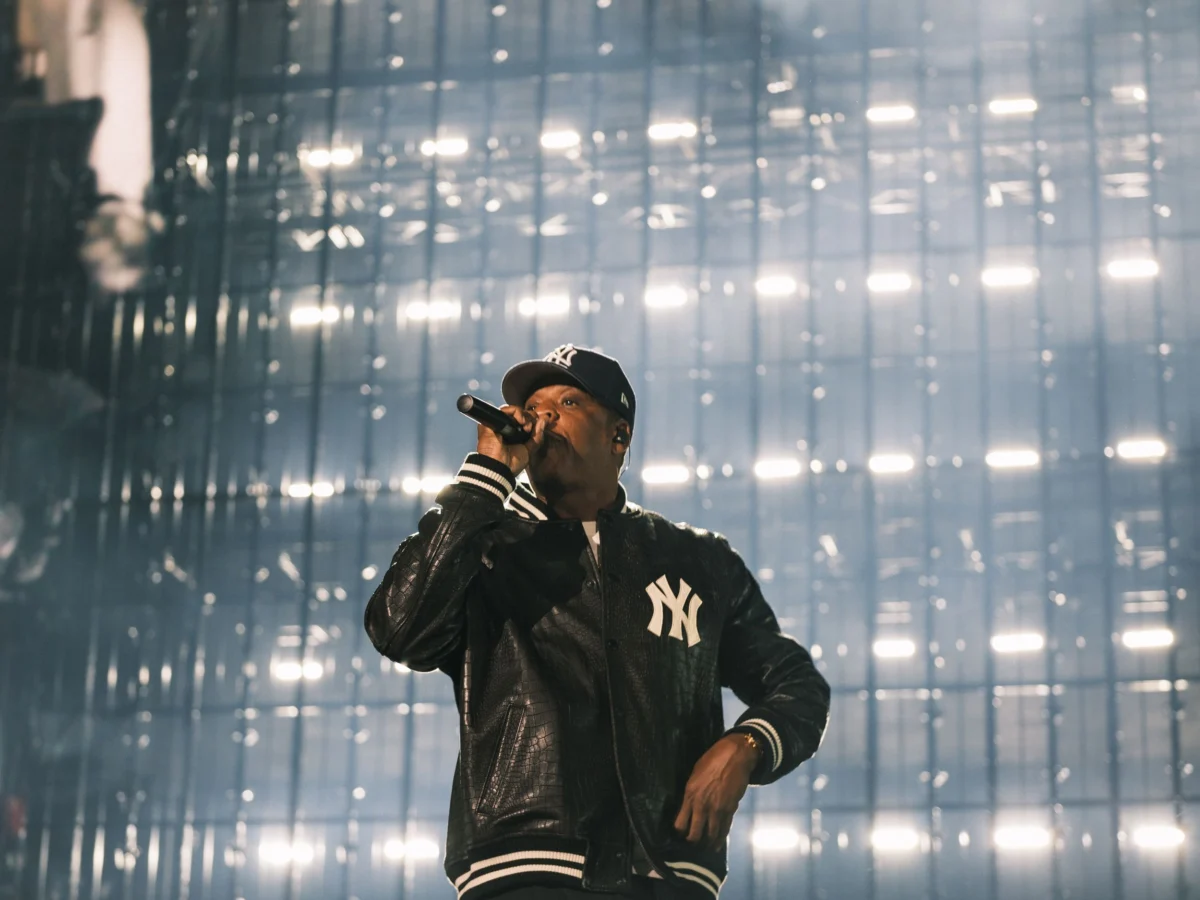
On a Friday night that felt like a convergence of local history, Jay-Z took the stage at Yankee Stadium before an electrified crowd of 45,000. He did not arrive via a complex rig or descend from the rafters. Instead, he simply appeared, backed by a massive, 2,952-square-foot outfield-spanning screen that projected raw, nostalgic imagery of his formative years in the city.

The performance was a masterclass in musical minimalism. Accompanied by a tight 10-piece band and an 18-piece string section, Jay-Z barreled through two hours of hits. The guest list was a curated roll call of his personal and professional history: his wife, Beyoncé, lent her vocals to "Can’t Knock the Hustle," reimagining the chorus originally sung by Mary J. Blige; Nas joined him for a rendition of "Dead Presidents," a nod to the song that famously sampled Nas’s own "The World Is Yours." Even family and legacy were on display, as his daughter, Blue Ivy Carter, joined on keys for "Feelin’ It," and his mentor, Jaz-O, emerged for a surprise appearance that sent the stadium into a frenzy.
The Chronology: From Two Shows to "Extra Innings"
The residency was originally conceived as a modest two-night affair: Friday to honor the 1996 masterpiece Reasonable Doubt, and Saturday to celebrate the 2001 classic The Blueprint. However, the demand for tickets shattered expectations. Scott Krug, the Yankees’ chief financial officer, noted that the velocity of ticket sales for these dates was among the fastest he had ever witnessed in his tenure.
The overwhelming response forced the hand of the organizers, leading to the addition of a third Sunday show, cheekily titled "Extra Innings." This mini-residency arrived at a pivot point for New York City, occurring amidst a summer defined by high-profile cultural touchstones—from the buzz surrounding the World Cup to the spectacle of celebrity weddings at Madison Square Garden. By the time Jay-Z took the stage, the atmosphere had been further charged by the New York Knicks’ recent NBA championship, which cemented the rapper’s "Empire State of Mind" as the city’s unofficial victory anthem.

Supporting Data: The Logistics of "Sacred Ground"
Transforming a professional baseball field into a concert venue requires a delicate balance of ambition and preservation. For the Yankees, the outfield grass is essentially sacred ground, and the transition from concert venue back to Major League Baseball stadium must be seamless.
Krug explains the immense logistical pressure of the event. Because the stadium is situated in the dense urban fabric of the Bronx, there is no expansive parking lot for staging equipment. Every truck delivery had to be synchronized with the departure of the previous one. Furthermore, the field itself remained untouched. To protect the Kentucky bluegrass, the outfield was blanketed in specialized polypropylene panels, which are flat on the underside to prevent indentation or damage to the turf.
"At the end of the day, our primary responsibility is for baseball," says Krug. "When the team returns next Friday, we have to make sure the playing field is in the best possible condition." This constraint, ironically, became the show’s greatest design asset. Perron utilized a vinyl-mesh cover on the diamond that served as a massive, immersive projection screen, bringing the visuals closer to the fans than a standard stage ever could.

The Philosophy of the "Intimate Stadium"
Despite the massive scale, the show avoided what Perron calls "ostentatious" design. A key feature of the layout was the inclusion of bleachers positioned on each side of the stage. This was a direct homage to the cramped, sweaty, high-energy atmosphere of legendary New York clubs like The Tunnel, where Jay-Z built his reputation in the 90s.
"Jay-Z sent me a video of an older concert," Perron recalls. "He pointed out that the way the stage was situated made it look like the people were actually onstage with him. And I thought, ‘We should just put people on stage.’"
This design choice highlights a growing trend in live music: a retreat from the "social media-first" aesthetic. While Perron acknowledges that he knows every frame will be captured and uploaded to Instagram or TikTok, he argues that designing exclusively for the "gram" has hindered the quality of live performance. The goal was to foster a genuine, visceral connection between the artist and the audience, rather than creating a series of "viral moments."

Implications: Authenticity in an Age of Artificiality
The success of these shows underscores a broader cultural hunger for authenticity. In a world increasingly saturated by artificial intelligence and digital artifice, a recent study by the Royal Philharmonic Orchestra found that 78 percent of respondents believe live performance is the one domain where human creativity remains untouchable.
This sentiment is echoed by academics like Isra Ali, a professor at NYU Steinhardt, who suggests that the value of in-person contact has reached a premium. "People are hungering for authenticity," says Ali. "In that environment, the value of in-person contact goes up."
Yet, Jay-Z occupies a complex position in this narrative. He is the kid from Bed-Stuy who became a billionaire mogul—a figure who is simultaneously a part of the city’s identity and increasingly distant from the daily struggles of the residents partying in the streets. Ali notes that there is an "explicit component of this hype NYC summer that is about the people versus the billionaires." Jay-Z’s performance, therefore, served as a nuanced commentary on his own status.

When he addressed the crowd early in his set, acknowledging the rumors of him "selling out," he leaned into the dichotomy. "They say I sold out," he told the 45,000-strong crowd. "Yeah, I did sell out. Three nights. I sold Yankee Stadium the hell out."
Conclusion: The Power of Restraint
The residency concluded not with a grand explosion of pyrotechnics, but with the soaring, triumphant chords of "Empire State of Mind." The moment was elevated by Alicia Keys, who introduced the track by weaving in a segment of Billy Joel’s "New York State of Mind."
For a few minutes, the distance between the billionaire in the spotlight and the fan in the nosebleeds vanished. The stadium became a living, breathing testament to New York’s enduring spirit. By stripping away the artifice, Willo Perron and Jay-Z proved that even in the largest of venues, the most potent tool is still the human voice. In an age of digital noise, they chose to speak clearly, and in doing so, they reminded the city exactly who they were celebrating: not the stage, not the light show, but the man and the story that made the music a legend.