Every Friday, IndieWire After Dark honors fringe cinema in the streaming age, excavating midnight movies from any moment in film history. This week, we examine the medieval madness of "Army of Darkness" and its enduring impact on the modern horror landscape.
The Bait: Why "Evil Dead Burn" Fans Need a History Lesson
Whether you have already experienced Sébastien Vanièk’s strangely cerebral new horror offering, "Evil Dead Burn," in theaters, or you are simply looking for a weekend watch that defies convention, the genre-savvy viewer would do well to revisit Sam Raimi’s deeply unserious 1993 masterpiece, "Army of Darkness."

While the "Evil Dead" franchise has evolved significantly in the three decades since its inception, the third installment of the original trilogy remains the definitive "black sheep." It is a film that trades the suffocating, claustrophobic dread of the original cabin-in-the-woods setup for a wide-open canvas of medieval fantasy, slapstick comedy, and gleeful self-parody. For those currently unpacking the "Wise Men" referenced in the latest franchise entry, "Army of Darkness" provides the essential context. It reveals the creative scaffolding Raimi quietly built when he transitioned his indie horror sensation into the studio system—a move that redefined what a horror sequel could actually be.
A Chronology of Chaos: From Cabin to Castle
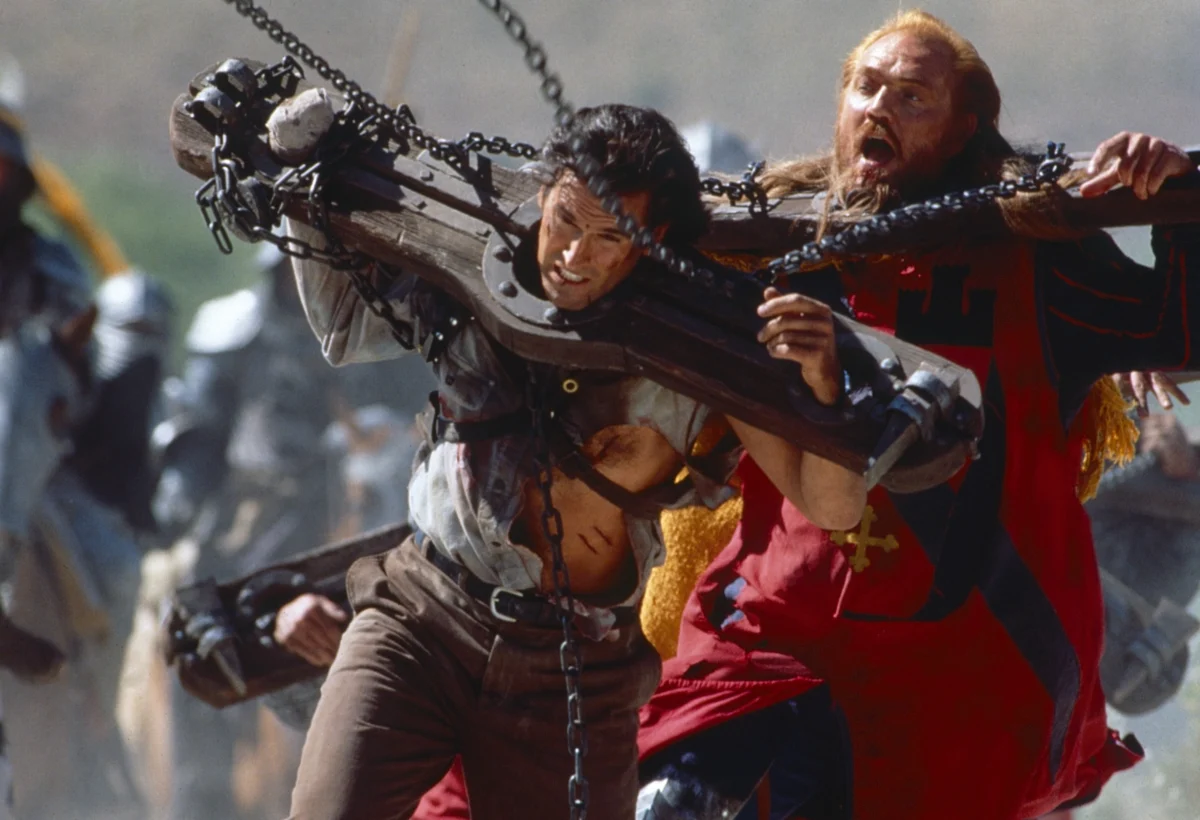
To understand the trajectory of the "Evil Dead" series, one must acknowledge the jarring pivot Raimi executed between 1987 and 1993. After the technical brilliance and relentless intensity of "Evil Dead II," expectations for a third film were high. Instead of playing it safe, Raimi and his co-writer brother, Ivan Raimi, chose to take the chainsaw-handed protagonist, Ash Williams (played with unmatched charisma by Bruce Campbell), and drop him into the Middle Ages.

The film serves as both a reset and a continuation of the franchise’s lore. By sending Ash sailing through a vortex into the 14th century, Raimi essentially liberated his lead character from the narrative constraints of the previous two films. This tonal swing—a risky maneuver that could have easily alienated the established fanbase—instead became the foundational principle of the "Evil Dead" legacy: narrative continuity is secondary to stylistic freedom.
Throughout the film, we witness the construction of a world that feels both tactile and absurd. Utilizing the "Introvision" front-projection process, Raimi paid homage to the stop-motion wizardry of Ray Harryhausen, specifically echoing the iconic skeleton battles of "Jason and the Argonauts." This decision created a visual language that felt purposefully artificial yet deeply authentic, grounding the supernatural stakes in a physical, tangible environment that modern CGI-heavy blockbusters often fail to capture.

Supporting Data: The Anatomy of a Cult Classic
"Army of Darkness" was distributed by Universal Pictures on an $11 million budget—a significant increase over its predecessors—and while it received a mixed critical reception at the time of its release, it performed respectably at the box office. However, its true value lies in its longevity.
The film stands as a testament to the "sandbox" philosophy of filmmaking. Raimi didn’t just want to tell a story; he wanted to see how far he could stretch the medium. Consider the production constraints: the film is largely confined to a single castle, a windmill, and a few acres of woodland, yet it feels expansive. By leaning into the physical comedy of Bruce Campbell—who spent the production enduring everything from mud-caked sequences to literal skeleton-induced slapstick—Raimi proved that horror could be as funny as it is frightening.

The film’s "tactile" quality is its most enduring legacy. In an era where digital effects have become the default for horror, the practical, messy, and visceral nature of "Army of Darkness" feels like a breath of fresh air. It is a synesthetic experience; you can feel the grit of the mud, the sharpness of the chainsaw, and the weight of the skeletons.
Official Responses and Creative Evolution
Raimi has long been regarded as a steward of the modern blockbuster, balancing auteurist ambition with populist appeal. His work on the "Spider-Man" trilogy—and his recent critically acclaimed effort, "Send Help"—demonstrates a consistent desire to push the boundaries of what an audience expects from a tentpole release.

Modern stewards of the "Evil Dead" franchise, such as Fede Álvarez, Lee Cronin, and now Sébastien Vanièk, have inherited this sense of audacity. They do not merely imitate Raimi; they adopt his willingness to test the limits of the genre. When audiences watch "Evil Dead Burn," they are seeing the fruit of the seeds planted in 1993. Vanièk’s aptitude for rendering uncomfortable, visceral textures is the modern successor to the creative DNA that Raimi exposed under the microscope of "Army of Darkness."
The "Bite": Bruce Campbell and the Art of the Pratfall
One cannot discuss this film without addressing its beating heart: Bruce Campbell. Is he the hottest man in horror history? It is a question often debated by fans, but his appeal goes beyond the chiseled jawline and the raven hair. It lies in his physical acting.

Campbell’s face is the most expressive instrument in the history of the genre. With a mouth that can stretch like rubber and eyes that communicate existential dread and manic glee in the same frame, he is the closest live-action equivalent to a Looney Tunes character. In "Army of Darkness," this is put to peak usage. He manages to be simultaneously a stoic, brooding hero and a pathetic, bumbling fool.
The slapstick sequences—the poke in the rear, the skeleton slapping his face, the repeated falls—require a level of commitment that few actors can maintain. By making Ash a character who experiences real physical pain, the audience is invited to feel protective of him, even when he is behaving like an absolute jerk. This duality is what makes the character of Ash Williams so enduringly beloved.

Implications for the Future of Horror
The implications of "Army of Darkness" for contemporary cinema are profound. It taught a generation of filmmakers that the "mythos" of a horror series—the origins of the Necronomicon, the specific rules of the Deadites—should never take precedence over the joy of the experience.
When directors get lost in the "sauce" of franchise building, the magic often evaporates. Raimi avoided this by treating his demonic hellscape as a playground rather than a jigsaw puzzle. He proved that you can respect the lore while also taking the piss out of it.

As we look toward the future of horror, the success of sequels like "Evil Dead Burn" confirms that the audience is craving the same audacity that Raimi championed in 1993. We want filmmakers who are willing to take risks, to treat their budgets like tools for invention rather than safety nets, and to remember that at its core, horror is meant to be a visceral, physical, and above all, exciting experience.
"Army of Darkness" is more than just a midnight movie; it is a vital chapter in the history of the blockbuster. It remains a showcase of physical performance, a masterclass in tonal shifting, and a reminder that when you give a brilliant director the freedom to play, they can create something that defies time itself. To properly thank Sam Raimi for giving us this gift, we can only offer the five words that defined a generation of fans: Hail to the king, baby.

“Army of Darkness” is currently streaming on HBO Max and is available on major VOD platforms.