The long-standing tradition of The Price Is Right has always been rooted in the celebration of the American consumer’s intuition. For over half a century, the sight of a contestant "coming on down" to win a brand-new car has been a staple of daytime television. However, a recent decision by the show’s digital marketing team to spotlight a particularly demoralizing loss on its official YouTube channel has ignited a firestorm of criticism. Fans are accusing the production of being "mean-spirited" and "tasteless," sparking a wider conversation about the ethics of social media engagement in the legacy game show industry.
The controversy centers on a segment featuring the classic game "Any Number," where a contestant’s narrow miss resulted in a payout of less than ten dollars. While losses are a mathematical certainty on the show, the decision to curate and promote this specific failure as a "highlight" has left a sour taste in the mouths of the program’s dedicated fanbase.
Chronology of a "Piggy Bank" Disaster
The incident occurred during a standard taping of the iconic CBS game show. The contestant in question successfully navigated the "Contestants’ Row," winning a shuffleboard table with a well-placed bid, which earned him the right to join host Drew Carey on the main stage.
The Setup: Any Number
Drew Carey introduced the game "Any Number," which historically holds the distinction of being the first pricing game ever played on the 1972 revival of the show. The stakes were high: a brand-new car (the primary prize), a high-end smart television (the secondary prize), and the "Piggy Bank" (the consolation prize).
The game board displayed the following:
- The Car: A five-digit price, with the first digit revealed as a "2."
- The Smart TV: A three-digit price.
- The Piggy Bank: A three-digit amount representing dollars and cents (e.g., $X.XX).
To win, the contestant must call out digits from zero to nine. The first prize to have its slots completely filled is the prize the contestant takes home.
The Gameplay
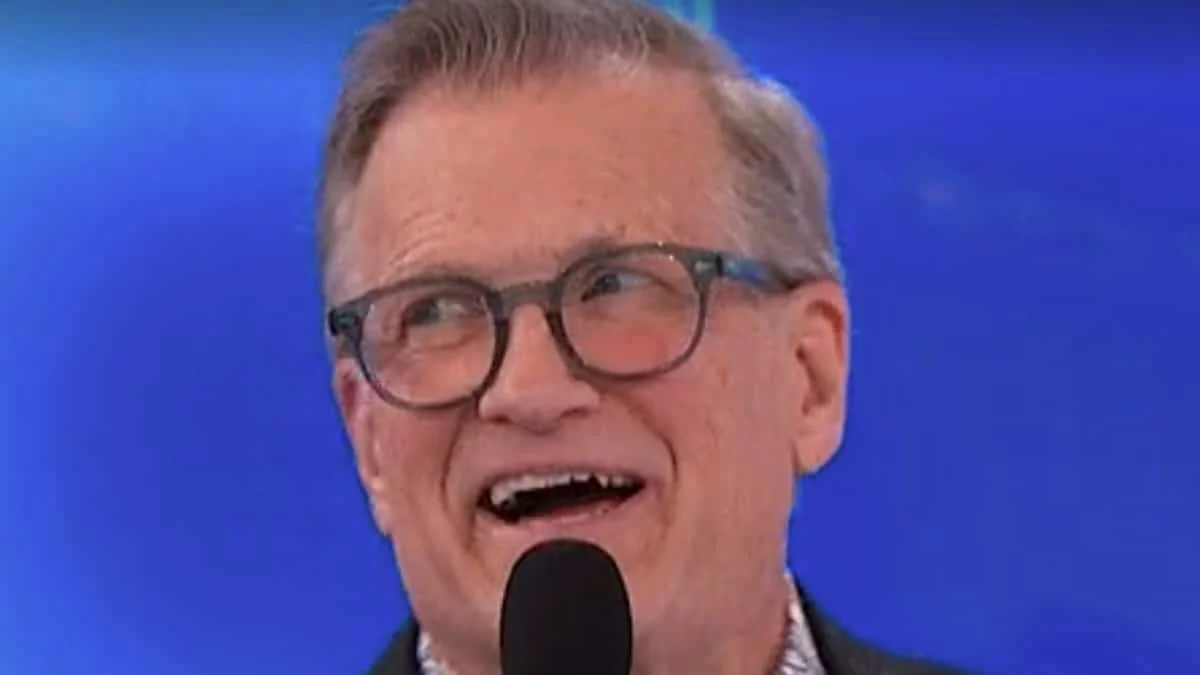
The contestant’s journey began with an unfortunate first pick that landed in the Piggy Bank. Carey, known for his improvisational comedy background, immediately quipped that the contestant could "buy a sandwich" with that money.
As the game progressed, the tension mounted. Through a series of strategic guesses, the contestant managed to fill all but one digit for the car, the TV, and the Piggy Bank simultaneously. The audience was on its feet; the next number would determine if he drove home in a new vehicle or walked away with pocket change.
The Outcome
The contestant called out his final number. Instead of completing the price of the car or the television, the number slotted into the final position of the Piggy Bank. The "losing horns"—the iconic four-note "mwah-mwah-mwah-mwaaaaah" synthesizer riff—echoed through the studio. The contestant had won exactly $9.25.
Carey, attempting to lighten the mood, placed a hand on the contestant’s shoulder and remarked, "The good news is nine dollars is the most you can win in the piggy bank, so that’s something. Enjoy your double burger."
Supporting Data: The Mechanics of a "Loss"
In the world of The Price Is Right, "Any Number" is considered a game of pure chance and psychological grit. Statistically, it is one of the more difficult games to win perfectly, as the Piggy Bank only requires three digits, whereas the car requires four (after the first is revealed).
According to historical win-loss data tracked by fan communities, "Any Number" has a win rate that fluctuates significantly based on the contestant’s ability to avoid the low digits (0-9) that typically populate the cents column of the Piggy Bank. By winning only $9.25, the contestant experienced what fans call a "technical win but a practical loss."
While the contestant did win a shuffleboard table earlier in the episode and was still eligible to participate in the "Showcase Showdown" (the Big Wheel spin), the "Any Number" segment was the emotional centerpiece of his appearance. For many viewers, seeing a contestant get so close to a five-figure prize only to be mocked with a "double burger" joke felt disproportionately harsh.

Fan Reaction: "Nasty Work" and Hosting Critiques
The backlash began almost immediately after the show’s official YouTube channel uploaded a clip titled "Can It Be Any Number?" The video did not feature a triumphant win; instead, it archived the $9.25 disappointment.
The YouTube Comment Storm
The comment section became a lightning rod for viewer frustration. One top-rated comment described the move as "nasty work," a colloquialism for behavior that is perceived as unnecessarily cruel or exploitative.
"Showcasing a loss on the YouTube channel is nasty work lol," the user wrote, gaining hundreds of likes from fellow disgruntled fans. Another viewer pointed out the perceived insensitivity of Carey’s humor: "Ignored dumb Drew’s joke about buying a stupid burger at a fast food restaurant. Stop showing a losing pricing game in an episode like that."
Criticisms of Drew Carey
Since taking over for the legendary Bob Barker in 2007, Drew Carey has faced a divided audience. While many appreciate his more relaxed, "everyman" persona, others feel he lacks the gravitas and empathetic touch Barker brought to the role.
The recent "double burger" comment has reignited these old wounds. Critics argue that Barker would have focused on the "win" of the shuffleboard or the upcoming wheel spin, whereas Carey’s focus on the $9.25 payout felt like "punching down." One commenter went as far as to state, "Drew Carey is ruining the show," reflecting a sentiment that the host’s flippant attitude toward losses diminishes the "dream-come-true" atmosphere the show cultivated for decades.
Official Responses and Digital Strategy
As of this writing, CBS and the production team for The Price Is Right have not issued a formal response to the backlash. However, the decision to post the clip likely stems from a broader digital strategy used by many legacy media brands.
The "Engagement at All Costs" Model
In the current social media landscape, "fails" and "disappointments" often generate higher engagement metrics (comments, shares, and watch time) than standard wins. By posting a losing segment, the show’s social media team may have been seeking to spark conversation—even if that conversation is negative.
This strategy, while effective for the algorithm, risks alienating a core demographic that views The Price Is Right as "comfort food" television. For these viewers, the show is a sanctuary of positivity, and seeing the production lean into the "cringe" of a loss feels like a betrayal of the brand’s identity.
Implications: The Future of Game Show Media
The controversy surrounding the "Any Number" highlight reflects a larger tension in the television industry: the clash between traditional brand values and modern digital demands.
1. The Ethics of the "Loss"
Should game shows celebrate losses? While Jeopardy! often shares clips of contestants losing their entire bankroll on a "Daily Double," the tone is usually one of intellectual tragedy. In contrast, The Price Is Right has historically been a show about the "common man" winning big. Highlighting a loss where the contestant wins less than $10 feels, to many, like a mockery of the contestant’s time and effort.
2. The Host’s Role in the Digital Age
Drew Carey’s hosting style is fundamentally different from the era of "Classic TV." In an age of viral clips, hosts are often encouraged to be more provocative or "meme-able." However, as this incident shows, there is a fine line between being funny and being perceived as dismissive. Carey’s "burger" joke might have landed well in a comedy club, but in the context of a contestant losing a $25,000 car, it felt out of touch with the audience’s emotional investment.
3. Fan Loyalty vs. Viral Metrics
The production team now faces a choice: continue to post "fails" to drive YouTube numbers or return to a more celebratory content schedule to appease long-term fans. The comments on the YouTube video suggest that the audience is beginning to feel that the show is losing its "heart."
Conclusion
The Price Is Right remains a juggernaut of American television, but this recent social media misstep serves as a cautionary tale. In the race for digital relevance, even the most beloved brands can lose their way if they forget that at the center of every "highlight" is a real person whose dreams—however small—just vanished on national television. Whether the show will adjust its digital strategy or continue to lean into the "nasty work" of showcasing losses remains to be seen, but the fans have made their voices clear: they want the "win," not the "burger."