In the traditional lexicon of photography, the "decisive moment"—a term popularized by Henri Cartier-Bresson—has long served as the gold standard for artistic achievement. It is the pursuit of the perfect, static fraction of a second where composition and subject matter align in sublime harmony. However, for lens-based artist Riccardo Magherini, this methodology has become an artifact of the past.
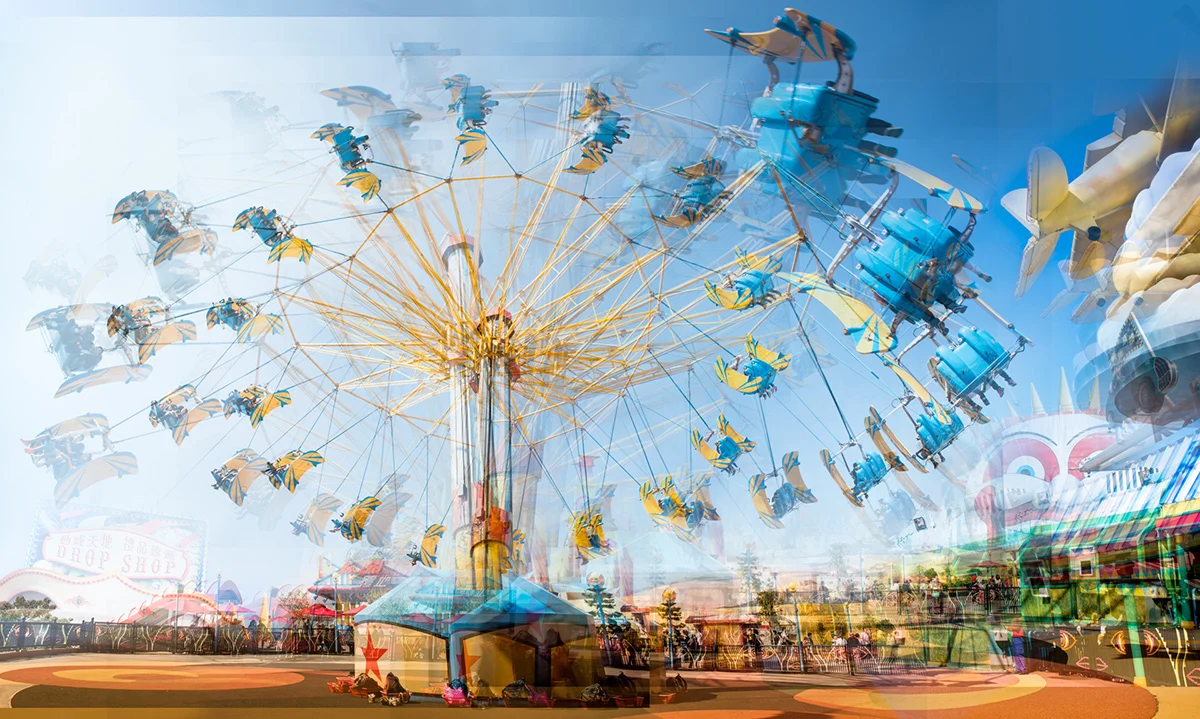
Magherini’s latest long-term body of work, The Shape of Memories, challenges the camera’s historical role as a mere recording device. Instead of documenting reality, Magherini’s process is one of sensory archaeology. By traversing the dense, chaotic urban landscapes of Tokyo, Hong Kong, Bangkok, and Hanoi, he has moved away from the snapshot, opting instead for a labor-intensive practice of digital accumulation. Each final image is a composite of hundreds of fragments, layered in the studio to mimic the way human memory functions: not as a singular, sharp frame, but as a sedimented, vibrating accumulation of sensations.
The Genesis of an Urban Odyssey: A Chronology of Discovery
The trajectory of The Shape of Memories is rooted in fifteen years of international travel and internal reflection. To understand the depth of this project, one must examine the evolution of Magherini’s relationship with the camera.
The Early Years: The Limitations of the Lens
In the initial stages of his career, Magherini operated within the constraints of conventional street photography. He sought the "perfect shot," chasing the interplay of light and shadow in public spaces. However, he quickly found that the static image failed to capture the visceral intensity of the environments he was exploring. The sensory overload of a monsoon-drenched street in Hanoi or the neon-lit frenzy of a Tokyo intersection could not be compressed into a 1/500th of a second shutter speed.
The Shift: From Capturing to Collecting
Around a decade ago, the artist began his transition toward a more complex, layered methodology. He realized that if the goal was to represent the "truth" of a place, he had to abandon the notion of the singular vantage point. He began to treat his camera as a sketchbook, collecting textures, silhouettes, and atmospheric light. These fragments, once brought into the studio, became the building blocks of a new visual language.
The Synthesis: The Birth of "The Shape of Memories"
Over the last five years, this methodology crystallized into the current project. The Shape of Memories represents a synthesis of these experiences. It is an exploration of the disorientation inherent in global travel—the specific, melancholic state of being physically present in a city while remaining fundamentally untethered from its cultural fabric. By layering hundreds of moments into a single image, Magherini allows the viewer to experience the "vibration" of a city rather than its dry documentation.
The Mechanics of Memory: Supporting Data and Methodology
What separates Magherini from a digital collagist is the intent behind the layering. The project is not merely aesthetic; it is a psychological inquiry into how we recall our surroundings.
The Anatomy of a Fragment
Each image in the series is the result of a rigorous post-production process. Magherini does not use filters or abstract manipulations; he uses genuine visual data captured on-site. When he stands in the Shibuya Crossing or the alleys of Bangkok, he is not looking for a single focal point. He is documenting the "noise"—the way light bounces off wet asphalt, the blur of a commuter’s coat, the layering of signage.
In the studio, these thousands of captured moments are meticulously blended. The artist notes that this process is akin to the biological process of memory formation. Cognitive scientists have long noted that human memory is reconstructive; we do not recall an event as a movie file stored in the brain, but as a series of sensory inputs that we reassemble every time we think of them. Magherini’s art mirrors this biological reality.
Comparative Analysis: Photography vs. Perception
The following table illustrates the shift in Magherini’s practice compared to traditional street photography:
| Element | Traditional Photography | The Shape of Memories |
|---|---|---|
| Temporal Focus | A fraction of a second | A temporal continuum |
| Primary Goal | To record a visual truth | To reconstruct a felt experience |
| Viewer Interaction | External observation | Internal immersion |
| Methodology | Subtractive (framing) | Additive (layering) |
The Artist’s Perspective: Official Statements
In a series of reflections on his practice, Magherini has been candid about the philosophical shift that necessitated this project.
"I realized early on that the traditional ‘frozen moment’ of photography was fundamentally inadequate to tell the truth about a place," Magherini stated in a recent interview. "Life in these environments does not happen in a static fraction of a second. It is a continuous, layered vibration of noise, scents, colours, and the relentless flow of people."
The artist’s work is heavily influenced by the feeling of "estrangement"—the state of being an outsider in a foreign land. Rather than viewing this as a negative, he leans into it. He suggests that the outsider often perceives the "character" of a city more sharply than a local, precisely because they are not yet habituated to the surroundings.
"My work is an invitation to step inside the image," Magherini adds. "I want the viewer to move away from the idea that a photograph is a historical document. Instead, I want them to view it as a living space where memory, emotion, and place coexist. If the image feels uncomfortable or overwhelming, that is because the experience of being in those cities is exactly that."
The Implications: A New Era of Lens-Based Media
The impact of The Shape of Memories extends beyond the gallery walls. It signals a broader shift in how contemporary artists are using technology to address the limitations of the medium.
Challenging the Truth-Value of the Image
For over a century, the public has held a near-sacred belief in the "truth-value" of photography. We trust the camera to tell us what happened. Magherini’s work subverts this trust. By openly admitting that his images are synthetic, he frees himself from the constraints of accuracy, moving toward a higher "emotional" truth. This approach challenges contemporary discourse on photography, particularly in an era where AI-generated imagery and digital manipulation are blurring the lines between reality and simulation.
The Urban Experience in a Globalized World
The project also serves as a poignant commentary on globalization. As cities like Tokyo, Bangkok, and Hanoi become more interconnected, the experience of the "foreign traveler" is becoming a universal human condition. We are all, to some extent, transients in the global urban sprawl. Magherini’s work captures the specific loneliness and beauty of this transient state—the feeling of being caught between worlds, represented through visual layers that never quite lock into place.
The Legacy of the Series
As The Shape of Memories continues to be exhibited, it is likely to influence a new generation of photographers. By prioritizing the feeling of a place over the geometry of a place, Magherini has carved out a unique space for subjective, experiential art.
The project stands as a testament to the fact that while the camera may be a mechanical device, the act of seeing is a deeply human, messy, and layered experience. Through his studio practice, Riccardo Magherini has succeeded in doing the impossible: he has rendered the invisible, shifting, and ephemeral nature of memory into a tangible, beautiful, and profoundly resonant form.
In the final analysis, The Shape of Memories is not just a collection of images of cities; it is a map of the human psyche navigating the complexities of the modern world. It demands that we look at the world, and at our memories, with a renewed sense of nuance and depth.