Nana Muazin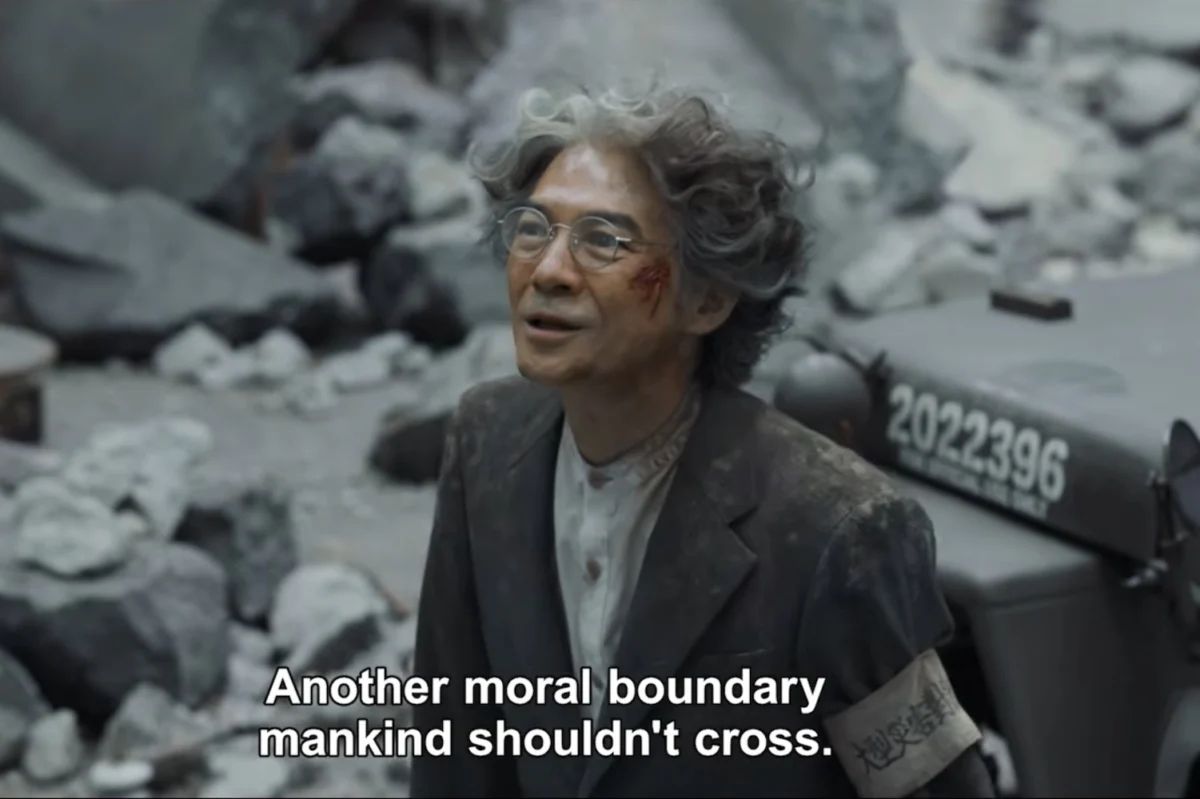
The cinematic landscape of the kaiju genre is bracing for a tectonic shift. Following the unprecedented critical and commercial success of Godzilla Minus One, director Takashi Yamazaki has officially unveiled the first look at the highly anticipated sequel, Godzilla Minus Zero. While the previous entry in this franchise redefined the "King of the Monsters" as a symbol of post-war trauma and existential dread, this upcoming installment appears to be raising the stakes to a global, thermonuclear scale.
With a confirmed U.S. theatrical release date of November 6, excitement has reached a fever pitch. The latest teaser trailer offers a harrowing glimpse into a world that is not merely running from Godzilla, but attempting to eradicate him with the most destructive weapon in human history.
Main Facts: A New Calamity Approaches
Godzilla Minus Zero serves as a direct narrative continuation of the 2023 phenomenon Godzilla Minus One. Set in 1949—two years after the catastrophic events of the previous film—the story returns to the lives of the Shikishima family as they attempt to rebuild in a fractured, post-war Japan.
The core production team remains largely unchanged, with Takashi Yamazaki returning to helm the project, once again overseeing both direction and the visual effects that garnered his team an Academy Award. The returning cast includes Ryunosuke Kamiki as the haunted former kamikaze pilot Koichi Shikishima and Minami Hamabe as his wife, Noriko.
Perhaps the most significant technical detail to emerge is the decision to shoot the film specifically for the IMAX format. This suggests a shift in scale; while Minus One focused on intimate, grounded survival, Minus Zero is positioning itself to be a massive, wide-screen spectacle that emphasizes the sheer, terrifying magnitude of the creature against the backdrop of humanity’s greatest technological hubris.
Chronology: The Evolution of a Legend
To understand the trajectory of the current franchise, one must look at the progression from 1947 to 1949.
- 1947 (The Events of Minus One): Japan, already devastated by the conclusion of the Second World War, faces an additional threat: a prehistoric leviathan mutated by radiation. The film concludes with a pyrrhic victory, leaving the nation in a fragile state of reconstruction.
- 1948 (The Interlude): A period of uneasy peace. The world is unaware of the long-term biological potential of the creature, while the Japanese government struggles with the remnants of military intelligence and the looming presence of the Cold War.
- 1949 (The Setting of Minus Zero): The teaser indicates that the threat has not only survived but evolved. The dialogue—"I speculate Godzilla can withstand even a thermonuclear strike"—suggests that humanity is no longer dealing with a creature that can be deterred by conventional mines or military ingenuity. We are witnessing the arrival of a force of nature that treats nuclear weaponry as a mere nuisance.
Supporting Data: Why Minus Zero Matters
The financial and cultural impact of the Minus series cannot be overstated. Godzilla Minus One became the highest-grossing Godzilla film in the franchise’s 70-year history. Its success was a masterclass in low-budget, high-impact filmmaking, proving that audiences crave character-driven storytelling over mindless CGI destruction.
Production Metrics
- Visual Fidelity: The first film was praised for its tight VFX budget, which arguably outperformed many multi-hundred-million-dollar Hollywood blockbusters. Minus Zero is expected to leverage a larger budget to refine these assets, particularly in the IMAX format, where pixel density and color grading become critical.
- The Nuclear Allegory: The 1954 original Godzilla was an allegory for the horrors of the atomic bomb. Minus Zero seems to be evolving this commentary. By centering the dialogue on "a moral boundary mankind shouldn’t cross," the film moves the conversation from the past use of atomic weapons to the continued, reckless pursuit of even more powerful thermonuclear dominance.
Official Responses: From the Director’s Chair
Takashi Yamazaki has remained notoriously tight-lipped regarding specific plot beats. However, in limited public comments, he has emphasized the "continuity of trauma."
"If Minus One was about the loss of everything," Yamazaki stated during a recent press briefing, "then Minus Zero is about the terrifying realization that humanity has learned nothing from that loss."
The production house, Toho, has also been strategic in their marketing. By keeping the synopsis brief—"the Shikishima family as they face an all-new calamity"—they are focusing the audience’s attention on the human element. The choice to highlight the family unit in the face of absolute annihilation is a hallmark of Yamazaki’s style. It grounds the audience in the perspective of the survivors, making the sight of a nuclear bomb being dropped on Godzilla not just a cool visual, but a devastating ethical failure on the part of the human protagonists.
Implications: The Moral Crisis of the Kaiju
The primary implication of the new trailer is the shift in human culpability. In many iterations of Godzilla, the creature is the villain or the accidental bystander. In the Minus timeline, Godzilla is the consequence of human actions.
The Question of Escalation
The dialogue, "Another moral boundary mankind shouldn’t cross," implies that the military—or perhaps a desperate international coalition—has reached a point where they are willing to risk global fallout to stop the monster. This mirrors the real-world anxieties of the late 1940s and early 1950s, a period defined by the arms race and the fear of total nuclear annihilation.
The IMAX Factor
Filming for IMAX changes the "rhythm" of the destruction. Standard cinema is often about cuts and quick transitions; IMAX requires long, lingering shots of landscape and scale. By moving to this format, the audience will be forced to look at the wreckage for longer. We will not just see a building fall; we will see the dust, the debris, and the individual lives lost within the frame. It signals a move toward a more meditative, albeit horrifying, viewing experience.
The Legacy of the Shikishima Family
The return of Ryunosuke Kamiki and Minami Hamabe is pivotal. Their characters survived the war, and then they survived Godzilla. Their return in Minus Zero suggests that the trauma of the first film was not a closed chapter. It poses the question: Can a person ever truly move on if the world itself refuses to heal?
Conclusion: A November to Remember
As we count down to November 6, the expectations for Godzilla Minus Zero are astronomical. It is rare for a franchise to strike lightning twice, yet the Minus series has positioned itself as the gold standard for kaiju cinema.
The shift from the post-war desperation of 1947 to the thermonuclear anxiety of 1949 captures a specific, chilling moment in human history. By blending high-concept science fiction with the grounded, intimate struggles of the Shikishima family, Takashi Yamazaki is not just making another monster movie; he is crafting a cautionary tale about the human appetite for destruction.
Will Godzilla withstand the thermonuclear strike? The trailer leaves us with the chilling implication that even if he does, the real destruction—the kind that humanity inflicts upon itself in a desperate attempt to maintain control—may be the true monster of the film.
Prepare yourselves. The countdown to the "Minus Zero" event has begun, and if the early footage is any indication, we are about to witness the most ambitious, harrowing, and visually stunning entry in the history of the Godzilla franchise. November 6 cannot come soon enough.

 Laily UPN
 Evan Lee Salim