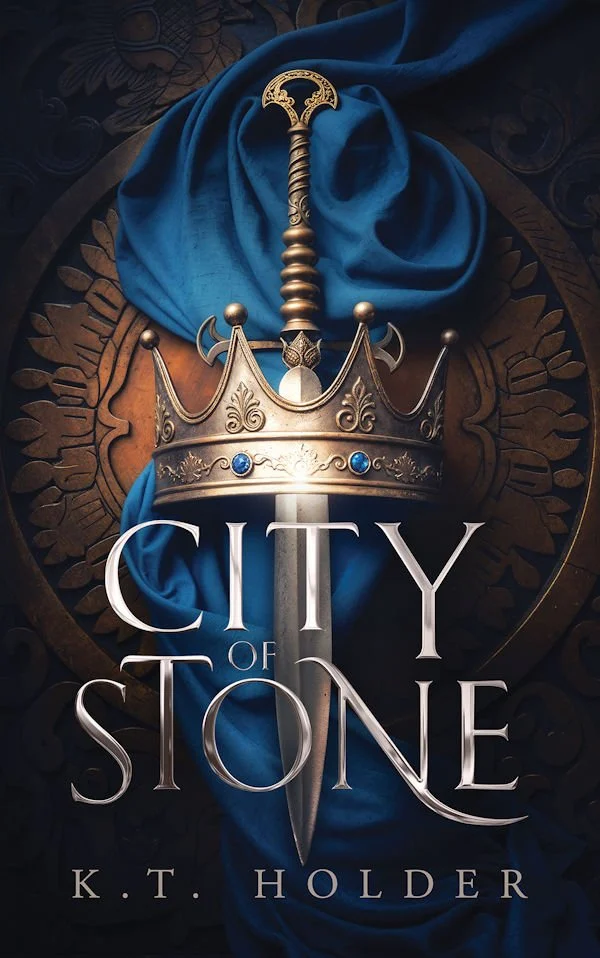
In the landscape of modern self-published fantasy, few titles have sparked as much nuanced debate among the judging panel of the 11th Annual Self-Published Fantasy Blog-Off (SPFBO) as City of Stone. A tale of systemic collapse, fractured loyalties, and the enduring power of found family, the novel serves as a compelling case study in the complexities of independent publishing. As the competition nears the end of its first phase, City of Stone stands out as a polarizing, deeply emotional, and ambitious entry that forces a conversation about the balance between narrative polish and thematic heart.
The Narrative Core: A World Divided
Set in a realm where magic is the primary currency of power and the shadows are laden with political secrets, the novel follows Kasperi “Kas” Ironstone. Kas’s story is one of tragic displacement: originally a young man driven to petty theft to secure a future for his younger brother, Soli, Kas’s life is derailed when he is sentenced to the brutal labor camps.
Eight years later, the world has shifted. The Empire stands on the brink of total war, and the brother he sacrificed his freedom to protect has emerged as a formidable, albeit enigmatic, leader of a burgeoning rebellion. Upon his release, Kas finds himself thrust into a dangerous dance of espionage and survival. Alongside a band of unlikely allies, he must navigate the treacherous political architecture of the realm to expose a traitorous threat before an invading army reduces the City of Stone to rubble. The stakes are personal as much as they are geopolitical, forcing Kas to confront the ultimate dilemma: the loyalty he owes to his blood and the duty he bears toward the survival of the realm.
Chronology of Conflict: From Labor Camps to Imperial Courts
The pacing of the novel is central to the varied reactions of the SPFBO judges. The story follows a distinct structural progression that begins with the claustrophobic, grinding misery of the labor camps. This period serves to establish the psychological scars carried by the protagonists—a group of young survivors whose magic was suppressed during their incarceration.
As the narrative shifts to the post-incarceration era, the story moves into high-stakes political maneuvering. The chronology is anchored by:
- The Catalyst: Kas’s release from the labor camps and his immediate attempt to reconcile with his brother, Soli.
- The Inciting Incident: The discovery of a deep-seated conspiracy within the Empire that threatens the status quo.
- The Rising Action: The formation of a “found family” unit, comprising characters from diverse cultural backgrounds who must learn to trust one another in the face of an existential threat.
- The Climax: A convergence of multiple points of view (POV) during the final chapters, characterized by a rapid, frenetic shift in power dynamics and the ultimate betrayal that forces Kas to choose between the past and the future.
Critical Analysis: A Tale of Two Readers
The judging panel for the SPFBO, comprised of seasoned fantasy critics, presented a spectrum of perspectives that highlights the subjective nature of contemporary genre fiction.
The Case for the Enthusiastic Reader
For judges like Maureen, Julia, and Stacey, the novel’s strength lies in its emotional intelligence. Maureen highlighted the complexity of the political landscape, noting that the worldbuilding—which avoids the dreaded "info-dump"—effectively communicates the motivations of various factions, from the empress seeking to bypass stagnant nobility to the rebellion’s internal power struggles.
Julia particularly praised the book’s handling of character development, specifically the "quiet" growth of the protagonist. She noted that Kas’s journey involves the unlearning of imperialistic biases—a subtle, nuanced process that avoids grandstanding. Furthermore, the book’s approach to interpersonal relationships, specifically its gentle treatment of LGBT identity and the absence of melodramatic romance, provided a "genuinely comforting" reading experience that allowed the character bonds to take center stage.
The Case for the Skeptical Reader
Conversely, judges like E.G. found the experience to be less rewarding. The primary critique centered on narrative execution: the character dynamics were, in their view, articulated too explicitly, stripping the plot of its subtlety and rendering certain twists predictable. For this segment of the panel, the characters occasionally veered into "childish" or overly aggressive territory, which created a disconnect that made the ultimate outcome feel inconsequential.
Supporting Data: Structural Strengths and Weaknesses
The novel’s structure relies heavily on a multi-POV narrative. This choice allows for a breadth of perspective that enriches the political tension. The inclusion of an Empress’s perspective, in particular, provides a window into the frustration of attempting systemic reform from within a patriarchal and entitled structure.
However, the rapid nature of the resolution is a recurring point of contention. Several judges noted that while the ideas behind the plot are robust, the execution occasionally feels hurried. Conflicts, at times, resolve with a velocity that undermines the tension established in earlier chapters. This suggests a potential for future volumes in the series to benefit from a deeper, more deliberate exploration of the consequences of the characters’ actions.
Implications for the SPFBO and the Genre
The reception of City of Stone carries significant implications for the broader self-publishing ecosystem. The feedback loop provided by the SPFBO judges—ranging from high praise for character-driven emotional arcs to critiques of narrative pacing—serves as an invaluable resource for authors operating outside traditional publishing houses.
The "Found Family" Archetype
The novel reinforces the enduring popularity of the "found family" trope. By grounding its high-fantasy stakes in the genuine warmth and loyalty of its protagonists, City of Stone taps into a reader desire for connection that often transcends the need for complex, magic-heavy systems. The willingness of the narrative to treat "unlearning" and personal growth as integral plot points suggests a shift in reader expectations toward more thoughtful, character-first storytelling.
The Future of the Series
Despite the "rough edges" identified by some judges, there is a consensus that the foundation of the series is solid. The fact that several judges were compelled to move immediately to the second volume is perhaps the strongest endorsement possible for a debut series. The promise of exploring the "disturbing" nature of the druids and the continuing evolution of the fractured realm suggests that the series has the potential to mature alongside its characters.
Conclusion: A Promising Foundation
City of Stone is a novel that thrives on its heart. While it may occasionally stumble over the complexities of its own pacing or the clarity of its political maneuvers, it succeeds where it matters most: in the creation of characters that the reader genuinely cares for.
As the SPFBO moves into its final phases, the discussions surrounding this title highlight the very essence of the competition. It is a reminder that in the vast, often overwhelming sea of self-published literature, the stories that resonate are often those that dare to be kind, that prioritize the emotional growth of their characters, and that understand that the most compelling wars are often those fought within the soul of the protagonist.
For readers who value character-centric fantasy and are willing to overlook a few structural growing pains, City of Stone offers a compelling, emotional, and ultimately rewarding journey. As the series continues, the primary challenge for the author will be to maintain this emotional clarity while refining the polish of the narrative—a task that, given the strength of the characters, seems well within reach.