

More than three years after the meteoric launch of ChatGPT effectively brought generative AI into the global mainstream, the landscape of artificial intelligence is undergoing a profound metamorphosis. OpenAI, the developer behind the world’s most recognizable chatbot, is signaling a strategic shift in its product roadmap: moving away from the "lone user" paradigm and toward a holistic, household-centered model.
In a move that underscores this evolution, OpenAI is currently seeking a dedicated product manager based in San Francisco to spearhead the development of experiences tailored for families, caregivers, and older adults. The job posting—a window into the company’s long-term vision—explicitly calls for candidates with a background in "trust-sensitive consumer experiences" and a proven track record of designing products specifically for parents and families.
The Shift in User Demographics
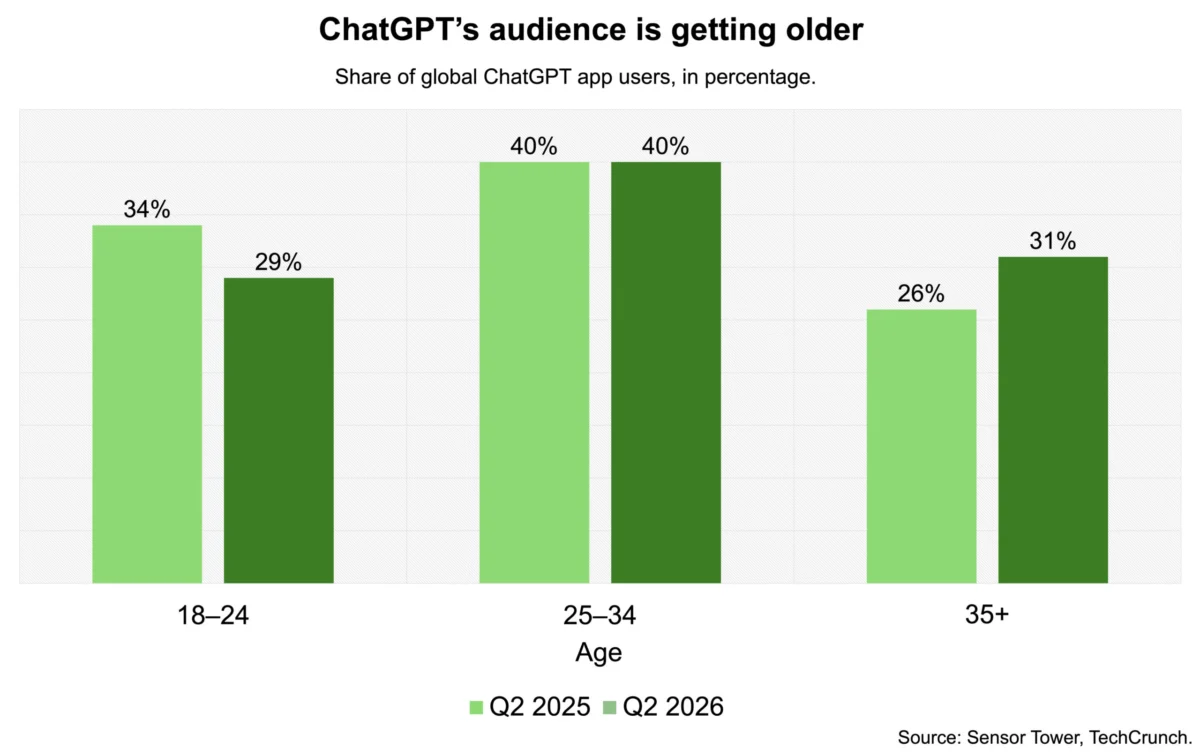
The impetus for this pivot is rooted in cold, hard data. ChatGPT’s user base is no longer the exclusive domain of tech-savvy youths and early adopters. Recent estimates from market intelligence firm Sensor Tower highlight a significant "aging up" of the platform’s global audience. In the second quarter of this year, the share of ChatGPT users aged 35 and older climbed to 31%, up from 26% just one year prior. Conversely, the core demographic of 18-to-24-year-olds saw its share contract from 34% to 29%.
This trend is even more pronounced in the United States, where the integration of AI into the home environment is accelerating. Estimates suggest that nearly one in four American smartphone users who are parents actively utilized ChatGPT during the second quarter—a sharp rise from the 16% recorded during the same period last year.
A Chronology of Institutional Maturation
To understand why OpenAI is prioritizing the family unit now, one must look at the company’s trajectory over the last 36 months.
- 2022-2023: The Wild West Era. The initial release of ChatGPT was designed as a general-purpose productivity tool. It lacked age-gating, specific parental controls, or family-centric safety guardrails. It was built for the individual, by the individual, with little foresight into the implications of household-wide adoption.
- 2024: The Realization of Risk. As AI adoption surged, so did the reports of unintended consequences. Following a wave of high-profile lawsuits—including cases where parents alleged that interactions with AI chatbots contributed to the decline of their children’s mental health and, in tragic instances, suicide—OpenAI was forced to re-evaluate its safety posture.
- 2025: The Regulatory and Safety Response. OpenAI began rolling out a series of defensive measures. This included the introduction of "Trusted Contact" features designed to flag signs of self-harm to a pre-authorized caregiver, the implementation of parental controls for teen accounts, and the architectural decision to route potentially sensitive, high-distress queries to specialized reasoning models.
- 2026: Formalizing the Family Strategy. With the current search for a specialized product manager, OpenAI is transitioning from reactive crisis management to proactive product design. The focus has moved from "how do we patch this?" to "how do we build this for a family from the ground up?"
The "Safety by Redesign" Imperative
Stephen Balkam, chief executive of the Family Online Safety Institute, views this development as a critical turning point. "I see this as safety by redesign," Balkam told reporters. "The initial product was released without kids in mind. This hiring represents a necessary, long-overdue response to the reality of how these tools are actually being used."
The urgency of this shift is underscored by a glaring "usage gap." Research conducted by the Family Online Safety Institute reveals that parents are significantly underestimating their children’s engagement with generative AI. While only 27% of surveyed U.S. parents believed their child had interacted with an AI tool in the past week, 38% of the children themselves reported that they had. This discrepancy suggests that parents are often in the dark, highlighting the need for transparent, family-managed interfaces.
Balkam argues that companies like OpenAI have a narrow window of opportunity to avoid the systemic failures that plagued the social media era. "AI companies have an opportunity to build differently," he noted, advocating for explicit content controls, age-appropriate interfaces, and mandatory, persistent reminders that clarify the user is interacting with a machine, not a human being.

Implications: From Tools to Household Infrastructure
Industry analysts view this pivot as an inevitable maturation of the generative AI market. Ben Bajarin, CEO of the technology consultancy Creative Strategies, notes that OpenAI is essentially following the well-trodden path of tech titans like Apple, Google, and Meta.
"This is similar to the path Google, Apple, and Meta eventually followed as their platforms became embedded in everyday life," Bajarin explains. "However, AI raises the stakes exponentially because the assistant is not just mediating content or devices—it is mediating knowledge and human connection."
The implications for the future of consumer AI are vast. As AI becomes a shared utility within the home, we can expect to see:
- Shared Household Memory: AI systems that can help organize calendars, grocery lists, and family logistics.
- AI Tutoring and Coaching: Tools tailored to supplement education, a vision OpenAI has already begun testing through workshops with community organizations like the San Antonio Spurs Community Impact group.
- Tiered Access and Profiles: Similar to streaming services, future AI platforms will likely offer distinct profiles for different age groups, each with unique, hard-coded safety guardrails.
- Caregiver Dashboards: Enhanced transparency tools that allow parents to monitor and manage the AI interactions of younger members of the household.
Competitive Landscape: The Race to the Living Room
While OpenAI is making significant moves, the race to own the "family AI" space is becoming increasingly crowded. Sensor Tower data provides a revealing look at how competitors are faring. While Gemini and Claude currently share a similar demographic footprint with ChatGPT—with the 25-to-34-year-old segment accounting for 40% of their respective audiences—they are not capturing the older demographic with the same velocity.
Microsoft’s Copilot currently leads the pack in reaching older users, with 20% of its audience aged 45 and above. However, OpenAI’s growth rate among that same demographic is the highest in the industry, suggesting that its brand recognition is proving to be a potent tool in bridging the generation gap.
Conclusion: A New Frontier for OpenAI
OpenAI’s decision to hire for a family-focused role is more than just a recruitment effort; it is a declaration of intent. The company is signaling that the era of "AI as a curiosity" is over, replaced by the era of "AI as a household utility."
This transition will not be without its challenges. Balancing the utility of an open-ended, creative AI with the strict safety requirements of a family-friendly environment is a complex engineering and ethical puzzle. As the company works to integrate itself into the daily lives of families, its success will likely depend on whether it can deliver on its promise of "safety by redesign"—ensuring that as the technology becomes more powerful, it also becomes more responsible.
For the millions of families currently navigating the digital landscape, the outcome of this pivot will shape how they learn, communicate, and interact with the world for years to come.











