

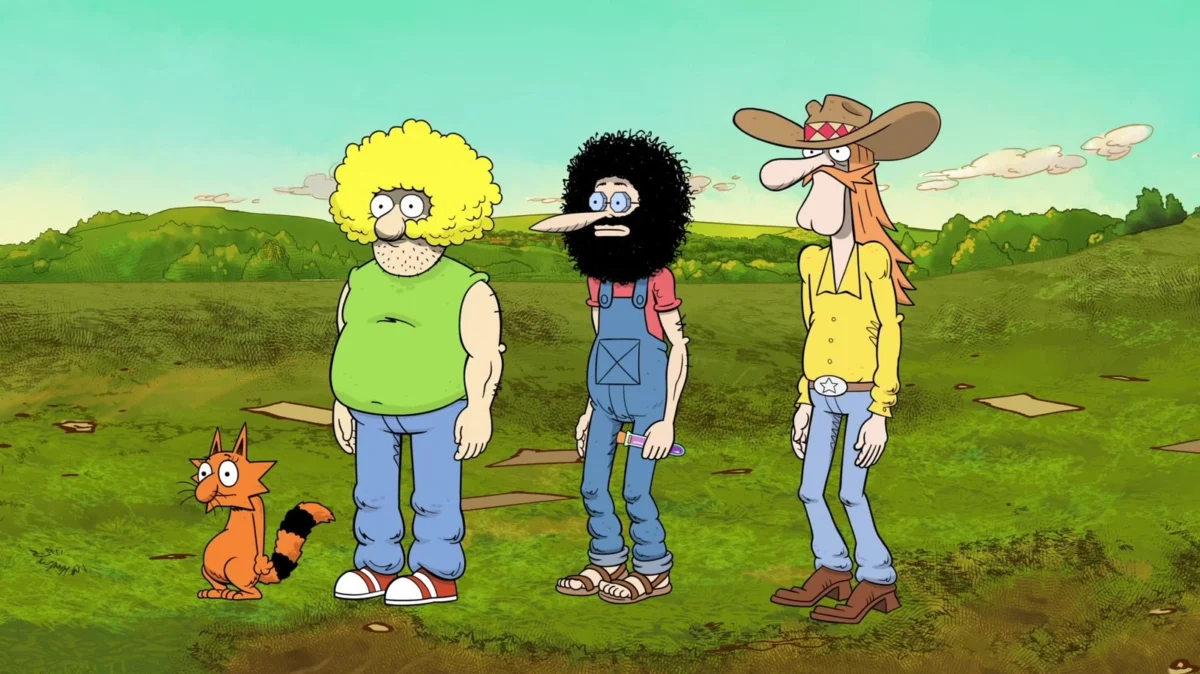
In the vast, fragmented landscape of modern streaming, gems are often buried under an avalanche of algorithmically generated content. Among the most peculiar and overlooked entries in recent years is The Freak Brothers, an adult-animated series that managed to secure a powerhouse cast—including Woody Harrelson, Pete Davidson, and John Goodman—only to find itself relegated to the quiet corners of Tubi. Based on Gilbert Shelton’s iconic 1971 underground comix series, The Fabulous Furry Freak Brothers, the show is a jarring, hilarious, and at times profound time-capsule collision. Despite its A-list pedigree, the series remains one of the best-kept secrets in television, leaving many to wonder how such a high-profile adaptation could fly so far under the radar.
The Genesis: From Underground Comix to Mainstream Stasis
To understand the absurdity of the series, one must first understand the source material. Gilbert Shelton’s The Fabulous Furry Freak Brothers was a pillar of the underground comix movement. It was never intended for a mass audience; it was raw, unapologetically countercultural, and deeply rooted in the post-Summer-of-Love haze of San Francisco.
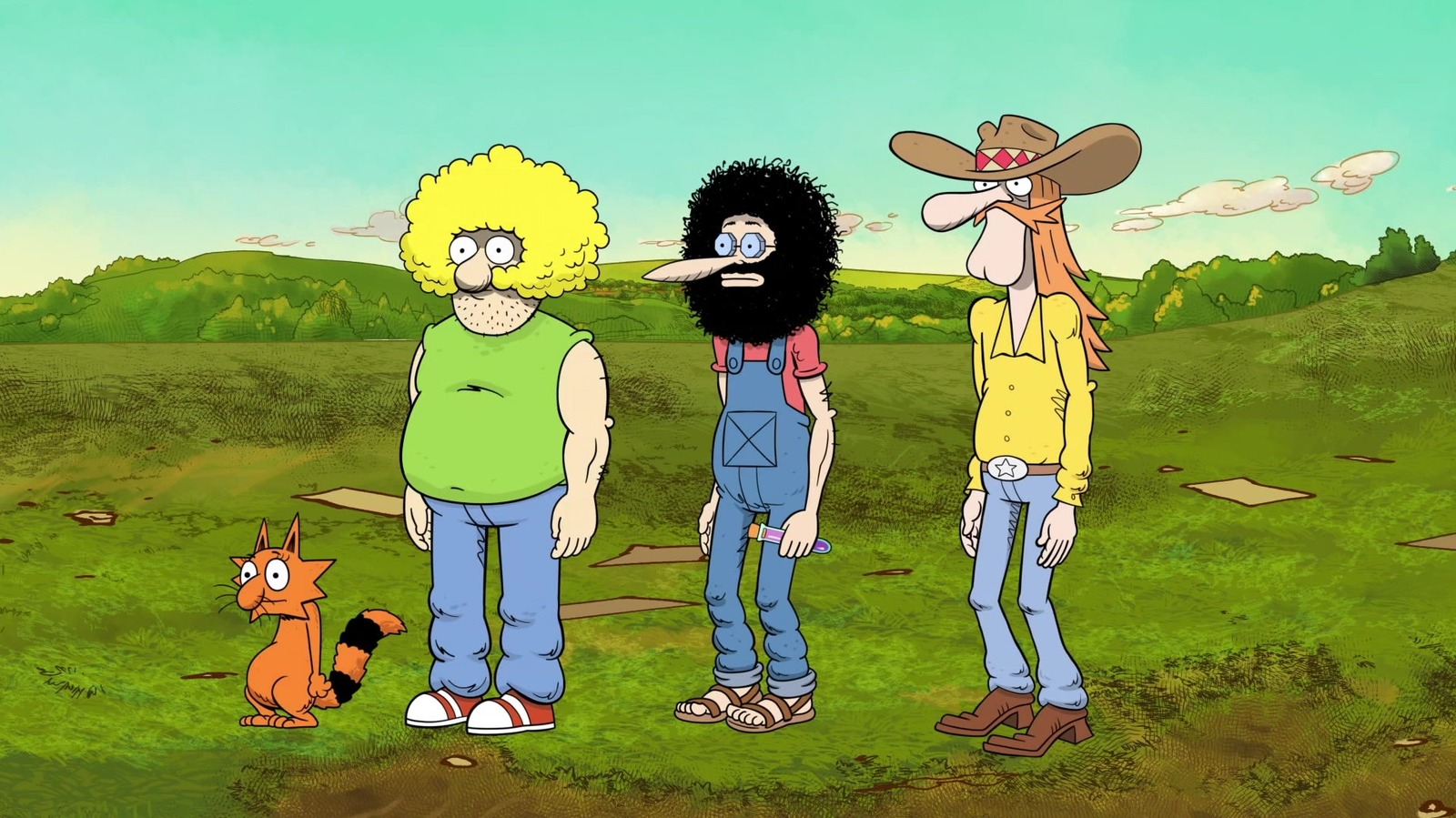
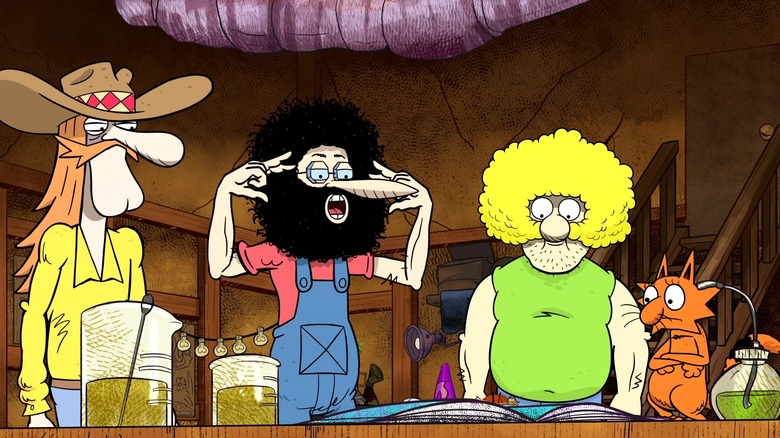
The trio at the heart of the comic—Freewheelin’ Franklin, Phineas T. Phreak, and Fat Freddy Freekowtski—were never meant to be heroes. They were shiftless, perpetually stoned, and constantly embroiled in self-inflicted catastrophes. Franklin provided the "street smarts," Phineas served as the pseudo-intellectual mouthpiece for Yippie-style rhetoric, and Fat Freddy represented the blissfully detached, gluttonous id of the group. With their penchant for evading the police and their cat’s separate, surreal adventures, the comics were a distinct cultural artifact.
The Tubi adaptation, which premiered in 2021, took this 1970s relic and applied a high-concept sci-fi twist. In the show’s pilot, the trio consumes a experimental strain of cannabis spiked with an "eerie elixir," resulting in them being placed in stasis for 51 years. When they awake in 2020, they are forced to navigate the bewildering, digitized, and highly corporatized reality of the 21st century.
A Chronology of Chaos: The Show’s Evolution
The series, co-developed by Courtney Solomon—best known for his work on the 2000 Dungeons & Dragons film—was designed to translate the "stoner chaos" of the comics into a format that could sustain a multi-season arc.
- 2021 (The Premiere): The show debuted on Tubi with significant marketing fanfare but faced an uphill battle due to the platform’s status as a free, ad-supported service. Critics noted that the time-travel premise was a clever way to bypass the static nature of the original comics, allowing the characters to interact with modern tropes.
- The Middle Years: As the series progressed, it moved away from the "weeded-up miasma" of the original comics to embrace a more episodic, culture-shock-driven narrative. The brothers were depicted working for the likes of Jeff Bezos on space shuttles, navigating tech conventions, and even encountering a hologram of Jim Morrison.
- 2026 (The Current State): The series has shown remarkable longevity, with its third season dropping on April 20, 2026. This quiet consistency suggests that while the show may not have captured the "watercooler" cultural zeitgeist, it has cultivated a dedicated, if niche, following.
The Cast: Why the Talent Was Never the Problem
The casting of The Freak Brothers is, by all accounts, a stroke of genius. Woody Harrelson, a long-time advocate for cannabis legalization and countercultural icon, fits the role of Freewheelin’ Franklin like a glove. Pete Davidson, whose public persona is inextricably linked to the "laid-back stoner" archetype, provides a perfect, modern-inflected voice for Phineas. John Goodman, a titan of character acting, brings a grounded, comedic gravitas to the role of Fat Freddy.
The inclusion of Tiffany Haddish as "Kitty" was a bold attempt to give the original comic’s feline sidekick a larger, more vocal presence. While some critics argue that the cat’s charm was always in its silent, secondary comic strip, Haddish’s performance is objectively high-energy. The issue, if there is one, lies not in the performance but in the translation of the source material’s spirit.
Supporting Data: The "Tubi Original" Paradox
The primary reason for the show’s obscurity is systemic. As a "Tubi Original," the show suffers from a brand perception issue. For many viewers, Tubi is a repository for classic library content, B-movies, and forgotten gems, not a home for high-budget, star-studded animated satire.
When a series carries the "Tubi Original" tag, it lacks the prestige-TV baggage of a Netflix or HBO production. Consequently, even when the show features A-list talent, it rarely gains the critical discourse or "prestige" buzz necessary to penetrate the mainstream. The show is essentially a victim of its own distribution channel—a premium product sold in a discount aisle.
Official Responses and Critical Reception
Critical reception at the time of the show’s release was mixed but largely positive toward its ambition. Den of Geek and other genre-focused outlets praised the show for retaining the "filthiness" and irreverence of the original comics. However, there was a consistent critique: the show feels like a "Boomer nostalgia" project.
The original comics were dangerous; they were unpublishable by mainstream standards. Today, the counterculture of the 70s has been assimilated into the mainstream. Marijuana is legal in many states, and the "anti-establishment" rhetoric of the 70s has been commodified. Critics pointed out that the show often feels like a raunchier Austin Powers—a fun, dirty romp that serves as comfort food rather than a radical challenge to the status quo.
Implications: The Death of Edge and the Rise of Comfort
The existence of The Freak Brothers highlights a fascinating trend in modern media: the "sanitization" of counterculture. By taking a series that was once eager to offend "the squares" and turning it into a polished, star-studded animation, the creators have effectively turned the 1970s into a museum piece.
The implications are twofold:
- Cultural Nostalgia: We are living in an era where the counterculture of the past has become the comfort food of the present. The "Freak" lifestyle is no longer a threat; it is a brand.
- The Fragmented Audience: The show’s relative invisibility despite its talent roster proves that we no longer have a single "cultural conversation." Instead, we have isolated silos of content where high-budget shows can exist entirely outside the sphere of popular awareness.
Conclusion: Is It Worth the Watch?
The Freak Brothers is a series that defies simple classification. It is too dirty for the casual viewer, yet perhaps too "mainstream-adjacent" for the hardcore, original comic book purist. It serves as a bridge between two worlds: the radical, messy, and uncompromising spirit of the 1970s and the slick, high-concept, star-driven world of modern streaming.
For those interested in the evolution of comedy, the performance of top-tier actors playing against type, or simply a show that isn’t afraid to be unapologetically weird, The Freak Brothers is a mandatory watch. It may not have the countercultural impact of the source material, but it succeeds as a raucous, inventive, and deeply amusing piece of television. In an era of endless reboots and safe, focus-grouped content, the fact that a show as bizarre as The Freak Brothers exists at all is, in itself, a small victory for the weird.










