Introduction: A Meditation on Biological Becoming
In the intimate confines of the project space at Lyles & King, a new series of paintings by Los Angeles-based artist Kate Meissner is currently commanding attention. On view through April 4, the collection serves as a profound inquiry into the malleability of the human form. Meissner, a Yale MFA graduate whose work has already secured a place in prestigious institutions ranging from the Denver Art Museum to the Xiao Museum of Contemporary Art, utilizes this exhibition to pivot toward the deeply personal and the universally biological.
At the heart of these works lies a singular, transformative experience: the artist’s own journey through pregnancy and the birth of her first child. Rather than approaching the subject through the lens of domestic sentimentality, Meissner strips back the surface, presenting the body as a site of visceral, animalistic, and structural upheaval.
Main Facts: The Exhibition and Its Conceptual Framework
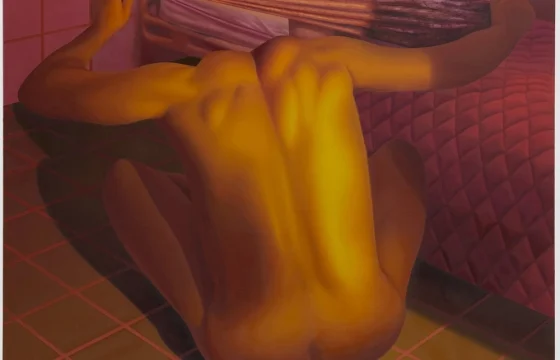
The exhibition at Lyles & King marks a significant moment in Meissner’s career. The paintings on display are characterized by an exploration of what the artist describes as the "human body’s elasticity and capacity to metamorphose."
The Core Theme
Meissner’s artistic practice has long been preoccupied with the boundaries of the physical self, but this latest series grounds that interest in the raw reality of mammalian biology. By documenting the physiological shifts required to sustain and birth new life, Meissner challenges the viewer to confront the "underlying animalistic nature" inherent in all humans. The works oscillate between the clinical observation of bodily change and a raw, emotive expression of the loss of self-containment that pregnancy necessitates.
Technical Execution
The canvases exhibit a tension between fluidity and structural rigidity. The brushwork mirrors the themes of the subject matter—stretching, warping, and expanding. For collectors and critics, these works represent a shift in Meissner’s trajectory, moving from the conceptual exploration of space to a more grounded, visceral investigation of the human vessel.
Chronology: From Sacramento to the Yale MFA
To understand the weight of Meissner’s current project, one must trace the trajectory of her development as a painter.
- 1995: Kate Meissner is born in Sacramento, California.
- Early Education: Developing an early interest in the intersections of figurative art and biology, Meissner moves toward formal fine arts training.
- Graduate Studies: Meissner completes her Master of Fine Arts at Yale University, a program noted for its rigorous focus on contemporary theory and technical mastery. It is here that she begins to hone the aesthetic language of "elasticity" that defines her current work.
- Professional Rise: Following her graduation, Meissner relocates to Los Angeles. Her work begins to garner international attention, finding its way into the permanent collections of the Mer Collection in Madrid and the Abroms-Engel Institute for the Visual Arts in Birmingham.
- 2023–2024: The artist experiences pregnancy and the birth of her first child. This period of intense physical and psychological change serves as the direct catalyst for the current body of work exhibited at Lyles & King.
- Current Date: The exhibition remains open to the public through April 4, serving as a capstone to this transformative chapter in her life.
Supporting Data: Institutional Recognition and Artistic Pedigree
Meissner’s rise in the contemporary art market is supported by a series of high-profile acquisitions and institutional endorsements. Her work is not merely a transient trend but is firmly cemented in the discourse of contemporary painting through its inclusion in:
- Denver Art Museum (Denver, CO): A major American institution that validates her work within the canon of modern figurative painting.
- Xiao Museum of Contemporary Art (Rizhao, CN): Signaling her reach into the global contemporary market.
- The Mer Collection (Madrid, ES): A prestigious private collection known for its focus on significant contemporary voices.
- Abroms-Engel Institute for the Visual Arts (Birmingham, US): Cementing her academic and institutional footprint.
These placements suggest that Meissner’s work is recognized for its ability to bridge the gap between traditional figurative painting and the evolving dialogue regarding the body in contemporary theory.
Official Responses and Curatorial Context
Lyles & King, in presenting this project space exhibition, has positioned Meissner as a key voice in the new wave of artists exploring "biological autobiography."
In official statements, the gallery emphasizes the technical sophistication of these paintings. Curators note that the work avoids the pitfalls of "motherhood as a trope," choosing instead to treat the body as a site of engineering. By focusing on the "mammalian" aspect of human existence, Meissner bypasses the social constructs of maternity and instead engages with the sheer physical gravity of the process.
The response from the art community has been one of quiet intensity. Critics have noted that while the paintings are aesthetically arresting, they possess a disquieting quality—a reminder that the body, while a vessel of life, is also a site of radical, sometimes frightening, change.
Implications: The Future of Figurative Painting
The implications of Meissner’s work are twofold: they speak to the future of the artist’s own career, and they contribute to a broader shift in contemporary art.
The Reclaiming of the Biological
For decades, the "maternal body" was either absent from high-art discourse or relegated to a specific, often domestic, category. Meissner’s work represents a reclamation of this subject matter, moving it into the realm of the existential. By framing pregnancy as a "metamorphosis" rather than a milestone, she aligns her work with a lineage of artists who have explored the body’s fragility, such as Louise Bourgeois or Jenny Saville.
Impact on the Market
The inclusion of her work in international collections suggests that collectors are increasingly drawn to art that possesses a "visceral authenticity." As the art market shifts away from purely digital or abstract trends, there is a renewed appetite for work that addresses the human condition with brutal, technical honesty. Meissner’s success is a bellwether for this trend.
A Dialogue with the Viewer
By stripping away the artifice, Meissner forces the viewer to confront their own physicality. Her work suggests that the boundary between the "self" and the "other" is far more permeable than we would like to believe. This is not just a painting of a pregnant body; it is a painting of the transition from one state of being to another, a universal experience rendered with specific, harrowing, and beautiful detail.
Conclusion: The Finality of April 4
As the exhibition at Lyles & King nears its conclusion on April 4, the discourse surrounding Meissner’s work continues to deepen. She has successfully navigated the transition from a promising MFA graduate to an artist whose work warrants inclusion in global museum collections.
Her latest paintings are a testament to the fact that the most profound art is often that which emerges from the most fundamental human experiences. By documenting her own metamorphosis, Meissner has provided a mirror for all of us—a reminder that we are all, at our core, biological entities in a constant state of flux.
Whether this series marks a permanent shift in her thematic focus remains to be seen, but for now, it stands as a landmark exhibition, offering a raw and unflinching look at what it means to be human in a body that refuses to stay the same. As we look toward the final days of the exhibition, the legacy of these works seems secure, serving as a poignant, visceral, and essential addition to the narrative of contemporary figurative painting.
Note: This article has been prepared based on information regarding Kate Meissner’s exhibition at Lyles & King. For those interested in viewing the works in person, the project space will remain open through April 4. For further inquiries, contact the gallery directly or visit their website for visitor information.