Sagoh
Sagoh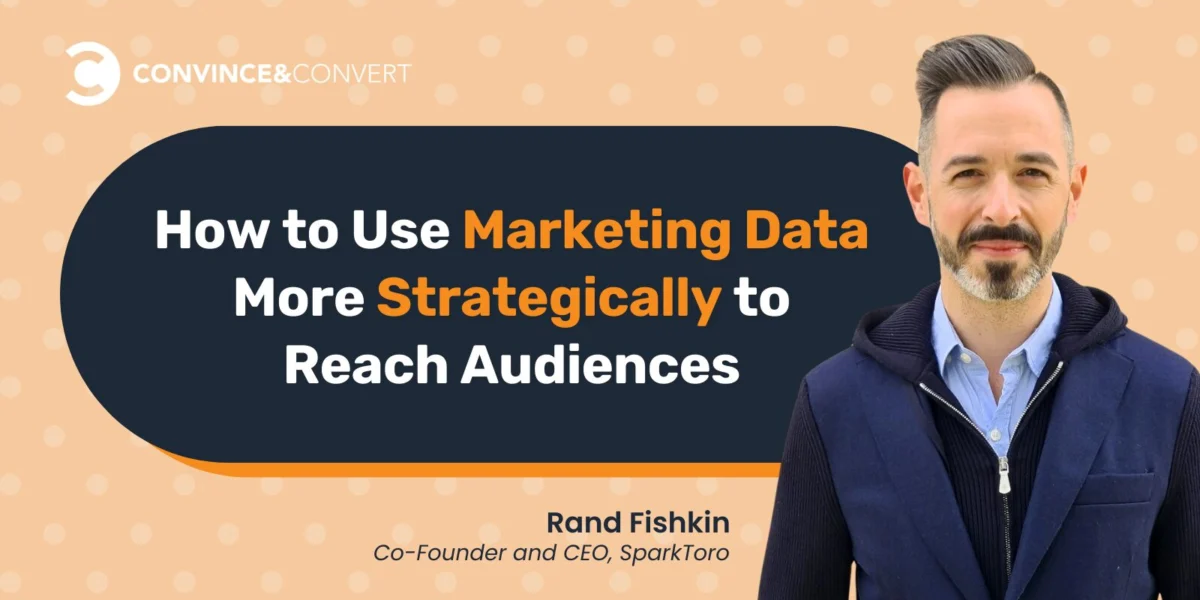
In the modern digital marketing landscape, the roadmap to success has become standardized to the point of stagnation. Most organizations funnel the vast majority of their budgets into a "holy trinity" of platforms: Google Ads, LinkedIn campaigns, and Facebook retargeting. These channels offer a seductive promise—granular attribution, immediate ROI metrics, and a sense of "safety" that is easily packaged into slide decks for stakeholders.
However, a growing chorus of industry experts is challenging this status quo. They argue that by prioritizing platforms that are easy to measure over platforms that are actually relevant to the target audience, marketers are sacrificing long-term growth for short-term vanity metrics. In a recent appearance on the Data-Driven Decisions podcast, Rand Fishkin, co-founder of audience research tool SparkToro, dismantled the myth that "measurable" is synonymous with "effective."
The Attribution Trap: Why Your Google Ads Data May Be Misleading You
The reliance on paid advertising is often driven by a fear of the unknown. When a company spends a dollar on a Facebook ad, the platform provides a neat dashboard showing exactly how many people clicked and, theoretically, how many converted. This creates a feedback loop that feels like control. But, as Fishkin points out, this data often masks the reality of the modern customer journey.
"A ton of what happens in Google is actually a response to something else," Fishkin explained during his interview with host Zontee Hou. "People who performed a search query in Google, very rarely was that a spontaneous first-touch thing. It was like, ‘Oh, I heard about this software, so I went to Google and searched for it and clicked on it.’ And of course, the attribution looks like Google drove all the value. No, Google was just the middleman."
The "Middleman" Fallacy
The danger here is a fundamental misunderstanding of the customer journey. If a potential client learns about your brand through a niche industry podcast, a mention at a professional conference, or an influencer’s newsletter, they are already "converted" in spirit. When they eventually search for your brand name on Google, the search engine takes credit for the acquisition.
Marketers who rely exclusively on these attribution reports fall into a "safe bet" pattern. They optimize for what is easy to measure rather than what is actually influencing the buyer. This leads to an over-investment in platforms that are essentially capturing intent that was generated elsewhere, while the true drivers of brand awareness—the spaces where the audience actually learns, solves problems, and engages—remain starved of resources.
Mapping the Audience: The SparkToro Methodology
The shift toward audience-centric marketing requires a move away from platform-centric metrics. Instead of asking, "Where can I buy the most impressions for the lowest cost?" marketers should be asking, "Where does my audience spend their time, and how can I provide value in those spaces?"
SparkToro functions as a tool to bridge this gap. It provides a diagnostic map of an audience’s digital footprint: the websites they visit, the podcasts they listen to, the influencers they follow, and the specific topics they discuss. By identifying these "niche communities," marketers can move away from broad-spectrum paid ads and toward high-relevance, high-trust outreach.
Chronology of a Shift
The evolution of this strategy typically follows a three-stage progression for businesses:
- The Saturation Phase: The brand hits a wall with traditional paid channels, seeing a decline in incremental returns despite increasing spend.
- The Discovery Phase: The marketing team shifts focus to audience research, identifying high-affinity communities (e.g., specific subreddits, newsletter audiences, or niche industry events).
- The Integration Phase: The brand begins to show up in those communities—not necessarily with a "hard sell" or a tracking pixel, but with presence and utility.
Zero-Click Marketing: Building Trust Before the Conversion
One of the most compelling strategies discussed in the context of audience-driven marketing is "zero-click marketing." Coined by Amanda Natividad, VP of Marketing at SparkToro, this approach argues that the modern internet user is increasingly hostile toward content that forces them to leave their current platform.
The Chartr Case Study
Consider the trajectory of Chartr, a data storytelling company. Rather than running banner ads or forced-click campaigns, they identified that their target audience was highly active on the "r/dataisbeautiful" subreddit.
Instead of spamming the community with links back to their website, they simply posted high-quality, standalone data graphics. There was no branding, no aggressive call-to-action, and no friction. The goal was purely to provide value within the ecosystem the users were already enjoying.
The results were twofold:
- Trust: The community began to associate the brand with high-quality insights.
- Efficiency: The cost was significantly lower than paid acquisition, and the reach was far more organic and sustainable.
By creating content that stands on its own, brands can engage users where they already are. When a customer eventually decides to purchase, they aren’t coming from a banner ad they barely noticed; they are coming from a place of existing brand affinity.
Supporting Data: Why "Underinvested" is a Growth Opportunity
Fishkin argues that there are hundreds of billions of dollars of marketing spend misallocated toward channels that claim to "prove" their value, while the channels that actually move the needle are chronically underfunded.
"Where do our customers actually spend time? Where do they engage? Where do they learn about products and services? Where do they try and solve their problems?" Fishkin asks. "Those are places that are almost always underinvested in."
For example, an event organizer in the technology sector can use audience data to identify speakers who have a high "crossover" audience with potential sponsors. By recruiting those specific speakers, the organizer builds a more valuable event for the sponsors, creating a self-sustaining revenue cycle. This is vastly more effective than throwing budget at a generic Google display campaign that has no inherent connection to the event’s specific niche.
Balancing Data with Human Insight
While the push toward data-driven decision-making is necessary, Fishkin provides a crucial caveat: data is not a panacea. It can illuminate behavior, but it often misses the "why."
"I’m not saying don’t be data-informed, but I think it pays to be responsible in your recognition of what problems data can solve and what it can’t solve," he notes.
The Role of Qualitative Research
Data tells you that a user clicked a button; it does not tell you why they felt frustrated by the process or what they were hoping to find but couldn’t. To truly understand an audience, organizations must balance their quantitative dashboards with qualitative feedback:
- Customer Interviews: These are the only way to uncover deep-seated pain points that aren’t captured by web analytics.
- Surveys: When used correctly, surveys can provide context for the "what" shown in the data.
- Community Engagement: Simply "listening" in the forums and channels where your audience gathers is often more informative than any A/B test.
Implications for Future Strategy
The implication for marketing teams is clear: we must stop optimizing for the convenience of the reporting tool and start optimizing for the behavior of the human being.
This does not mean abandoning paid media. As Fishkin admits, if a Google Ad campaign is providing profitable, incremental customers, there is no reason to kill it. However, he suggests that if you look at your top 10% of spend and realize it is failing to bring in new, incremental customers, that capital should be redirected toward more creative, audience-aligned strategies.
Final Takeaways for CMOs and Marketing Managers:
- Stop the Attribution Obsession: Acknowledge that the "last click" is rarely the "first touch."
- Invest in Where the Audience Lives: Use tools like SparkToro to find the podcasts, newsletters, and communities that your customers actually trust.
- Adopt Zero-Click Mindsets: Prioritize building brand equity in the spaces where your audience hangs out, rather than trying to constantly force them into your marketing funnel.
- Marry Data with Empathy: Use analytics for scale, but use customer interviews and qualitative feedback to understand the human motivations driving those numbers.
In a world where algorithms are constantly shifting and privacy regulations are making traditional tracking increasingly difficult, the most competitive advantage a brand can have is a deep, authentic connection with its target audience. By moving beyond the familiar, and sometimes deceptive, comfort of the major advertising platforms, brands can build a more resilient and effective marketing engine—one that works with the customer, rather than trying to manipulate them.
For those looking to deepen their understanding of how data shapes organizational culture and cross-functional success, Zontee Hou’s book, "Data-Driven Personalization," provides a comprehensive framework for navigating this landscape. Listen to the full interview with Rand Fishkin and other industry leaders on the "Data-Driven Decisions" podcast series.

 Asro
Asro
 Nila Kartika Wati