

In the contemporary digital landscape, social media is no longer just a space for brand engagement; it is a critical engine for business intelligence. For marketing teams, the challenge has shifted from simply "being present" on social platforms to proving the tangible value of that presence. A social media report serves as the bridge between creative effort and executive decision-making, transforming a deluge of raw metrics into a coherent narrative of performance, ROI, and future strategy.
The Anatomy of a High-Impact Social Media Report
A social media report is far more than a collection of screenshots and follower counts. It is a strategic document that provides an in-depth analysis of marketing performance over a specific period. At its core, a robust report answers three fundamental questions: What happened? Why did it happen? And what should we do next?
![How to create a social media report in 2026 [free template]](https://blog.hootsuite.com/wp-content/uploads/2024/09/social-media-report.png)
By tracking Key Performance Indicators (KPIs), teams can measure the efficacy of their campaigns and pivot when necessary. For instance, a data-driven report on an Instagram account might reveal a nuanced consumer preference: followers may engage significantly more with short-form video content like Reels than with static carousel posts. These insights allow teams to move beyond intuition, enabling them to double down on high-performing formats while optimizing or discarding underperforming ones.
Chronology of Data: From Collection to Strategic Action
Creating a meaningful report is a systematic process that requires discipline and a clear framework. The journey from data collection to executive presentation generally follows this eight-step lifecycle:
![How to create a social media report in 2026 [free template]](https://blog.hootsuite.com/wp-content/uploads/2024/09/social-media-report-556x556.png)
- Defining Objectives: Before touching a spreadsheet, teams must define who the audience is. Is this report for the C-suite, who needs a high-level ROI summary, or for the creative team, who needs granular content performance data? Using the SMART (Specific, Measurable, Achievable, Relevant, Time-bound) framework is essential here.
- Selecting Relevant Metrics: Metrics should never be chosen in a vacuum. If your goal is brand awareness, reach and impressions are paramount. If your goal is conversion, click-through rates (CTR) and attribution data take precedence.
- Data Gathering: Utilizing both native in-platform analytics and third-party tools like Perch by Hootsuite or Talkwalker, teams must aggregate data from across the ecosystem.
- Performance Analysis: This is the "why" phase. It involves reviewing metrics against goals and identifying patterns. Was there a spike in traffic on Tuesday? That likely correlates with a specific post or a trending topic.
- Visualization: Complex data is often unreadable in table format. Converting data into intuitive charts and graphs helps stakeholders grasp performance trends at a glance.
- Comparative Benchmarking: Data is meaningless without context. Comparing current results to previous months, quarters, or year-over-year figures allows teams to account for seasonality and long-term growth trends.
- Actionable Recommendations: A report without recommendations is just a history lesson. A strong report provides clear, data-backed suggestions for the next cycle—such as budget reallocation or content strategy adjustments.
- Distribution: Finally, the report must be delivered in the format most useful to the stakeholder, whether that is a live dashboard for the team or a concise PDF summary for leadership.
Supporting Data: The Pillars of Measurement
To provide a comprehensive view, professional social media reports typically categorize data into specific pillars. Every report should, at a minimum, include:
- Executive Summary: A high-level, 3-5 sentence snapshot that highlights top wins and critical misses.
- KPI Tracking: Quantifiable data points like engagement rate, reach, website traffic, and conversion rates.
- Audience Insights: Demographic shifts, peak activity times, and evolving audience interests.
- Competitive Benchmarking: An analysis of how your brand stacks up against industry peers, providing context for your performance metrics.
- Content Analysis: A deep dive into which formats (videos, images, polls) and topics resonated most effectively.
Official Perspectives: The Role of Advanced Analytics
Industry experts and enterprise-level marketers increasingly emphasize that the "tools" chosen for reporting are as important as the data itself. While native platform tools (like Meta Business Suite or TikTok Analytics) are excellent for single-platform insights, they often create "siloed" data.
![How to create a social media report in 2026 [free template]](https://cdn.airops.com/rails/active_storage/blobs/proxy/eyJfcmFpbHMiOnsiZGF0YSI6MTk0Mzk3ODE3LCJwdXIiOiJibG9iX2lkIn19--c8bd5696bdac6937c1bb3c1c2d65cab81fa45fa6/image.png)
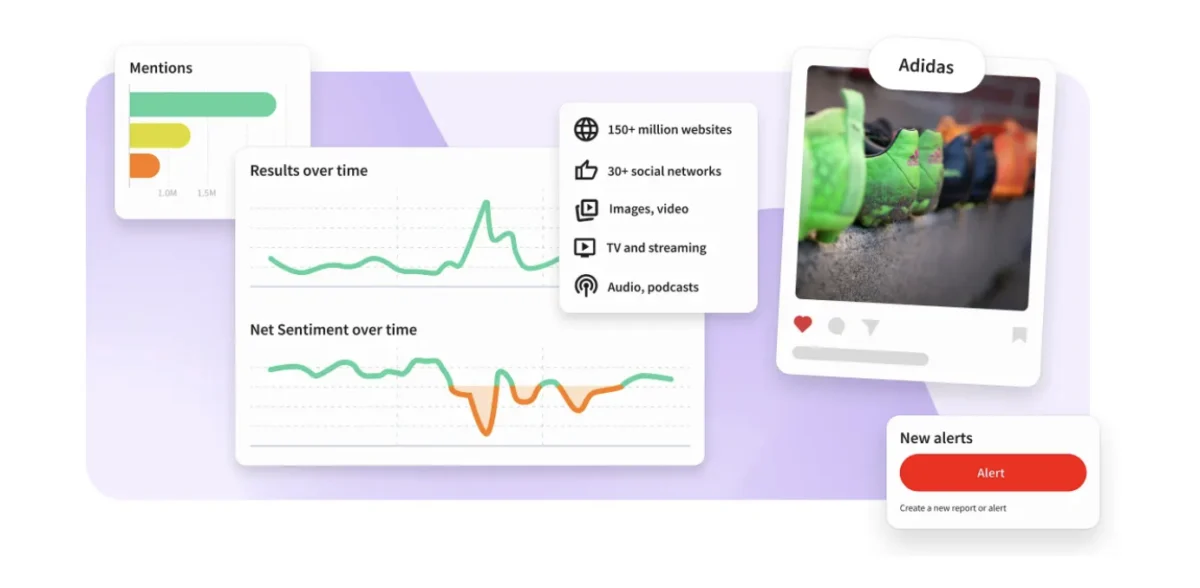
Enterprise teams lean toward integrated solutions. For example, Perch by Hootsuite is frequently cited for its ability to unify cross-channel data, allowing for a holistic view of the brand. For reputation management, Lumen by Talkwalker provides advanced sentiment analysis, using AI to detect shifts in public perception—a metric that standard engagement numbers often miss.
As noted by leading strategists, the most effective teams use a "cadence" of reporting. Monthly reports are typically utilized for tactical adjustments, while quarterly reports serve as the foundation for long-term strategic planning. This duality ensures that teams remain agile enough to react to a viral trend while remaining disciplined enough to pursue annual business objectives.
![How to create a social media report in 2026 [free template]](https://cdn.airops.com/rails/active_storage/blobs/proxy/eyJfcmFpbHMiOnsiZGF0YSI6MTk0Mzk4MDczLCJwdXIiOiJibG9iX2lkIn19--80c88146db70bd11dc4eb4e431a7479a65fe7dbe/image.png)
Implications: Driving Business Intelligence
The primary implication of a well-crafted social media report is the democratization of data across an organization. When a marketing team can clearly articulate that a 10% increase in social media engagement led to a 2% uptick in web conversions, social media moves from being a "cost center" to a "revenue driver."
Furthermore, the process of reporting forces accountability. It discourages the "post and pray" method of content management and encourages a culture of continuous testing and learning. By identifying that a specific campaign failed on Facebook but thrived on Pinterest, teams can optimize their advertising spend in real-time, preventing the wastage of resources.
![How to create a social media report in 2026 [free template]](https://blog.hootsuite.com/wp-content/uploads/2023/01/HS_ProductImage-Analytics-1.png)
Looking Ahead: The Future of Reporting
As AI and machine learning continue to permeate the marketing landscape, the future of social media reporting lies in predictive analytics. Instead of simply reporting on what happened in the last 30 days, future reports will likely suggest what will happen in the next 30 days based on historical patterns and predictive sentiment modeling.
For now, the mandate for marketing professionals is clear: focus on the narrative. Data is the foundation, but the story you tell with that data is what secures the buy-in from stakeholders. Whether you are presenting to a board of directors or fine-tuning a content calendar for the creative team, your report should be a clear, compelling, and actionable document that highlights the value of the human connection your brand fosters online.
![How to create a social media report in 2026 [free template]](https://cdn.airops.com/rails/active_storage/blobs/proxy/eyJfcmFpbHMiOnsiZGF0YSI6MTk0Mzk3ODgwLCJwdXIiOiJibG9iX2lkIn19--eaf54a4d428bcfb899e0f793253fb54ddd137d24/image.png)
By following a structured approach—defining clear goals, choosing the right metrics, visualizing results, and offering actionable next steps—you ensure that your social media presence is not just a digital megaphone, but a precise, data-backed instrument for sustainable business growth.











