Neng Nana
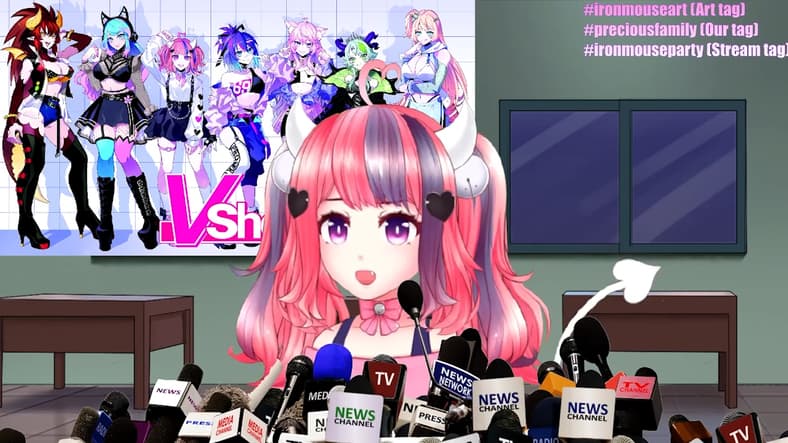
The landscape of digital entertainment was sent into a state of shock this week as VShojo, one of the most prominent and influential agencies in the Virtual YouTuber (VTuber) industry, announced its permanent closure. The collapse follows a cascade of devastating allegations regarding systemic financial irregularities, the misappropriation of charitable funds, and a crumbling internal culture that alienated its own talent.
At the center of this firestorm is Ironmouse, the agency’s most recognizable star, whose public resignation on July 21st triggered an exodus of talent and forced an admission of failure from the company’s leadership. What began as a bold, "creator-first" experiment in the burgeoning VTubing space has concluded in insolvency, betrayal, and widespread calls for accountability.

The Catalyst: Ironmouse’s Damning Testimony
The downfall of VShojo was not a slow decay, but a rapid detonation sparked by a single, emotionally charged video released by Ironmouse. A pioneer in the space who began streaming in 2017 while managing the severe health challenges of Common Variable Immunodeficiency, Ironmouse had become a symbol of resilience and community.
In her announcement, an visibly distraught Ironmouse revealed that she was parting ways with the agency due to severe financial discrepancies. She alleged that VShojo had failed to pay her a significant amount of owed revenue. More damning, however, was the revelation regarding the Immune Deficiency Foundation (IDF), a charity she has championed for years. Ironmouse claimed that over $500,000 she had successfully raised for the foundation—money intended to support those suffering from conditions similar to her own—had been withheld by VShojo.

"This entire situation has broken me," Ironmouse stated in her video. "I just wanted to do something good, and to give back to a community that helped me. But unfortunately, that’s not the case." She noted that she was speaking under the guidance of legal counsel, preventing her from disclosing the full extent of the internal mismanagement.
A Chronology of the Crisis
The dissolution of VShojo was preceded by months of mounting tension and talent attrition.
- Early 2024: Financial strain becomes apparent behind the scenes, though the public-facing image remains stable.
- July 11, 2024: Zentreya, a major talent within the agency, resigns, signaling that the internal environment had become untenable.
- July 21, 2024: Ironmouse releases her video, publicly accusing the company of failing to pay her and, crucially, failing to pass on over half a million dollars in charity donations.
- July 22, 2024: The domino effect begins. A wave of talent, including Amalee, Projekt Melody, Kuro, and Hime, announces their immediate departure.
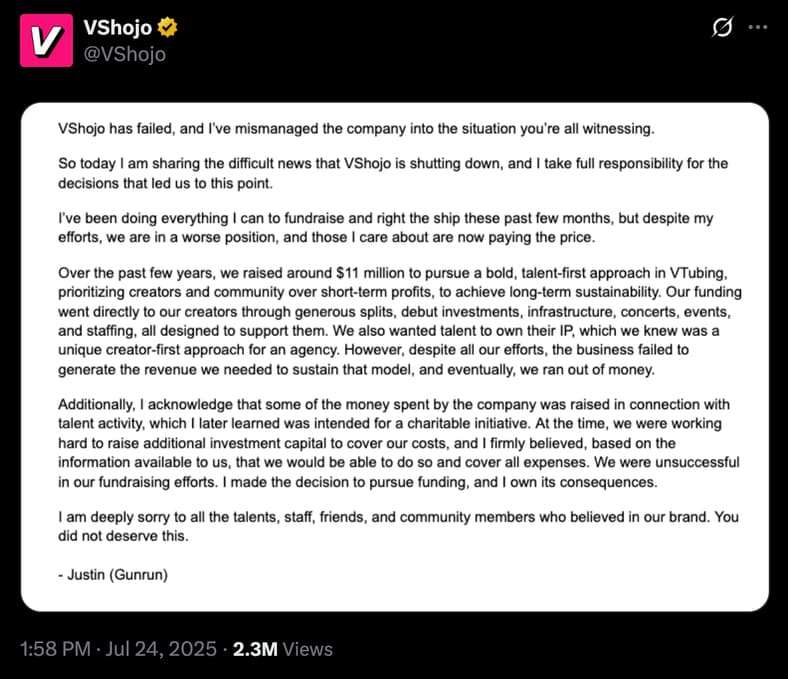
- July 23, 2024: VShojo CEO Justin Ignacio (GunRun) issues an official statement on X, confirming the company’s permanent shutdown and acknowledging the failure of the business model.
- Late July 2024: Former and prospective talent, including those waiting for debuts, confirm their departure or rejection of contracts, citing the same patterns of unpaid dues and broken promises.
Official Responses and the "Creator-First" Failure
Following the public outcry, VShojo CEO Justin Ignacio issued a candid, albeit late, apology. Ignacio admitted that the company had "mismanaged" its way into a corner, failing to generate the revenue necessary to sustain its ambitious, talent-focused model.
"I’ve been doing everything I can to fundraise and right the ship these past few months, but despite my efforts, we are in a worse position," Ignacio wrote. He attempted to justify the company’s history, noting that they had raised approximately $11 million to invest in infrastructure, concerts, and generous revenue splits for creators. However, he conceded that the "bold, talent-first approach" failed to achieve long-term financial sustainability.
Perhaps most damaging was his admission regarding the charity funds: "I acknowledge that some of the money spent by the company was raised in connection with talent activity, which I later learned was intended for a charitable initiative." Ignacio claimed that he had operated under the belief that they could cover those costs with future investment capital—a gamble that ultimately failed, leaving the company insolvent.
Supporting Data: The Community’s Response
The scale of the betrayal felt by the community was reflected in the immediate and overwhelming response to Ironmouse’s call for help. Within hours of her announcement, the community bypassed the failed agency entirely.
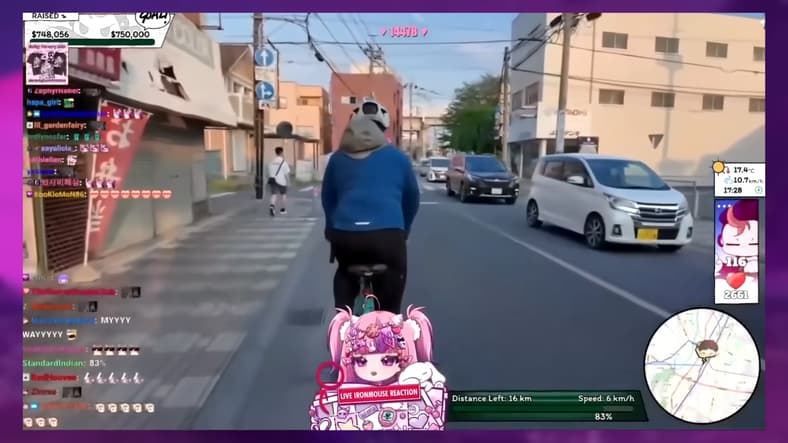
A Tiltify donation drive, originally aiming to raise $10,000 to cover the missing charity funds, skyrocketed to over $563,000 in a matter of days. This massive outpouring of support included significant contributions from other streamers, industry figures, and even the charity itself, which expressed shock at the sudden influx of support. This response served as a clear message: the audience remained loyal to the creators, not the agency.
The Internal Culture: A Pattern of Neglect
The fallout has exposed that the issues went far beyond the withheld charity funds. Interviews with former talents and staff have painted a picture of a company riddled with operational incompetence and ethical breaches.

KSon, another high-profile talent, held a live-streamed emergency meeting to demand answers, revealing that she had been unpaid since September 2024. Her conversations with the company’s Japanese CEO, Koshi Makino, revealed a deep disconnect. Makino admitted that the Japanese side of the business was largely kept in the dark, with many staff and talent being told that the company was "doing good" while they were being denied pay.
Other allegations include:
- Staff Misconduct: Claims that staff members leaked private details about VTubers’ physical appearances and marital statuses.
- Unpaid Commissions: Reports from independent contractors and artists who were never compensated for their work for the agency.
- The "Ghost" Debuts: Prospective talent like Tori Orane spent months and significant personal funds on model assets, only to have their debuts delayed indefinitely due to a lack of staff, eventually realizing the company was in a death spiral.
Implications for the VTubing Industry
The collapse of VShojo represents a significant turning point for the VTubing industry. For years, the agency was held up as a gold standard for how to handle virtual talent, promising to prioritize the creators’ ownership of their intellectual property (IP) and financial well-being.
The failure of this model suggests that the "agency" structure—at least as it existed at VShojo—is fraught with systemic risks. When agencies act as the financial gatekeepers between streamers and their revenue, they create a single point of failure. If the agency falters, the talent is left not only without income but often without the necessary legal or financial independence to pivot quickly.
Furthermore, the scandal highlights the dangers of the "charity through middle-man" model. For many creators, the desire to give back is a core part of their identity. When agencies control the distribution of these funds, it puts the creator’s reputation and the charity’s integrity at risk.
Moving forward, the industry is likely to see a shift toward more decentralized management. Creators are increasingly expected to handle their own finances and legal affairs, or rely on smaller, boutique management firms that do not hold the power to withhold or misappropriate funds.

Conclusion: A Lesson in Accountability
The story of VShojo is a cautionary tale for the creator economy. It serves as a reminder that "talent-first" is a marketing slogan that requires rigorous financial oversight to be anything more than a hollow promise. The downfall was not merely a result of bad market conditions, but of ethical failures at the leadership level.
As the dust settles, the focus remains on the survivors—the creators who have had to navigate the loss of their primary support system while maintaining their connection to the communities they serve. While VShojo as an entity has ceased to exist, the resilience of individuals like Ironmouse, KSon, and GEEGA suggests that the talent themselves will continue to drive the industry forward, albeit with a much more cautious and skeptical eye toward the agencies that seek to manage their careers. The "pitchforks" were indeed out, and in this case, they were justified.

 Reynand Wu