Ammar Sabilarrohman
In the vast, interconnected map of science fiction television, few franchises carry the weight and cult prestige of "Stargate." Since the release of Roland Emmerich’s 1994 feature film, the concept of a wormhole-traveling military unit has served as a cornerstone of the genre. While the live-action series Stargate SG-1 and Stargate Atlantis became global phenomena, defining a golden age of television for MGM, one dark corner of the franchise’s history remains largely forgotten by fans and critics alike: Stargate Infinity.
Premiering in 2002 as part of the FoxBox Saturday morning block, Stargate Infinity was intended to be the gateway through which a new, younger generation would enter the Stargate universe. Instead, it became a cautionary tale of corporate indifference, budget constraints, and a fundamental misunderstanding of what makes a franchise endure.
The Genesis of an Animated Gamble
To understand the failure of Stargate Infinity, one must look at the climate of the early 2000s. Unlike the high-stakes, brand-guarded landscape of modern streaming services, intellectual property in the early 2000s was often treated as a disposable asset. MGM, looking to capitalize on the popularity of its sci-fi brand, sought to expand the franchise into the lucrative children’s animation market.
Enter the DIC Entertainment Corporation, led by Andy Heyward. DIC was known for producing high-volume, low-cost animation. As series co-creator Eric Lewald noted in a 2022 interview with The Companion, DIC did not have the massive resources of a Warner Bros. or Disney. They operated on thin margins, and MGM—at the time considered a "weaker" major studio in terms of animation infrastructure—was eager to license its properties for a relatively small fee.
The goal was simple: take a mature, complex sci-fi military drama and strip it down to a Saturday morning cartoon format. The result was a 26-episode series that, while technically an "official" production, was largely discarded by the fanbase and ultimately excluded from the franchise’s core canon.

A Chronology of Creative Disconnect
The production timeline of Stargate Infinity was marked by a lack of oversight and a vacuum of creative direction.
- The Development Phase (2001): Eric Lewald and Michael Maliani were tapped to develop the series. Having found success with X-Men: The Animated Series, the team arrived with high ambitions. They envisioned a sweeping, epic adventure that could stand alongside the live-action series.
- The Production Void (2001–2002): Development was hampered by a total lack of communication from the rights holders. According to writer Michael Edens, the production team received only a single meeting with MGM executives. The only concrete instruction provided was a warning to avoid using plotlines that were being saved for the then-upcoming Stargate Atlantis.
- The Premiere (September 2002): The show debuted on the FoxBox block. Set in the distant future, it followed a veteran, four cadets, and an alien navigating the gate network to return to Earth.
- The Cancellation (2003): Following the conclusion of its 26-episode run, the show was quietly canceled. It never gained the traction required for a renewal, and it quickly drifted into obscurity.
The Chasm Between Vision and Reality
The primary culprit behind the show’s failure was a massive disparity between the writers’ creative intent and the production budget provided by DIC.
Lewald and his team were writing scripts with "IMAX-sized" action in mind—sequences that required fluid animation, complex background art, and cinematic pacing. However, the budget allocated to the overseas animation studios was a fraction of what such a vision required.
"We writers, in crafting the stories, were imagining ‘Stargate’-like spectacle," Lewald recalled. "But the animators were given maybe 30 percent of the time and money to do it."
This created a jarring experience for viewers. The writing was attempting to weave a serialized narrative, but the visuals—often stiff, repetitive, and uninspired—failed to convey the stakes of the story. In the world of animation, the script is only half the battle; without the budget to execute the spectacle, even the most compelling plotline falls flat. By the time the production team realized the constraints, it was too late to pivot to smaller, more character-driven stories that might have flourished within the limited animation budget.

Industry Perspectives and Internal Critique
The critical consensus regarding Stargate Infinity is largely negative, but the internal critique from those involved offers a more nuanced view of why the ship sank.
Brad Wright, the co-creator of Stargate SG-1, famously distanced himself from the project. His stance—"I don’t have a problem with it. I’m just not involved"—perfectly encapsulates the general attitude toward the show. For the architects of the live-action success, Infinity was a peripheral entity that existed in a different dimension of quality and intent.
Mark Edward Edens, another key developer, provided perhaps the most stinging indictment of the show’s legacy. He drew a direct comparison to X-Men: The Animated Series, a project that succeeded because it respected the source material and built upon it. Stargate Infinity, conversely, was a "lesson in how to waste a property’s popularity by ignoring what fans liked about it."
The Implications for the Stargate Franchise
The failure of Stargate Infinity had long-lasting consequences for the Stargate brand. In the years following its cancellation, MGM grew increasingly gun-shy about attempting further animated ventures. While other franchises like Star Wars used animation (The Clone Wars) to bridge generations and expand their lore, Stargate remained strictly within the realm of live-action.
The "lost" nature of Infinity serves as a case study for why tone-deaf adaptations fail. By stripping away the military grit, the political intrigue, and the intellectual curiosity that defined SG-1, the creators were left with a generic sci-fi shell that appealed neither to the hardcore fans of the franchise nor to the children it was intended to capture.
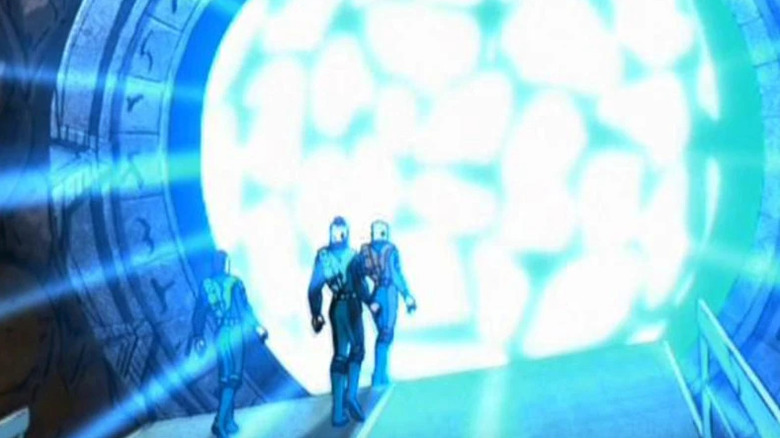
Furthermore, the lack of a "bridge" show meant that when the live-action series eventually went dormant, there was no animated component to keep the brand alive in the public consciousness. Stargate went from being a multi-show juggernaut to a property that has been largely dormant for over a decade.
Conclusion: A Lesson in Brand Stewardship
Today, Stargate Infinity is relegated to the bargain bins of digital retailers and the memories of a few curious completionists. Its existence serves as a reminder that franchises are not merely collections of logos and terminology—they are delicate ecosystems of tone and expectation.
When Stargate Infinity debuted, the industry didn’t understand the power of "fan service" or the importance of maintaining a unified canon. It was a time when "good enough" was considered sufficient for children’s programming. As the modern era of television moves toward increasingly sophisticated storytelling, the story of Stargate Infinity remains a vital footnote. It is a reminder that in the race to expand a brand, the most important element—the heart of the story—is the one thing that cannot be outsourced, cut, or ignored.
For those interested in witnessing this piece of science fiction history firsthand, Stargate Infinity: The Complete Series remains available on home media—not as a triumph of the franchise, but as a fascinating, flawed artifact of an era when the Stargate was meant to lead to endless possibilities, but instead led to a dead end.


 Muslim
 Azzam Bilal Chamdy