By Matthew Wilson | Gaming Industry Analysis
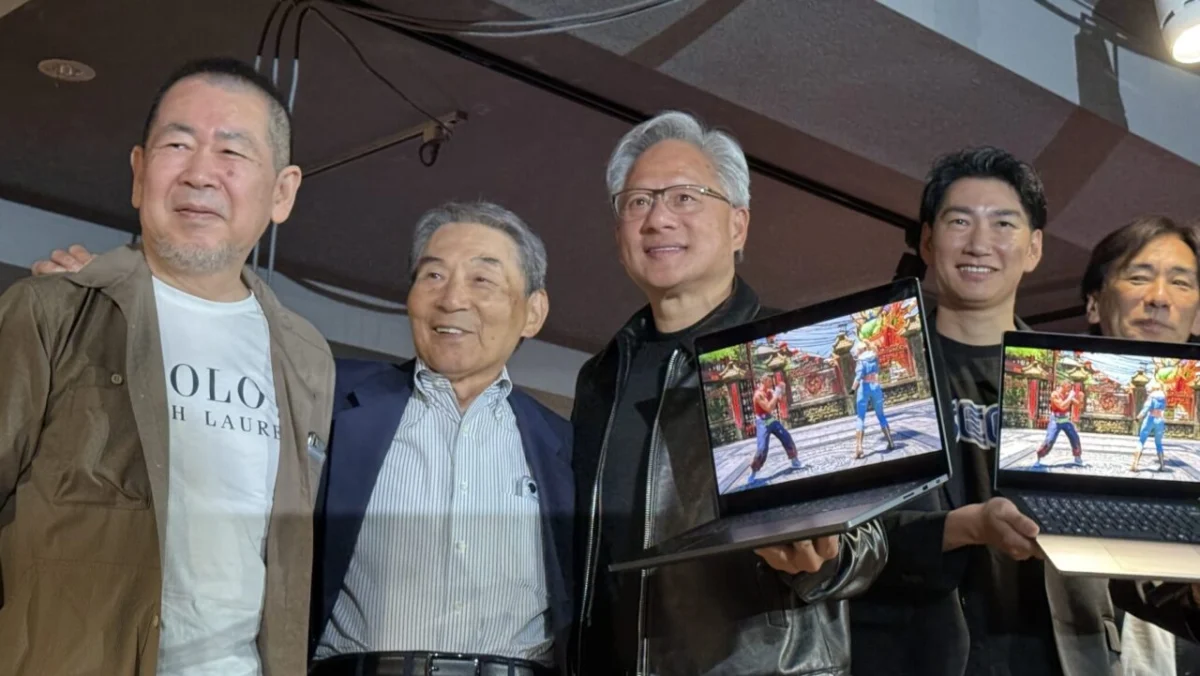
In a significant move that echoes the golden age of arcade gaming while signaling a massive shift in modern hardware architecture, Nvidia has officially partnered with SEGA to bring a new suite of titles to the newly unveiled RTX Spark platform. The collaboration, announced during a high-profile industry event at the iconic GiGO Akihabara in Tokyo, marks a strategic pivot for both companies as they navigate the evolving landscape of ARM-based PC gaming.
The partnership, which features the revival of the legendary Virtua Fighter franchise with Virtua Fighter Crossroads, aims to leverage Nvidia’s proprietary hardware acceleration to deliver high-performance gaming on the RTX Spark platform. For enthusiasts and industry analysts alike, this announcement is not merely about a single game; it represents a foundational test for how traditional x86-based gaming libraries will transition to the power-efficient, ARM-based future of consumer computing.
The Core Announcement: Bringing Virtua Fighter to the Modern Era
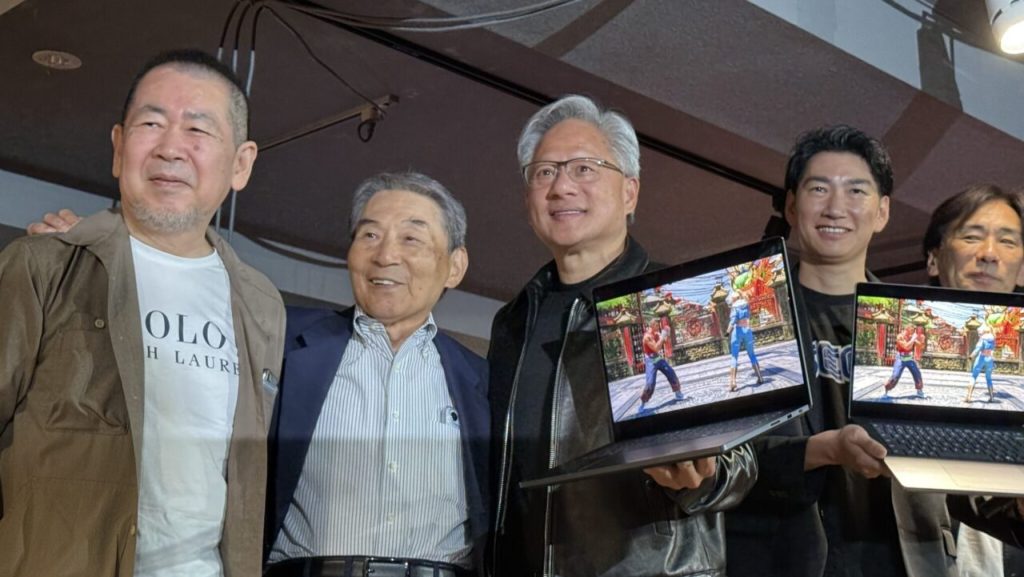
The headline of the event was undoubtedly the confirmation that Virtua Fighter Crossroads will serve as the flagship title for the RTX Spark platform. The announcement was bolstered by the presence of SEGA leadership and the legendary creator of the Virtua Fighter series, Yu Suzuki.
Nvidia CEO Jensen Huang, taking the stage at the Akihabara venue, emphasized that the RTX Spark platform is designed to bridge the gap between mobile-grade power efficiency and desktop-class gaming performance. "We are not just porting games," Huang noted during his address. "We are optimizing the very fabric of how these titles interact with the silicon."
For the legions of fans who grew up in the era of the SEGA Saturn and the original Virtua Fighter PC ports, this collaboration feels like a full-circle moment. Decades ago, Nvidia and SEGA worked in tandem to bring the arcade-perfect experience of Virtua Fighter to early 3D-accelerated PCs. Today, the challenge is different: moving complex, high-fidelity gaming software onto the RTX Spark’s ARM-based architecture.
A Chronology of Collaboration: From Hardware Pioneers to Cloud Visionaries
The relationship between Nvidia and SEGA is deeply rooted in the history of computer graphics. To understand the significance of the RTX Spark announcement, one must look back at the trajectory of both companies.
- Mid-1990s: The Arcade Revolution: SEGA dominated the arcade scene with the Model 2 and Model 3 boards. During this time, Nvidia was a fledgling company looking to prove that the PC could replicate the high-octane 3D performance of specialized arcade hardware.
- Late 1990s: The PC Port Era: The first PC port of Virtua Fighter was a landmark moment for early 3D accelerators. It set a precedent for how console and arcade experiences could be scaled for the home market.
- 2000s–2010s: Divergent Paths: As SEGA shifted away from hardware manufacturing to focus on software publishing, Nvidia ascended to become the world’s leading designer of GPUs. Their paths crossed periodically in cloud gaming and professional visualization.
- 2024–2026: The ARM Transition: With the rise of high-performance ARM chips, the industry began searching for a way to maintain Windows compatibility while slashing power consumption. This culminated in the development of the RTX Spark platform.
- July 2026: The Akihabara Announcement: The formal unveiling of the partnership between Nvidia and SEGA marks the beginning of a new initiative to bring classic and new SEGA IP to the RTX Spark ecosystem.
Technical Hurdles: The Challenges of the ARM Architecture
The RTX Spark platform utilizes a Windows-based environment, but the underlying hardware architecture is ARM-based. This creates a unique technical paradigm. While modern Windows supports ARM natively, existing game codebases—often built for x86 processors—require significant "compatibility work."
Translating the Instruction Sets
When a game is written for x86 (the standard architecture for Intel and AMD CPUs), it uses a specific set of instructions. Running this on an ARM chip requires a translation layer. While Windows on ARM has made strides, gaming remains the "final frontier." Nvidia’s involvement suggests that they are providing custom drivers and AI-driven translation technologies to ensure that Virtua Fighter Crossroads runs with the same, if not better, performance than on traditional hardware.
The Role of RTX Spark
The RTX Spark platform is more than just a chip; it is an integrated ecosystem. It combines Nvidia’s expertise in AI-driven upscaling (DLSS), frame generation, and high-efficiency ARM cores. By focusing on Virtua Fighter Crossroads, which requires precise frame-perfect inputs and low latency, Nvidia is attempting to prove that the RTX Spark platform can handle the most demanding genre in gaming: the fighting game.
Official Responses and Strategic Implications
The industry reaction to the Nvidia-SEGA partnership has been largely optimistic, though tempered with questions about the scalability of the platform.
SEGA’s Perspective
SEGA leadership has stated that the partnership is essential for the future of their library. By moving to the RTX Spark platform, SEGA believes they can reach a new generation of players who prioritize portability and battery life without sacrificing the graphical fidelity expected of modern titles. Yu Suzuki, speaking at the event, highlighted that the "feel" of Virtua Fighter—its responsiveness and fluid animation—is a priority that the RTX Spark platform has successfully maintained during internal testing.
The Analyst View
Industry analysts note that if Nvidia can successfully court publishers like SEGA, it could spark a migration toward ARM hardware in the consumer laptop market. If developers find that the "compatibility work" mentioned by Nvidia is simplified by proprietary software tools, the barriers to entry for other studios will vanish.
"The success of RTX Spark depends entirely on the library," says industry analyst Sarah Chen. "By leading with a legacy title like Virtua Fighter Crossroads, they are appealing to the core gamer while simultaneously stress-testing their new hardware. It is a calculated risk."
Looking Ahead: The Future of the Gaming Ecosystem
The implications of this move extend far beyond the titles announced in Tokyo. If the RTX Spark platform gains significant traction, it could force a shift in how games are developed. Currently, developers optimize primarily for x86 architectures (PC, PS5, Xbox Series X/S). A shift toward ARM could mean that "optimized for RTX Spark" becomes a standard requirement in developer kits.
Potential Benefits for Consumers:
- Increased Battery Life: ARM chips are inherently more power-efficient, meaning high-end gaming on the go could see a leap in longevity.
- Smaller Form Factors: The thermal efficiency of the RTX Spark chip allows for thinner, lighter gaming devices.
- Cross-Platform Parity: If the translation layers prove robust, it could lead to a future where your gaming library is truly platform-agnostic, running equally well on desktops, handhelds, and ARM-based tablets.
Potential Risks:
- Fragmentation: A new hardware platform could lead to a fragmented ecosystem where games only run optimally on specific chipsets.
- Software Bloat: Heavy translation layers can sometimes lead to performance overhead, which might negate the efficiency gains of the ARM architecture.
Conclusion: A New Chapter for PC Gaming
The announcement from the GiGO Akihabara event is a clear signal that the PC gaming market is entering a state of flux. By teaming up with a titan like SEGA, Nvidia is positioning the RTX Spark not just as a piece of hardware, but as a gateway to a more efficient and versatile future for gaming.
As we look toward the remainder of 2026 and into 2027, the success of Virtua Fighter Crossroads will be the primary metric by which this partnership is judged. If the title performs as expected, and if the translation of other classic SEGA titles continues to gain momentum, we may well be witnessing the early days of a post-x86 dominance in the PC gaming space.
For now, the gaming community remains in a state of curious anticipation. Will RTX Spark be the platform that finally convinces the broader industry to embrace the ARM transition? Or will it remain a niche, albeit powerful, experiment in the evolution of hardware? Only time—and the performance of Virtua Fighter Crossroads—will tell.
KitGuru continues to monitor the situation regarding the RTX Spark platform and will provide further technical analysis as more titles are announced for the platform.