By Ken Allsop | July 15, 2026
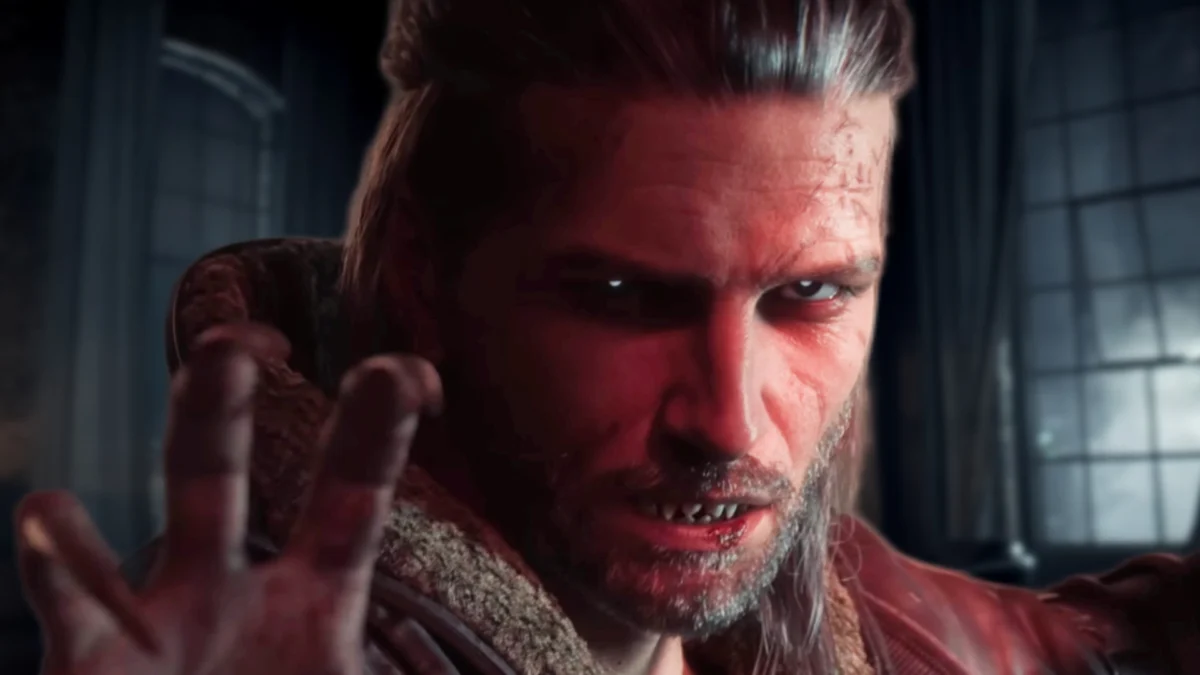
The Summer Game Fest floor is often a theater of the expected, filled with polished trailers for sequels and iterative updates to established franchises. Yet, amidst the predictable rhythm of the industry’s biggest showcase, Rebel Wolves managed to shatter the status quo. The studio, founded by industry veterans with deep roots in the RPG genre, offered a glimpse of The Blood of Dawnwalker that sent shockwaves through the community. While the game has been widely anticipated as a dark, atmospheric medieval fantasy, the developers dropped a bombshell: a teaser showing the game’s bloodthirsty protagonist, Coen, in a stark, modern-day setting.
This isn’t just a stylistic experiment; it is the cornerstone of a grand, multi-generational saga. Rebel Wolves has confirmed that The Blood of Dawnwalker is merely the first act in a sweeping epic that promises to bridge the gap between ancient folklore and the neon-soaked complexities of the modern era.
The Foundation: A Masterclass in Atmosphere
To understand the gravity of this shift, one must first appreciate the meticulous craftsmanship of the game’s debut setting. The Blood of Dawnwalker finds its initial footing in the 14th-century Vale Sangora—a region that serves as a haunting, ethereal mirror to the Slavic and Balkan landscapes of our world, yet remains untethered from specific historical geography.

During my extensive hands-on preview, I sat down with Game Director Konrad Tomaszkiewicz and Environment Artist Adam Payet to dissect the design philosophy behind Vale Sangora. According to Payet, the goal was to achieve a "familiarity without specificity." By drawing inspiration from the architectural and natural motifs of the Carpathian Mountains, the team crafted a world that feels lived-in and authentic, yet remains distinctly "other."
"It has a very strong sense of place that you look at and you immediately know where you are geographically," Payet explains. "But it’s not exactly specific to a single village or nation. It’s a synthesis of folklore, landscape, and history." This ambiguity is intentional; it allows the player to project their own understanding of the era onto the world while keeping the narrative free from the constraints of historical accuracy.
Chronology and Scope: A Saga Spanning Centuries
The most provocative aspect of the Rebel Wolves announcement is the temporal scope of the series. Narrative Director Jakub Szamałek has been vocal about the studio’s ambition to evolve the protagonist alongside the timeline.
In a recent developer diary, Szamałek outlined the trajectory for the Dawnwalker saga: "With each game in the series, we want to push the time forward, take you to different places, and explore different timelines. We want you to see Coen changing as he gains experience, as he ages, as he learns more about the hidden truths of the world."

This implies a radical departure from traditional RPG structures. Most franchises, such as The Witcher or Dragon Age, keep their protagonists within a relatively static technological and cultural period. By contrast, Rebel Wolves is proposing a metamorphosis. Players will not just be exploring new maps; they will be witnessing the slow erosion of the vampire mythos as it clashes with the industrialization and secularization of the modern world. It is a bold, longitudinal storytelling experiment that asks players to invest in a character’s evolution over what could potentially be hundreds of years of in-game time.
The "Gone Gold" Milestone and Future Roadmaps
As of today, July 15, 2026, Rebel Wolves has officially announced that The Blood of Dawnwalker has "gone gold." The build is finalized, the code is locked, and the focus has shifted entirely to distribution and the final polish of the day-one patch.
When I pressed Tomaszkiewicz on what lies beyond the horizon, he was predictably tight-lipped, yet optimistic. "When we decide, we will talk openly about what we will do," he stated, offering a knowing smile. "But for sure, we have the sequels in our minds. We know what it will be about. We have this whole story arc for the saga—we’ve now shown the conclusion in the present times at Summer Game Fest."
This suggests that the "modern-day" footage wasn’t just a random teaser; it was a narrative anchor point. The studio has the end in mind, and they are building the mechanics of the first game to support that long-term vision.

The Assassin’s Creed Parallel: Learning from History
The industry has seen attempts at "time-hopping" before, most notably in the early years of the Assassin’s Creed franchise. For many of us who grew up with the series, the promise was clear: we were tracking a lineage that would eventually culminate in a modern-day master assassin, with Desmond Miles utilizing his ancestor’s skills in a contemporary urban environment.
That promise, as history has shown, largely withered away. Ubisoft eventually pivoted, moving the "modern-day" segments into the background until they were eventually stripped away entirely, as evidenced by the recent Black Flag Resynced release.
Rebel Wolves is essentially betting that they can succeed where others have retreated. The challenge is immense. The Blood of Dawnwalker relies on a specific rhythm of melee combat and environmental traversal that feels perfectly suited to the 14th century. How does that translate when the environment changes to include firearms, surveillance, and high-speed transit? The danger lies in the gameplay becoming diluted—losing the weight of the sword-swing to accommodate the mechanics of a modern shooter.
Implications for Gameplay and Design
The pivot toward a modern setting raises significant questions regarding the core loop of the Dawnwalker series. If the game remains an RPG, the shift in setting necessitates a shift in character progression and gear.

- Combat Evolution: Will the visceral, momentum-based combat of the medieval chapters be replaced by tactical, cover-based mechanics? Or will the studio find a way to maintain the "vampire" power fantasy that transcends technological eras?
- Narrative Cohesion: Maintaining a consistent, believable world-building logic while leaping through centuries is a daunting task. The studio must ensure that the "hidden truths" mentioned by Szamałek are strong enough to justify why the protagonist is still relevant in a world of smartphones and satellites.
- Audience Retention: Will the player base that fell in love with the dark, gritty, sword-and-sorcery atmosphere of the first game be willing to follow the franchise into a modern setting? There is a risk of alienation, but there is also the potential for a fresh, groundbreaking experience that defines a new sub-genre of "Modern-Fantasy RPG."
Final Reflections: The Courage to Evolve
Despite my lingering questions about the technical and narrative hurdles, I find myself in a state of cautious excitement. We live in an era of safe bets, where developers often cling to the formulas that brought them initial success. Rebel Wolves is taking the opposite approach. They are not merely iterating on a successful product; they are attempting to build a tapestry of history, myth, and evolution.
The best games, in my estimation, are those that emerge from a place of genuine creative conviction rather than market research. If the team at Rebel Wolves is committed to this multi-century journey, then they deserve the benefit of the doubt. The Blood of Dawnwalker is set to be a landmark title, but its true legacy may not be defined by its medieval beginning, but by how bravely it steps into the unknown.
For now, we wait for the launch. We wait to step into the Vale Sangora, to learn the secrets of Coen, and to see if this studio has truly found the alchemy required to turn a singular game into an immortal legend.