Sagoh
Sagoh
In the current retail and service landscape, the "loyalty program" has become a ubiquitous feature of the consumer experience. From the neighborhood coffee shop’s digital punch card to the sophisticated, data-driven ecosystems of global airlines and big-box retailers, the promise of rewards has become a standard expectation. However, as the market becomes increasingly saturated, brands are facing a harsh reality: enrollment is not synonymous with engagement, and volume does not guarantee value.
As of mid-2026, industry leaders are shifting their focus. The objective is no longer simply to inflate user counts, but to fundamentally alter consumer behavior through strategic, personalized, and immediate value propositions.
Main Facts: The Great Disconnect in Loyalty
The primary challenge facing modern marketing departments is a growing disconnect between target demographics and the behavioral reality of their loyalty members. While enrollment numbers are at historic highs, the "loyalty" of these members is often superficial.
Data from recent studies, including insights from EY, indicates that while the vast majority of consumers claim that loyalty rewards are important to their purchasing decisions, a significantly smaller fraction actually utilize these programs with any regularity. The "loyalty" label is increasingly becoming a misnomer; for many consumers, a membership card is simply a tool to access a one-time discount, rather than a commitment to a brand ecosystem.
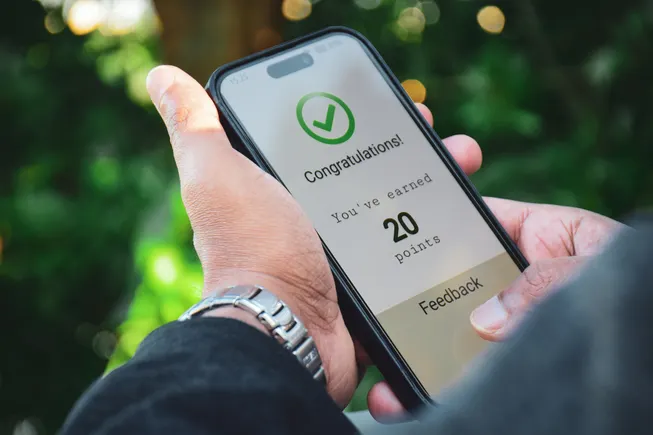
This phenomenon has created a "leaky bucket" effect. Brands spend significant marketing capital to acquire members, only to see those same members shop elsewhere the moment a competitor offers a slightly better price or a more convenient promotion.
Chronology of a Shifting Strategy
The evolution of loyalty programs has moved through several distinct phases over the last two decades:
- The Era of Mass Rewards (2005–2015): The focus was on "earning and burning." Programs were transactional, rewarding high-volume spending with points that could be redeemed for discounts.
- The Data Accumulation Phase (2015–2022): Brands realized that loyalty programs were excellent tools for data harvesting. Programs were redesigned to capture customer profiles, preferences, and purchase histories, fueling the rise of targeted digital advertising.
- The Behavioral Influence Era (2022–Present): With consumer attention at a premium, brands are moving toward "nurture-based" loyalty. The goal is now to identify customers who are drifting away and provide specific incentives to move them back into the "active" category. This represents a shift from rewarding past behavior to actively shaping future engagement.
Supporting Data: The Value of the "Middle Segment"
The conventional wisdom in the retail sector has long been to cater to the "heavy users"—the top 10% of customers who provide the bulk of revenue. Patricia Camden, a loyalty leader for EY Americas, argues that this strategy, while intuitive, is fundamentally flawed.
"For many years, programs were designed almost entirely around the heaviest users," Camden noted. "The thinking was if you reward the people already spending the most, you’ll get more of that behavior. That can work, but it also leaves a lot of value on the table."

The "Drifting Cohort" Opportunity
EY research highlights a critical opportunity in the "middle segment"—customers who were once frequent visitors but have since drifted toward infrequent, intermittent interaction. In the casual dining sector, for instance, data suggests that the greatest untapped value lies not in the "regulars" who visit every week, but in the segment that visits every two months.
When brands pivot to target this group with personalized, small-scale welcome-back offers, the return on investment is often significantly higher than traditional mass-marketing campaigns. One successful case study involved a firm that deployed personalized rewards to this drifting cohort, resulting in a measurable increase in quarterly visits. These infrequent customers began to engage in higher-value behaviors, eventually moving up the "loyalty pyramid" and becoming the next generation of core, high-frequency patrons.
Official Responses and Strategic Perspectives
Industry analysts and experts are in broad agreement that the "discount engine" model of loyalty is reaching its expiration date. Differentiation is now the primary currency of competitive advantage.
According to insights from the firm Upside, "preference-first" consumers are increasingly budget-conscious. While they desire to stay loyal to their favorite brands, their loyalty is conditional upon the brand’s ability to respect their financial constraints. To win these customers, brands must offer more than just a percentage-off coupon; they must provide exclusive experiences that make the membership feel like an extension of the customer’s lifestyle.

Furthermore, the concept of "immediacy" has emerged as a cornerstone of modern retention. Programs that require a high barrier to entry—such as requiring a customer to spend hundreds of dollars before triggering a reward—are failing to capture the "fence-sitters." By contrast, programs that offer immediate, low-stakes gratification—a free side dish, a small discount, or instant points upon registration—create a psychological link between the customer and the brand much faster.
Implications: The Future of Customer Retention
The shift toward behavioral influence has profound implications for how companies structure their loyalty budgets.
1. The Death of the "One-Size-Fits-All" Model
Modern loyalty will move away from uniform rewards structures. Instead, AI-driven platforms will allow brands to offer bespoke rewards based on an individual’s specific behavioral patterns. A customer who drifts away because of price will receive a discount; a customer who drifts away due to a lack of variety will receive a personalized recommendation or access to a new product line.
2. Prioritizing Nurturing Over Acquisition
If a program does not actively nurture the cohort of customers "coming up behind" the heavy spenders, the top of the loyalty pyramid will inevitably thin out. Brands that focus solely on the top 10% risk a total collapse of their customer base as those individuals eventually age out or shift their habits. The future of loyalty is a pipeline, not a static target.

3. Trust as a Currency
Beyond the mechanics of points and rewards, trust remains the ultimate differentiator. Customers are becoming increasingly protective of their data. Programs that demonstrate transparent, ethical data usage while providing tangible, personalized value will be the ones that survive the current "loyalty fatigue."
Conclusion
The crowded landscape of 2026 demands that companies stop treating loyalty programs as mere marketing checkboxes. The brands that will succeed in the coming years are those that view their loyalty programs as sophisticated, behavioral-modification engines. By identifying the "drifting" middle class of their customer base, prioritizing immediate rewards, and focusing on nurturing rather than just extracting value from the top tier, businesses can turn the tide against churn.
As Patricia Camden aptly noted, the best programs aren’t just protecting the top of the pyramid; they are systematically building the next version of it. In a world where consumers have infinite choices, the most successful brands will be those that make their customers feel seen, rewarded, and valued from the very first visit.

 Jia Lissa
 Nana Muazin