In a dramatic recalibration of global perceptions, the latest survey from the Pew Research Center has unveiled a striking divergence in international sentiment toward the world’s two largest superpowers. While much of the globe appears to be warming toward China, Japan remains a bastion of deep-seated skepticism, maintaining a staunchly negative outlook that contrasts sharply with the broader international trend.
The survey, which polled over 40,000 individuals across 36 nations—including 12 countries in the Asia-Pacific region—suggests that China’s international image is undergoing a significant transformation. For the first time in recent years, the median percentage of respondents viewing China favorably has surpassed those viewing the United States favorably, marking a pivotal moment in the geopolitical soft-power struggle between Beijing and Washington.
The Chasm in Public Perception
The core findings of the Pew report illustrate a world in flux. As of 2026, the median global favorability rating for China stands at 46%, while the United States trails at 36%, based on data aggregated from 20 of the 36 surveyed countries. This represents a significant reversal from 2025, when the United States held a more robust lead in public sentiment.
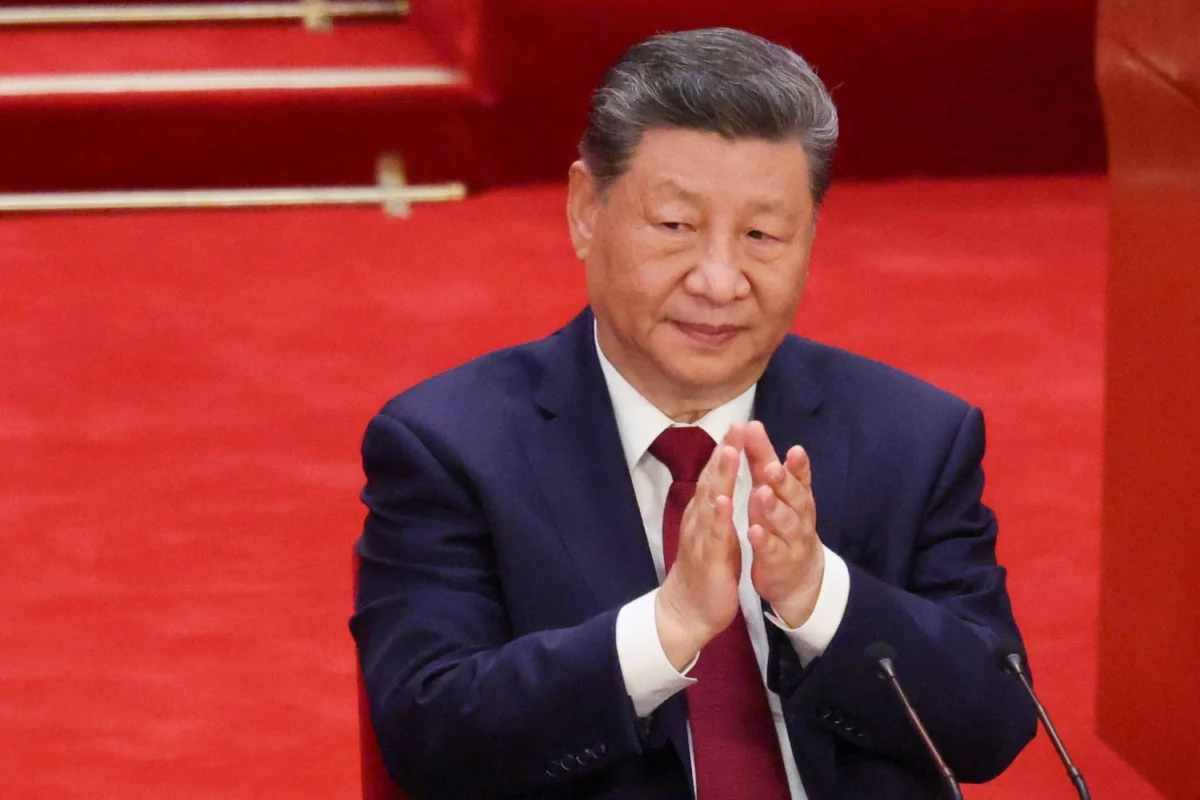
This shift in favorability is mirrored in the perceived leadership of the two nations. When asked about their confidence in the leaders of these powers to "do the right thing regarding world affairs," Chinese President Xi Jinping emerged with a median confidence rating of 31%, comfortably outpolling U.S. President Donald Trump, who registered at 21%.
"While many people still lack confidence in Xi, positive views of him have become more widespread," the Pew report noted, highlighting that the Chinese leader is beginning to capture a degree of global trust that has largely eluded his American counterpart in the current survey.
A Historical Retrospective: Japan’s Cold Shoulder
Japan serves as a profound outlier in this global trend. While nations like Pakistan have embraced China with overwhelming enthusiasm—reporting a 90% combined "very favorable" and "somewhat favorable" rating in 2026—Japan’s sentiment remains rooted in historical friction and ongoing territorial anxieties.
The Decline of Japanese Goodwill
The current state of Japanese opinion toward China is historically low. In 2026, a mere 1% of Japanese respondents described their view of China as "very favorable," with only 11% offering a "somewhat favorable" assessment.
To understand the depth of this cynicism, one must look at the historical data provided by Pew. In 2002, the climate was drastically different: 8% of Japanese respondents held a "very favorable" view, and nearly half (47%) were "somewhat favorable." The trajectory has been one of slow, steady erosion, reaching a nadir in 2020 when not a single respondent in the "very favorable" category could be found, and only 9% offered even a lukewarm "somewhat favorable" sentiment.
The Anchor of Territorial Disputes
The primary driver of this hostility is the persistence of territorial disputes. The 2026 data indicates that 88% of Japanese citizens are "concerned" about these ongoing geopolitical frictions, with 51% identifying as "very concerned." This marks an upward trend from 86% in 2024 and a significant leap from the 80% reported in 2016. For the Japanese public, these disputes are not merely diplomatic friction points; they are existential concerns that define their relationship with their neighbor.
Leadership Dynamics: The "Proximity" Paradox
Interestingly, the data suggests a "proximity paradox" regarding confidence in leadership. Countries that maintain the closest military and strategic ties to the United States—specifically India, the Philippines, and Japan—continue to express significantly higher confidence in President Trump than in President Xi.
This is a testament to the enduring strength of the U.S.-led security architecture in the Indo-Pacific. Despite the global shift toward Xi, these nations view the U.S. president as a more reliable, if controversial, partner in maintaining regional stability.
However, the tide is not uniformly against Beijing. South Korea, for instance, has demonstrated a volatile shift in sentiment. In previous surveys, President Trump enjoyed a confidence rating of 33% compared to Xi’s 15%. In 2026, those numbers flipped, with Xi edging out Trump by 3 percentage points. This reversal indicates that even within the U.S. alliance network, the consensus on leadership is far from static.
Supporting Data: A Global Snapshot
The survey’s breadth allows for a nuanced understanding of how regions perceive the "Big Two."
- The Pro-China Bloc: Pakistan remains the most pro-China nation in the study, with 66% of respondents holding a "very favorable" view. This alignment is largely attributed to long-standing economic partnerships and the massive infrastructure investments under the Belt and Road Initiative.
- The U.S. Resilience: Despite the global dip in favorability, the U.S. maintains strong pockets of support, particularly among nations that feel threatened by China’s regional expansionism.
- The "Neutral" Middle: A significant portion of the 36 countries surveyed remains ambivalent, showing a lack of strong confidence in either leader. This indicates that while the "median" may favor China, a large percentage of the global population is arguably wary of both systems of governance.
Implications for Geopolitical Strategy
The findings from the Pew Research Center carry profound implications for the foreign policy establishments in both Washington and Beijing.
For the United States: The Soft Power Crisis
The decline in favorability toward the U.S. suggests that the "America First" approach and the volatility of current leadership may be alienating traditional allies and neutral parties alike. The fact that Xi Jinping is outpolling the U.S. president in global confidence metrics is a warning sign that the U.S. narrative is losing its persuasive power in the global south and parts of the Indo-Pacific.
For China: The Limits of Economic Influence
While China is gaining ground in the court of public opinion, its struggle to convert that sentiment into trust in Japan indicates that economic power alone cannot dissolve historical grievances. Beijing’s inability to address the core "territorial anxiety" in Japan—and other neighbors—suggests that its soft power is currently limited to regions where economic dependency outweighs security fears.
The Future of Regional Stability
The widening gap between Japan’s outlook and the rest of the world suggests that Japan is becoming increasingly isolated in its diplomatic stance toward China. If Tokyo continues to maintain a hardline position while the rest of the region—and potentially the world—begins to normalize relations and view China as a more legitimate global player, Japan risks losing its ability to build a broad coalition against Beijing’s regional ambitions.
Conclusion: A World Realigning
The 2026 Pew Research survey provides a clear, albeit sobering, picture of a world in the midst of a transition. The United States, once the undisputed hegemon of global sentiment, is now grappling with a more skeptical world, while China is successfully leveraging its economic footprint to alter its global image.
Japan, however, remains a constant in a changing sea. Its persistent negative view of China, fueled by deep-seated territorial concerns, acts as a barometer for the underlying tensions that remain unresolved. As the global community weighs the merits of these two superpowers, the divergence between Japan’s reality and the global perception is a phenomenon that will likely define the diplomatic discourse for years to come.
Whether this shift in public opinion translates into long-term geopolitical realignment remains to be seen. However, one thing is certain: the era of clear-cut, binary loyalty is fading, replaced by a complex, fragmented global landscape where favorability is as much about economic pragmatism as it is about national values.