Asro
Asro
In the landscape of modern animation, few revivals have captured the cultural zeitgeist as effectively as Marvel Studios’ X-Men ’97. While the series has been praised for its emotional depth and complex narrative arcs, its latest installment, Season 2, Episode 5, titled "Weapon X, Lies, and DVDs," stands out as a tonal departure. By shifting from the high-stakes soap opera dynamics of the X-Mansion to the claustrophobic, visceral terror of a sci-fi creature feature, the show has reinvented the way we perceive its most iconic character: Wolverine.
This episode is more than just an action set-piece; it is a profound exploration of identity, trauma, and the cyclical nature of violence that defines Logan’s existence. By integrating the predatory menace of the Brood with the clinical, cold-blooded history of the Weapon X program, the showrunners have crafted an homage to legendary cinema while simultaneously deepening the lore of one of Marvel’s most enigmatic figures.
The Chronology of Loss: From Bone Claws to Alien Hives
To understand the weight of this episode, one must revisit the seismic shifts of the X-Men ’97 Season 1 finale, "Tolerance is Extinction." In a moment of devastating consequence, Magneto—the Master of Magnetism—stripped the adamantium from Wolverine’s skeleton, leaving the hero with his original, organic bone claws. For a character whose identity is intrinsically linked to the "indestructible" nature of his weaponry, this was a significant vulnerability.
Picking up in Season 2, Episode 4, "Rise of Apocalypse Part II," the narrative began to tighten its focus on Logan’s internal drive to reclaim his lost power. Armed with intelligence provided by his connections within the Avengers, Wolverine embarked on a mission to infiltrate the clandestine Weapon X facility. He did not go alone; he recruited a team of individuals bound by the same traumatic history: Sabretooth, Lady Deathstrike, Maverick, and Garrison Kane.
"Weapon X, Lies, and DVDs" follows this team as they breach the facility, only to find that the nature of their mission has changed. They are not walking into a simple military installation; they are entering a death trap. The scientists have pivoted from human experimentation to something far more dangerous: the Brood.

A Homage to Cinematic Terror: The ‘Aliens’ Influence
The episode functions as an extended, loving homage to James Cameron’s 1986 sci-fi masterpiece, Aliens. The parallels are intentional and pervasive. Much like the colonial marines in Cameron’s film, the Weapon X strike team finds themselves trapped in a sterile, isolated outpost, hunted by an apex predator that views them as nothing more than biological vessels.
The visual storytelling leans heavily into the claustrophobic aesthetic of the "xenomorph-adjacent" experience. The Brood, first introduced in 1982’s Uncanny X-Men #155 by Chris Claremont and Dave Cockrum, are depicted here not as the armored, lizard-like creatures seen in the original 1990s animated series, but as silent, terrifying, hive-minded parasites. They embody the "Game Over" panic popularized by Bill Paxton’s Private Hudson—a line actually uttered by Maverick in a moment of sheer desperation.
The episode culminates in a scorched-earth finale that mirrors the final act of Aliens. Realizing the facility is a lost cause, Logan and his team trigger a catastrophic explosion to sanitize the location, embracing the grim reality that destruction is the only way to ensure the threat is neutralized.
Deepening the Lore: The Legacy of Weapon X
The narrative threads woven into this episode extend back to the original 1990s X-Men animated series, specifically the episode "Weapon X, Lies, and Videotape." That earlier chapter explored the tragedy of false memories—the idea that the Weapon X program didn’t just break the bodies of its subjects; it shattered their sense of self.
In "Weapon X, Lies, and DVDs," the discovery of a DVD recording by Dr. Abraham Cornelius adds a layer of clinical horror to the proceedings. Cornelius, revealed to have been compromised by the Brood, explains his research: the Brood’s hive mind was intended to be the final "polishing" agent for mental reconditioning. By stripping away individual consciousness, the program aimed to create the perfect, compliant weapon.

This revelation serves as a bridge between the physical and psychological horror of Wolverine’s origin. The Brood are not just monsters in the hallway; they are a metaphor for the systemic dehumanization that Wolverine has spent his entire life fighting against. The episode masterfully links the biological horror of the parasite to the technological horror of the bonding process.
The Moral Weight: Morph and the Mirror of the Beast
While the episode is titled after the Weapon X program, the true emotional protagonist is Morph. Often relegated to the sidelines, Morph serves as the moral compass of this arc. Having been brought back from the dead by Mr. Sinister in the original series, Morph possesses a unique perspective on trauma and the manipulation of identity.
The episode forces a confrontation between Morph’s belief in Logan’s inherent nobility and the darker, more manipulative side of Wolverine’s nature. It is eventually revealed that Logan’s entire mission was a lie. He did not storm the facility to save the world or to dismantle a dangerous program; he went there specifically to get his adamantium back. He used his friends as bait, knowingly putting them in harm’s way to secure his own physical reclamation.
This reveal complicates the audience’s perception of the hero. Wolverine is shown to be willing to sacrifice his comrades—resulting in the deaths of Maverick and Garrison Kane—to mend his own insecurities. When the bonding process is finally completed, and Logan stands before the team with his signature claws, the victory feels pyrrhic.
Implications: A Hero Defined by His Own Curses
The final scene of the episode is a chilling examination of the "Wolverine" archetype. When Morph confronts him, asking if he is truly nothing more than a "beast with claws," Logan’s response—"That’s what I’m the best at being"—is a gut-wrenching admission of defeat.
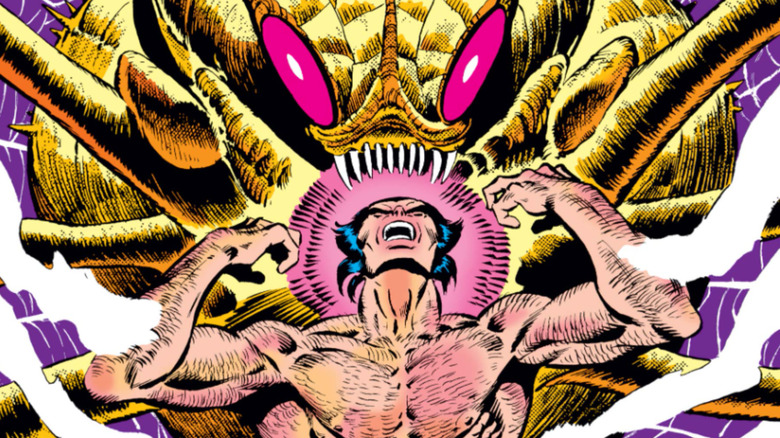
Morph’s disappointment serves as a surrogate for the audience’s own conflicted feelings. In this iteration of the character, the adamantium is no longer a tool he was forced to endure by cruel scientists; it is a weight he has chosen to carry again. He has effectively re-bonded himself to his own trauma because he cannot reconcile his humanity with his nature as a weapon.
The implications for future seasons of X-Men ’97 are massive. By returning Wolverine to his "classic" status quo, the writers haven’t just reset his powers; they have deepened his internal struggle. He is now a man who has looked at his own capacity for violence, realized he has the power to reject it, and chose the metal instead.
Conclusion: The Horror of the Self
"Weapon X, Lies, and DVDs" is a landmark episode that utilizes the vocabulary of sci-fi horror to tell a story about the permanence of trauma. By pitting the X-Men against the Brood, the show captures the visceral terror of being hunted, but by pitting Wolverine against his own desires, it captures something much more devastating: the terror of being the person you are programmed to be.
Wolverine remains the best at what he does, but as this episode proves, what he does is often at the cost of his own soul. As the series moves forward, the question will no longer be whether Logan can survive his enemies, but whether he can survive the man he has chosen to become. Through its expert pacing, deep-cut references, and uncompromising character work, X-Men ’97 continues to prove that it is not just a revival of a classic show, but a sophisticated evolution of the superhero genre.


 Muslim