Azzam Bilal Chamdy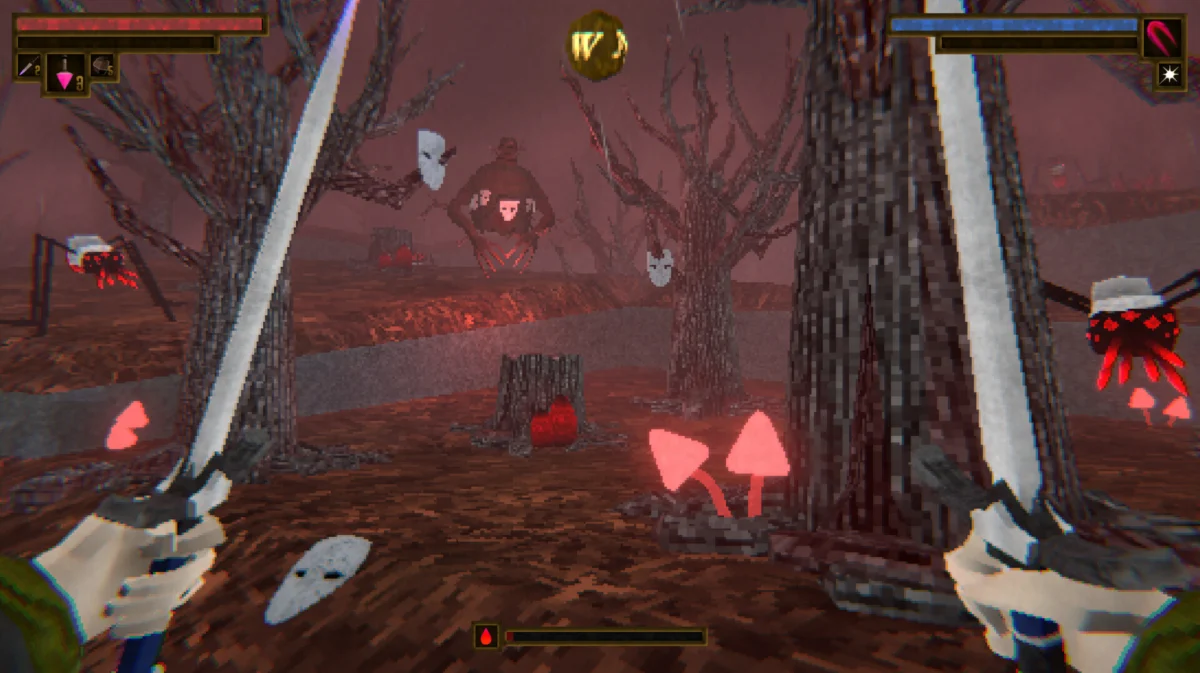
The resurgence of retro-styled, atmospheric dungeon crawlers has found a new standard-bearer. Publisher CobraTekku Games and developer Kasur Games have officially confirmed that their critically acclaimed, King’s Field-inspired dark fantasy RPG, Verho: Curse of Faces, is breaking free from its PC exclusivity. Starting July 30th, the haunting, mask-driven world of Yariv will be accessible to players on Xbox Series X|S, Nintendo Switch, and PlayStation 5.
This announcement coincides with the rollout of the substantial "Chaos" update for the Windows PC version (available via Steam and GOG), marking a pivotal moment for a title that has quickly become a cult favorite for fans of challenging, old-school level design and intentional technical minimalism.
The Architecture of Dread: What is ‘Verho: Curse of Faces’?
Verho: Curse of Faces is not merely an homage to the late 90s; it is a meticulous reconstruction of the "dungeon crawler" subgenre that once defined the early days of console gaming. Set in the desolate and hostile realm of Yariv, the game strips away the hand-holding common in modern RPGs, replacing it with a sense of isolation and discovery.
The core premise revolves around the identity-defining power of masks. In this grim landscape, a mask is not just a cosmetic accessory—it is a functional armor piece that dictates the wearer’s capabilities. By equipping different masks, players can seamlessly pivot between various archetypes: from the brutal, iron-clad melee fighter to the elusive, precision-based duelist, or the arcane, glass-cannon mage.
What sets Verho apart is its fluid character development system. Rather than locking players into a "class" at the start of the game, the developers have implemented a flexible, experience-driven progression path. If a player finds themselves struggling against a particular boss, they are not penalized for adapting their approach; they can re-specialize their build on the fly, experimenting with new mask synergies to survive the unforgiving encounters that lie ahead.
Chronology of Development: From Concept to Console
The journey of Verho: Curse of Faces began as a passion project for Kasur Games, a team deeply embedded in the aesthetic philosophy of the 32-bit era.
- Initial Conception: The developers aimed to capture the specific "feeling" of mid-90s RPGs—the jank, the low-poly environments, and the sense of mystery that arose from limited draw distances.
- PC Launch: Following a successful incubation period, the game launched on Steam and GOG. It was met with immediate praise from the "boomer shooter" and retro-RPG communities for its uncompromising difficulty and evocative, low-fidelity art style.
- The Chaos Update: As the game gained traction, Kasur Games focused on expanding the world, leading to the development of the "Chaos" update. This patch serves to increase the mechanical depth of the game, introducing new enemy behaviors and balancing tweaks that refine the core loop.
- Console Expansion: With the game’s stability now cemented, the partnership with CobraTekku Games paved the way for the upcoming July 30th multi-platform launch, ensuring that the title reaches the widest possible audience across current-gen consoles.
Supporting Data: The Allure of the Low-Poly Aesthetic
The visual language of Verho is a deliberate rejection of the hyper-realistic, ray-traced standards of modern AAA development. By utilizing low-poly models and intentionally "rough" textures, Kasur Games achieves an aesthetic that evokes the PlayStation 1 and early Sega Saturn era.
Technically, these limitations serve a narrative purpose. In high-fidelity games, the player is often shown exactly what they need to see. In Verho, the limited draw distance and the jagged geometry of the environment force the player to focus on the immediate surroundings, fostering an atmosphere of constant tension. Every dark corner, every shadowed corridor, and every distant silhouette is meant to trigger a primal sense of unease.

This style, often referred to as "Lo-Fi Horror" or "Retro-RPG," has seen a significant spike in popularity. Data from digital storefronts indicates that players are increasingly gravitating toward titles that prioritize atmosphere and "vibe" over technical polygon counts. Verho capitalizes on this by proving that "less is more" when it comes to world-building.
Official Perspectives: The Philosophy of Design
In recent press releases, the teams at CobraTekku and Kasur Games have emphasized that Verho is a response to the "over-simplified" nature of modern RPG progression.
"We wanted to give players the freedom to be who they wanted to be without the constraints of a menu that dictates their playstyle for the next forty hours," a spokesperson for Kasur Games noted. "The mask system is an extension of that philosophy. In Yariv, your identity is not static—it is a tool. We expect the console community to embrace this flexibility, especially when they encounter the challenges introduced in our new Chaos update."
The "Chaos" update, which will launch alongside the console versions, is described by the developers as an "evolution of the game’s difficulty curve." It introduces a series of systemic changes designed to keep veteran players on their toes, including randomized environmental hazards and more aggressive AI patterns that adapt to the player’s preferred mask loadout.
Implications for the Industry
The migration of Verho: Curse of Faces to consoles serves as a bellwether for the broader independent gaming landscape. For several years, small, experimental RPGs were largely confined to the PC market, where user bases were more forgiving of technical quirks and "rough around the edges" gameplay.
However, the success of titles like Verho proves that console audiences are not only receptive to these titles but are actively seeking them out. The transition from PC to consoles indicates that:
- Platform Parity is Essential: Players expect the same level of support and content updates (such as the "Chaos" patch) regardless of their platform of choice.
- Niche Aesthetics are Mainstream: The "Retro-Revival" trend is no longer a niche hobby; it is a viable commercial strategy that competes effectively with mainstream releases.
- Cross-Platform Portability: As development tools like Unity and Unreal Engine continue to streamline the porting process, we can expect a faster turnover between a game’s PC debut and its console release.
Conclusion: Entering the World of Yariv
As the July 30th release date approaches, anticipation is building for the console debut of Verho: Curse of Faces. Whether you are a veteran of the King’s Field series looking for a spiritual successor, or a modern gamer curious about the appeal of the 32-bit era, the game promises a challenging, atmospheric journey through a world where your face is your future and your mask is your salvation.
By blending the mechanical freedom of modern RPGs with the oppressive, deliberate pacing of the 90s, Kasur Games has crafted a title that stands as a testament to the power of design-led development. The journey to the heart of Yariv is rarely easy, but for those who value discovery over direction, it is a journey well worth taking.


 Asro
Asro
 Muslim